A Guide to Becoming a High-Impact Remote Scrum Master
Think of a remote scrum master as the servant-leader for a development team that isn’t in the same room. They’re the person who guides the team through the Scrum process, but instead of whiteboards and sticky notes, they use digital tools to keep everything running smoothly across different locations and time zones. They are the essential conductor for modern, globally dispersed development teams.
Why the Remote Scrum Master Role Is Critical
The shift from everyone being in the office to working from anywhere has completely changed how software gets built. A role that was once a nice-to-have has quickly become a must-have for modern development. A great remote Scrum Master is like the conductor of a digital orchestra, making sure every team member plays in harmony, no matter where they are in the world.
This isn’t just a passing phase. It’s a strategic shift driven by real business needs. The hunt for top talent has forced companies to look far beyond their local postcodes, assembling teams from all corners of the globe. While this new way of working offers incredible flexibility, it also brings its own set of challenges in communication, collaboration, and keeping the team connected—challenges that demand a special kind of leadership.
Key Drivers Fueling the Demand
The growing need for remote Scrum Masters isn’t random; it’s a direct result of major shifts in the tech industry. For engineering managers and CTOs looking to keep their teams efficient, understanding these drivers is key.
- Access to a Global Talent Pool: Companies are no longer limited by geography. A remote-first mindset lets them hire the absolute best engineers, creating diverse teams with a rich mix of skills and perspectives.
- Increased Team Flexibility and Autonomy: Giving people the freedom to work from where they want creates a better work-life balance and a real sense of ownership. That autonomy is a huge motivator, but it needs a leader who can keep everyone aligned without resorting to micromanagement.
- The Surge in AI-Assisted Coding: Tools that help developers write code faster are now a standard part of the toolkit. A remote Scrum Master is crucial for weaving these tools into the workflow, measuring their impact, and ensuring the team gets the most out of them.
The growth of the remote Scrum Master role has been explosive, especially since the big workplace shift around 2020. Back then, you’d be lucky to find 15% of Scrum Master jobs listed as remote. Fast forward to today, and that number has shot up to 62%, making remote the new normal for agile leadership.
At the end of the day, a talented remote Scrum Master is what unlocks a distributed team’s true potential. They do more than just run meetings; they build a strong, high-performing remote agile culture from the ground up. By mastering digital tools and async communication, they make sure all the benefits of agile software development are felt, regardless of physical distance. Their knack for fostering connection, clearing roadblocks, and keeping the momentum going makes them priceless in any modern engineering organization.
Understanding the Core Responsibilities
Being a remote Scrum Master is so much more than a title. It’s a completely different ballgame than its in-office counterpart. The role shifts from simply leading meetings to becoming the digital-first leader for the entire team.
While the fundamental ideas of Scrum don’t change, how you apply them in a distributed team has to be rethought from the ground up. You’re not just moving your responsibilities online; you’re fundamentally adapting them. The job becomes less about being a meeting organizer and more about being an architect for the team’s digital workspace.
Facilitating Virtual Ceremonies with Impact
Let’s be honest: remote Scrum events like the Daily Standup, Sprint Planning, and Retrospectives can quickly turn into boring, soul-crushing video calls. A great remote Scrum Master knows how to turn these into interactive sessions that actually get things done. This is about more than just dropping a Zoom link in Slack.
It means actively designing the entire experience so everyone can participate equally, no matter where they are or how outspoken they are. For example, instead of the classic round-robin where everyone waits for their turn to speak, you could use a digital whiteboard. Have everyone add their updates at the same time. It’s faster, more engaging, and way more efficient. You can learn more about building a focused and effective agenda for your daily scrum meeting to keep your team on track.
Removing Blockers Across Time Zones
When a team is in the same office, getting rid of a blocker can be as easy as walking over to someone’s desk. But when your team is spread across multiple time zones? That simple task becomes a logistical nightmare. This is where a remote Scrum Master really shines, becoming a master of asynchronous problem-solving.
This part of the job involves:
- Proactive Monitoring: Keeping a close eye on team channels like Slack or Microsoft Teams to spot problems before they blow up.
- Clear Documentation: Making sure any blockers are documented in a shared tool (like Jira or a Confluence page) with all the context needed for someone to jump in and help.
- Connecting People: Acting as the central connector, looping in the right people to solve an issue without having to wait for the next scheduled meeting.
The best remote Scrum Masters know that their most important work happens between meetings. They are masters of the threaded conversation, clearing the path so the team can keep moving forward without losing steam.
Coaching Agile Principles Through Digital Channels
Coaching is probably the trickiest part of the remote Scrum Master role. You can’t read body language or pick up on the subtle cues you get in person. Because of this, you have to find creative ways to teach and reinforce Agile values like transparency, inspection, and adaptation.
This usually means being much more direct and intentional with your coaching. You might use one-on-one video calls to give sensitive feedback, share interesting articles in a team channel to get a discussion going, or use anonymous polls during retrospectives to get brutally honest feedback.
The end goal is always the same: build a culture of continuous improvement and psychological safety, even when you’re all miles apart. Ultimately, you become the glue holding the entire remote Agile process together, making sure distance doesn’t get in the way of building great things.
Developing Essential Skills for Remote Leadership
To be a great remote Scrum Master, you need more than just a firm grasp of Agile. While the core principles don’t change, leading a team that’s spread out requires a different set of muscles. Think of it like conducting an orchestra. In person, you can see every musician and use visual cues. Remotely, you’re directing each one through a high-fidelity headset—the music is the same, but your communication, observation, and connection have to be much more intentional.
When you’re all in the same office, a Scrum Master can read the room. You can see the body language in a stand-up or feel the tension when a tough topic comes up. Remote leaders lose those organic signals. That means you have to learn to “read the digital room” by getting really good at virtual facilitation, asynchronous communication, and using data to see what’s really going on.
Mastering Advanced Virtual Facilitation
Just sharing a Jira board on a video call isn’t going to cut it. True virtual facilitation is about creating a space where people feel engaged and safe to speak up, even through a screen. A skilled remote Scrum Master acts like an architect for these digital interactions, making sure every voice is heard—not just the loudest ones.
This comes down to a few key practices:
- Design Interactive Sessions: Use digital whiteboards like Miro or Mural to run collaborative exercises. This gets people actively involved instead of just passively listening.
- Set Clear Expectations: Before a call, establish some ground rules. When should cameras be on? How should the chat be used? Using features like virtual hand-raising can keep conversations from getting chaotic.
- Timebox Everything: Everyone’s time is valuable, especially when working from home where distractions are everywhere. Keeping meetings short, sharp, and focused is non-negotiable.
The Art of Asynchronous Communication
A remote Scrum Master’s most important work often happens between meetings. Asynchronous communication—sharing information without expecting an instant reply—is what keeps a distributed team moving forward. When you master this, you prevent work from stalling across time zones and stop relying on meetings for every little thing.
A great remote Scrum Master knows that clear writing is everything. They craft updates, document decisions, and ask questions in a way that leaves no room for confusion. This keeps the team aligned and productive, even when they aren’t online at the same time.
The diagram below breaks down the three pillars of a remote Scrum Master’s responsibilities. Each one looks a little different when you’re not in the same room.
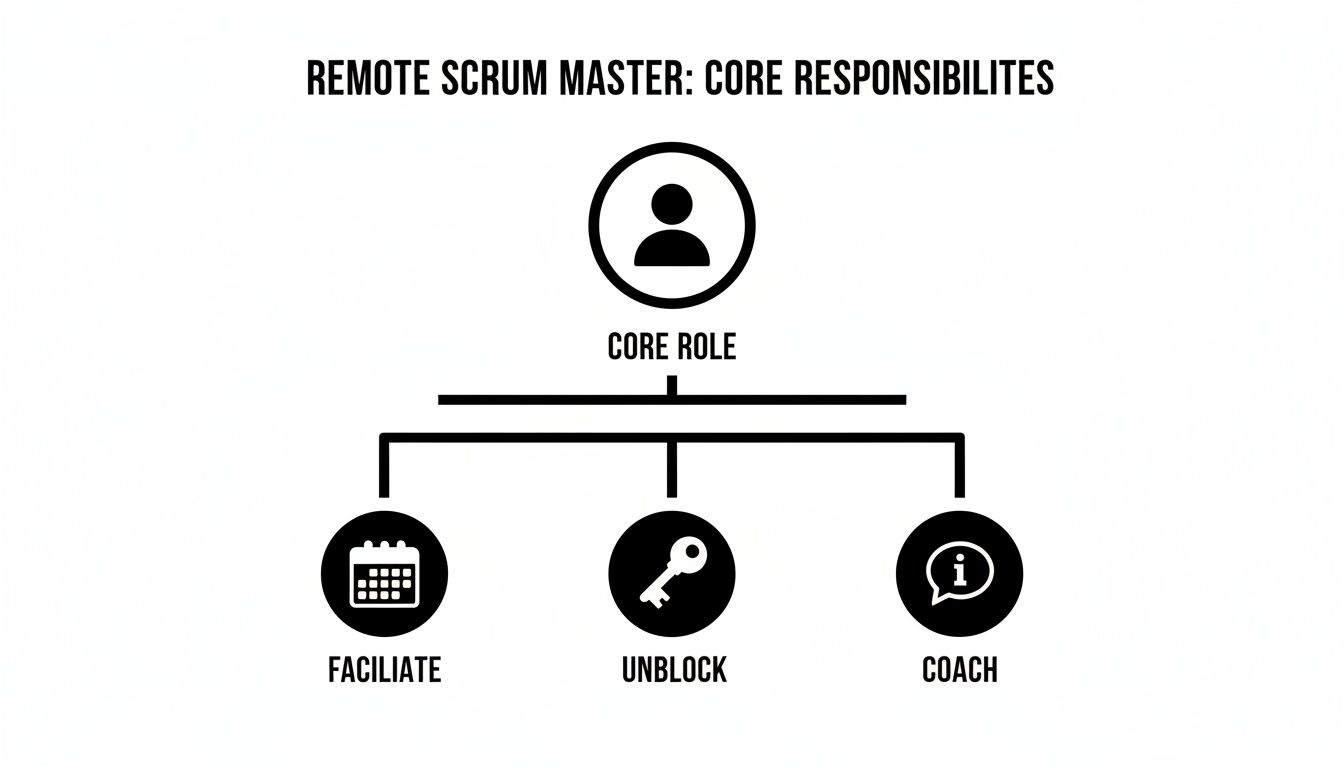
As you can see, facilitation, unblocking, and coaching are still the name of the game. But doing them effectively from a distance depends entirely on smart tool usage and proactive, crystal-clear communication.
Traditional vs. Remote Scrum Master Skillsets
Moving from an in-office to a remote Scrum Master role isn’t just a change of location; it’s a genuine evolution of your skills. The core job—servant leadership—is the same, but how you do it changes completely. You have to actively seek out information instead of just observing it, and building team spirit requires real, intentional effort.
This table highlights how core skills adapt to a distributed environment, showing what it takes to lead effectively from anywhere.
| Core Skill | Traditional Scrum Master Approach | Remote Scrum Master Approach |
|---|---|---|
| Communication | Relies on verbal, in-person cues and face-to-face meetings. | Must master clear, concise written communication and asynchronous updates. |
| Facilitation | Uses physical whiteboards and sticky notes in a shared room. | Designs engaging digital experiences with interactive tools like Miro and Mural. |
| Team Health Check | Observes body language, informal chats, and office atmosphere. | Uses data, one-on-one check-ins, and explicit feedback channels to gauge morale. |
| Impediment Removal | Walks over to someone’s desk to resolve blockers quickly. | Coordinates solutions across time zones using documented, asynchronous communication. |
| Empathy & Trust | Builds rapport through shared lunches and daily interactions. | Intentionally creates connection through virtual social events and personalized check-ins. |
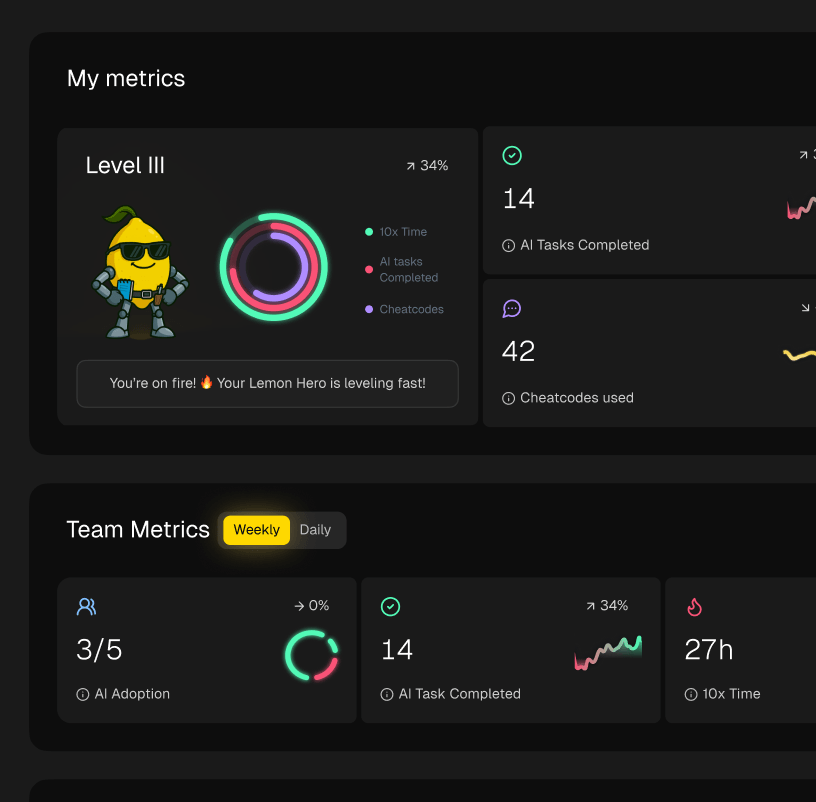
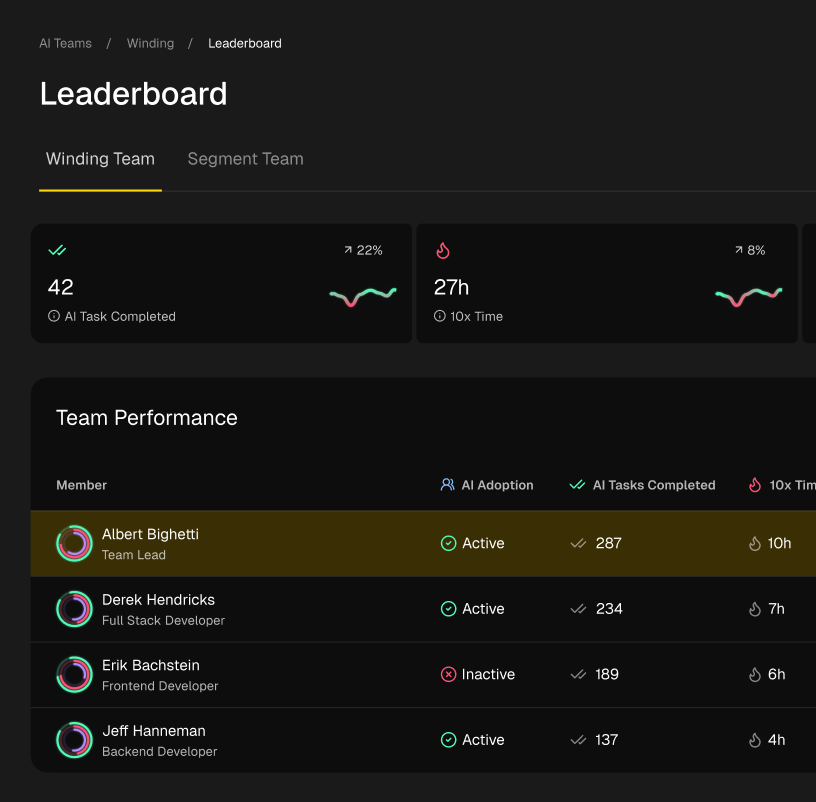
Ultimately, the best remote Scrum Masters become fluent in data. They use metrics from tools like Zest to get a clear picture of workflow efficiency and team health, turning what used to be invisible into something they can act on. This data-driven mindset empowers them to coach their teams with precision, clear away hidden blockers, and prove their impact without ever needing to be in the same physical room.
Solving Common Remote Team Challenges
When a team goes fully distributed, new challenges pop up that can slowly chip away at morale and productivity. A great remote scrum master doesn’t just wait for these problems to appear—they see them coming and build systems to head them off. The real goal isn’t just managing tasks from a distance; it’s about building a remote-first culture where everyone feels included, heard, and set up to succeed.
To do this well, you need a solid game plan. It’s all about spotting the common friction points of remote work, like the soul-crushing exhaustion from back-to-back video calls or the quiet loneliness that can set in, and putting real solutions in place.
Combating Virtual Meeting Fatigue
We’ve all been there: the endless parade of video calls that leaves you feeling completely wiped out. Staring at a screen, trying to read digital body language, and being “on” for the camera is just plain exhausting. A smart remote scrum master makes it their mission to lighten that cognitive load.
One of the easiest wins? Make more meetings ‘camera-optional.’ This simple shift lets people focus on the conversation instead of their on-screen appearance. For the meetings that absolutely need video, keep them short, sweet, and to the point.
Another good habit is to ask the tough question: “Does this really need to be a meeting?” Often, a quick decision can be made in a Slack thread, or an update can be shared in a well-written asynchronous post. Cutting down on meetings gives everyone back their focus time and makes the ones you do have that much more valuable.
Preventing Team Member Isolation
When you lose the casual “water cooler” chats of an office, it’s surprisingly easy for team members to feel like they’re working on an island. That feeling of isolation is a silent killer for team spirit and collaboration. This is where a remote Scrum Master has to be intentional about creating connection.
A simple but powerful tactic is scheduling regular virtual ‘coffee chats’. These are short, informal, no-work-talk-allowed calls that mimic grabbing a coffee in the office kitchen. It gives everyone a chance to connect as people, not just as colleagues.
Fostering genuine connection is non-negotiable for a remote team’s health. When people feel like they know their colleagues as human beings, trust deepens, communication improves, and collaboration becomes more natural and effective.
To really build those bonds, you can also introduce structured fun. Check out these effective team building activities for remote workers for ideas that create shared experiences and strengthen relationships, no matter the distance.
Managing Conflict and Ensuring Equal Voice
In a remote environment, disagreements can easily go unaddressed, and the loudest voices can drown out the quieter, more introverted team members on a video call. A skilled remote scrum master actively creates a space where conflict is handled constructively and everyone gets a chance to contribute.
Using anonymous feedback tools during retrospectives is a game-changer. Tools like Miro or other dedicated retro apps allow people to share honest, candid feedback they might not feel comfortable saying out loud. This brings the real issues to the surface so you can actually deal with them.
To make sure every voice is heard, you have to facilitate with purpose. Try calling on quieter folks directly (in a friendly way!) for their thoughts or use a round-robin style where each person gets a turn to speak. This prevents one or two people from dominating the conversation and ensures you get the benefit of everyone’s perspective. It’s about turning remote challenges into opportunities to build a more resilient and inclusive team.
Building Your Modern Remote Toolkit
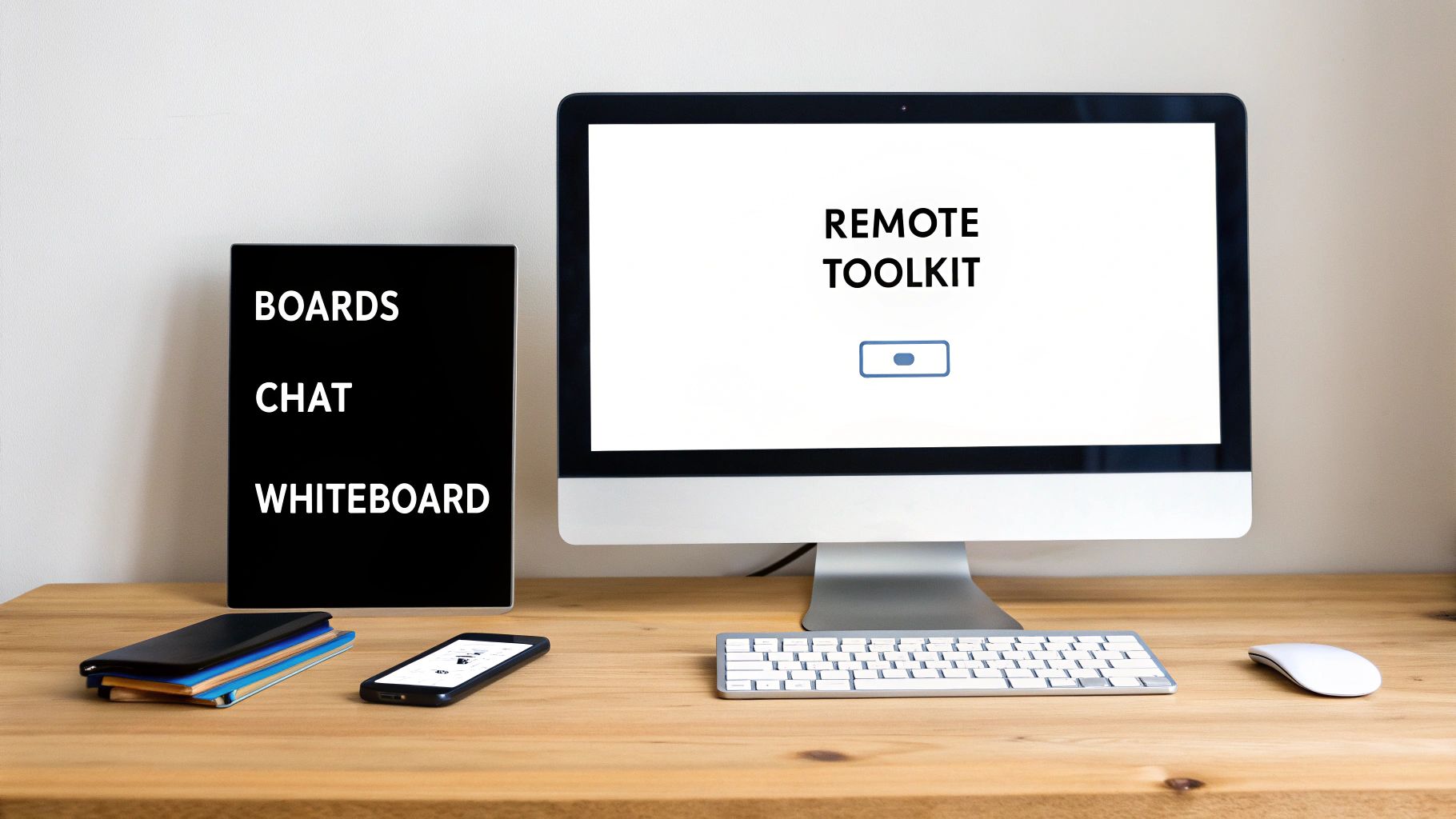
A great remote Scrum Master is like a conductor leading a digital orchestra. To create harmony across a distributed team, you need the right instruments. Your toolkit is that orchestra. It’s not just a random collection of apps, but a carefully integrated ecosystem built for communication, collaboration, and visibility—no matter where your team members are.
Picking the right tools is the first step, sure. But it’s mastering them that truly sets exceptional remote leaders apart. The real goal here is to build a digital workspace that feels as connected and efficient as a physical office, making it second nature to run ceremonies, see progress, and keep the team spirit alive from anywhere in the world.
The Core Three Tool Categories
For any remote Scrum Master, the toolkit really boils down to three essential pillars. Each one solves a fundamental need for a distributed Agile team, and they have to work together seamlessly to keep the engine humming.
-
Project Management & Tracking: This is your team’s single source of truth. A solid platform like Jira is pretty much non-negotiable for tracking stories, managing backlogs, and visualizing sprint progress. It creates the transparency everyone needs to stay aligned.
-
Communication & Messaging: Real-time conversation is the lifeblood of your team. Tools like Slack or Microsoft Teams become the virtual office floor. They’re perfect for focused discussions, quick check-ins, and team announcements, cutting way down on endless email chains.
-
Collaboration & Ideation: This is where the magic happens. Digital whiteboards like Miro or Mural are absolutely essential for bringing back that collaborative energy you get in person. They’re perfect for brainstorming, retrospectives, and mapping out complex ideas visually.
A well-curated toolkit does more than just copy what you do in an office; it makes it better. By centralizing information and making collaboration easy for everyone, these tools can level the playing field and give every team member an equal voice.
Adding a Layer of Performance Insight
While the core three cover the basics, the best remote teams need a way to measure what’s actually working. This is where specialized performance tools come in, giving you visibility that’s often lost when you’re not all in the same room. For engineering managers, these platforms are crucial for understanding team productivity and workflow snags.
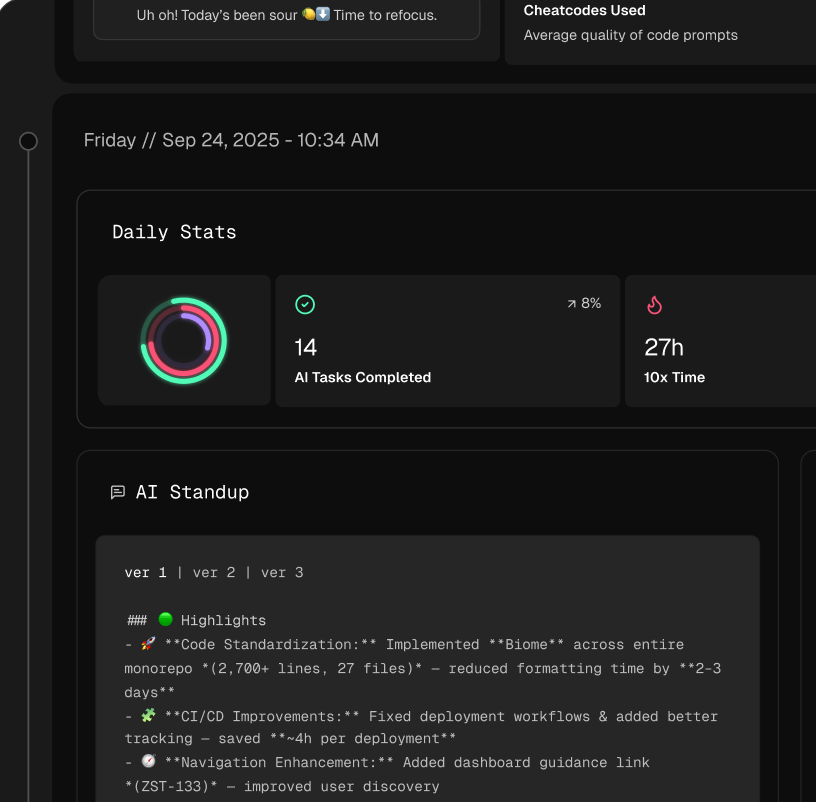
These tools can surface data you never had before, like how developers are using AI coding assistants. By tracking metrics on AI adoption and its impact on speed, a remote Scrum Master can pinpoint bottlenecks, spot effective habits, and help the team get better at AI-assisted coding. Some can even generate AI-powered standups, automatically summarizing progress and blockers. To build an effective digital workspace, exploring the right productivity Chrome extensions and resources can also give your team a serious boost.
The Future-Proof Toolkit with AI Integration
The modern toolkit is changing fast. Remote Scrum Masters are now using tools like Jira for tracking and Echometer for retros, and even running AI Standups—auto-summaries of wins and blockers—to keep things moving asynchronously. This is huge, especially since Gartner predicts that 90% of enterprise software engineers will use AI code assistants by 2028. That’s a massive leap from just 14% in 2024, and it’s going to completely reshape sprint velocities. You can discover more insights about these Scrum Master trends.
Ultimately, the power of your toolkit isn’t about one amazing app. It’s about how you strategically weave these tools together to create a cohesive, transparent, and genuinely productive digital environment. This thoughtful approach empowers the team, keeps leadership in the loop, and drives the continuous improvement that’s at the very heart of Agile.
How to Measure Success and Team Health
When your team is distributed, you can’t just “read the room” to get a feel for morale. You can’t wander over to a whiteboard to check on progress. For a remote Scrum Master, data becomes your eyes and ears—it’s how you understand performance, team health, and ultimately, success.
But it’s easy to drown in a sea of numbers that don’t actually mean anything. The real trick is to look past the vanity metrics and focus on the indicators that tell the true story of how your team is collaborating and delivering value. You need to build a narrative backed by hard evidence, showing leadership that your remote team isn’t just working, but thriving.
Core Agile Metrics for Remote Teams
The heart of Agile doesn’t change just because you’re remote, but how you track it needs to be far more intentional. These foundational metrics are your go-to for understanding what’s happening sprint after sprint.
- Sprint Burndown Chart: Think of this as your daily progress report at a glance. A nice, steady downward slope means the team is knocking out work as planned. For a remote team, this chart is pure gold—it creates transparency and keeps everyone locked in on the sprint goal without you having to constantly ping them.
- Velocity: This is simply the average amount of work your team gets done in a sprint. A stable or growing velocity is a fantastic sign that your remote team has found its rhythm and has a predictable workflow. Remember, it’s not about being fast; it’s about being consistent.
- Cycle Time: How long does it take for a task to go from “I’m starting this” to “It’s done”? That’s your cycle time. Shorter, consistent cycle times point to an efficient process with few roadblocks. For a remote Scrum Master, this is one of the best tools for sniffing out hidden friction points.
Tracking these metrics isn’t about micromanaging. It’s about creating visibility. In a remote world, good data takes the place of physical presence, giving you the insights to guide, coach, and unblock your team.
Measuring the Impact of Modern Tooling
Let’s be real—development teams today are using AI-powered tools to write code faster and smarter. Engineering managers need to see a return on that investment, and a savvy remote Scrum Master can be the one to show them the numbers. This means tracking new kinds of metrics that connect tool usage directly to team output.
You start by looking at data that shows how AI assistance is actually changing the development lifecycle. For a much deeper look at what to measure, check out our complete guide to agile development metrics and how they fit into today’s workflows.
Quantifying AI-Assisted Performance
To make the case for investing in new tech and skilled remote leadership, you have to connect the dots between the tools you use and the results you get. This is where a platform like Zest really shines, giving you concrete data on how your team is putting AI to work.
Here’s what you should be looking at:
- AI-Assisted Commits: What percentage of your team’s code commits were touched by an AI assistant? This metric quickly shows you how deeply the tool is embedded in your team’s day-to-day work.
- Time Saved with AI: How many developer-hours are you getting back thanks to AI handling routine coding tasks? This number translates directly into faster delivery and gives leadership the clear ROI they’re looking for.
- Reduction in Blockers: Are developers using AI tools to solve problems on their own instead of getting stuck? Tracking this shows a direct impact on team efficiency and, just as importantly, on morale.
By measuring these outcomes, a remote Scrum Master can build a powerful story about the team’s effectiveness, proving that a well-led, well-equipped distributed team can absolutely run circles around its co-located counterparts.
Common Questions About the Remote Scrum Master Role
If you’re stepping into a remote Scrum Master role, you probably have a few questions about how it all works in practice. Let’s tackle some of the most common ones I hear from people making the shift.
What’s the Biggest Difference Between a Remote and an In-Person Scrum Master?
The biggest change is how you exert influence. An in-person Scrum Master can walk the floor, grab coffee with a developer, and read the room’s body language in a meeting. So much of their effectiveness comes from just being there.
A remote Scrum Master has to build that same influence without a physical presence. This means you have to become an expert in asynchronous communication and be incredibly deliberate about creating connection with digital tools. You’re not just facilitating events anymore; you’re the architect of the team’s entire remote collaboration space, which requires a whole new level of proactivity.
Which Certifications Really Matter for This Career?
Your foundational certs, like the Professional Scrum Master (PSM I) or Certified ScrumMaster (CSM), are still the table stakes. But for remote roles, anything focused on virtual facilitation gives you a serious edge because it proves you know how to manage digital-first teams.
Honestly, though? Experience trumps everything. Employers get excited when they see a portfolio of successfully led remote projects. If you can show you’re a pro with tools like Miro and Jira, that often speaks louder than any certification. Practical skill is what gets you hired.
Your ability to point to real-world results—like how you improved velocity or cut down cycle time on a distributed team—will always be more powerful than a list of acronyms on your resume.
How Can I Actually Prove My Effectiveness to Management?
You prove your worth with data. It’s that simple. As a remote Scrum Master, you need to track and share the numbers that matter: a steady team velocity, a measurable drop in cycle time, and a high sprint goal achievement rate.
But don’t stop with just the hard numbers. Mix in qualitative data, like team satisfaction scores from anonymous surveys. If your team is using AI coding tools, use a platform that shows concrete metrics on how much time developers are saving or how many blockers were prevented. When you can directly connect your work to faster delivery and a happier team, you’re giving management undeniable proof of your impact.
High-Impact Remote Scrum Mastery
Transform your leadership from meeting facilitator to the architect of a thriving, data-driven remote team culture.
📊 Core Metrics
- Team Velocity Stability — Measuring the predictability and consistency of work delivered per sprint.
- Cycle Time Reduction — Tracking the time it takes for tasks to move from 'in-progress' to 'done'.
- AI-Assisted Commit Rate — Percentage of code commits influenced by AI tools, showing modern tool adoption.
🕹️ My Cheatcodes
- 🌱 Influence Through Writing — Master clear, concise asynchronous communication; it’s your primary leadership tool.
- 🦎 Facilitate, Don't Just Host — Design interactive digital experiences that ensure every voice is heard, not just the loudest.
- ⚡ Data Tells the Story — Use metrics to prove effectiveness and show management the tangible ROI of a well-led remote team.
📈 Reflection Points
- 💡 Am I creating connection intentionally, or just hoping it happens?
- 🧩 Is my toolkit reducing meeting fatigue or adding to it?
- 📘 How can I use data not just to report, but to coach and improve team performance?
Gallery
Lemon shots