Reducing Technical Debt for Clean Code

Think of technical debt as a high-interest credit card for your codebase. It’s easy to swipe it for a quick win—hitting a tight deadline, pushing a feature out the door—but the interest payments come due eventually. And those payments aren’t in cash; they’re paid in slower development, more bugs, and frustrated engineers. Getting a handle on this debt isn’t just about cleaning up code. It’s a strategic move that directly impacts your ability to innovate and stay competitive.
Why Technical Debt Is a Business Problem

Let’s cut through the jargon. At its heart, technical debt is a hidden tax on every move your development team makes. It’s the compounding cost of all those “we’ll fix it later” decisions that prioritized immediate needs over a more robust, long-term solution.
Here’s a classic example: a startup is scrambling to launch its first product. To make a crucial deadline, the team hardcodes a key feature and skips writing automated tests. They launch, and it’s a success! But six months later, a simple update to that same feature causes a cascade of failures across the application. What should have been a two-day tweak turns into a two-week fire drill. That, right there, is technical debt calling in its marker.
The Real-World Costs of Neglect
This kind of slowdown isn’t just an annoyance; it has a real price tag. Across the industry, technical debt has ballooned into a massive financial drag, eating up an estimated 30-40% of IT budgets every single year. That’s a staggering number, reflecting the time and money spent just keeping things running.
In fact, research shows that developers now spend a massive chunk of their time—somewhere between 25-50% annually—grappling with the fallout from past shortcuts. This isn’t just about developers being picky; it’s a direct drain on productivity and innovation.
Here’s a quick look at the key areas where unmanaged technical debt creates real business costs.
How Technical Debt Impacts Your Business
| Impact Area | Description of Negative Effects |
|---|---|
| Slower Innovation | New features get bogged down as developers have to work around a tangled and brittle codebase, delaying time-to-market. |
| Increased Bugs | Shortcuts and rushed code often lead to more production issues, which can seriously damage customer trust and brand reputation. |
| Lower Team Morale | Top-tier engineers get burned out when their days are filled with fixing old problems instead of building exciting new solutions. |
| Inflated Budgets | More time spent on maintenance and bug fixes directly translates to higher development costs for the exact same output. |
When you let technical debt pile up, it creates a drag on everything the business is trying to achieve.
Technical debt acts like an anchor on your product roadmap. The heavier it gets, the harder it is to move forward, no matter how hard your team rows.
A Continuous Strategy, Not a One-Time Fix
One of the biggest mistakes I see is treating technical debt like a spring-cleaning project—something you tackle once a year. That’s a losing game. The goal isn’t to reach zero debt. In fact, sometimes taking on a bit of debt to seize a market opportunity is absolutely the right call.
The real key is to manage it strategically.
This requires a cultural shift where everyone, from the product managers to the C-suite, understands the trade-offs being made. By tracking key performance indicators for your engineering team, you can start putting real numbers to the problem. The conversation shifts from a vague “our code is messy” to a concrete “this specific issue is delaying our next major release by 30%.” That kind of data-driven insight makes reducing technical debt a shared priority and a continuous part of how you build software.
How to Find and Measure Your Technical Debt

You can’t fix what you can’t find. Before you can even think about paying down technical debt, you need to know where it’s hiding and just how bad it is. It’s time to move past that nagging feeling that “our code is a mess” and build a real action plan.
The whole point of this exercise is to make the invisible visible. We need to turn those abstract frustrations into a tangible backlog of issues the team can actually get their hands on and start fixing.
Uncovering Different Types of Debt
First off, let’s be clear: technical debt isn’t just one thing. It’s a whole spectrum of problems, and to find them, you have to know what you’re looking for.
Here are the usual suspects I see in most codebases:
- Code Debt: This is the classic stuff—spaghetti logic, no comments where they’re desperately needed, and coding styles that change from one file to the next. It’s the kind of code that makes you afraid to touch anything.
- Architectural Debt: These are the deep, foundational problems. We’re talking about a brittle system where a tiny change over here causes a massive failure over there. Or maybe it’s an old framework that’s no longer supported and riddled with security holes.
- Test Debt: This one is sneaky but deadly. It’s the complete lack of automated tests, or a test suite that only covers the “happy path.” With low test coverage, every single deployment feels like a roll of the dice.
- Documentation Debt: When was the last time anyone updated the wiki? If your documentation is stale or just plain missing, getting a new developer up to speed becomes a massive time-sink for your senior engineers.
Recognizing these different flavors of debt is crucial. It helps you grasp the true scope of what you’re up against.
The first step to paying down technical debt is creating an itemized bill. Until you list out every shortcut and compromise, you’re just guessing at the total cost.
Creating Your Technical Debt Log
Once you start spotting these issues, you need a central place to track them. This is where a technical debt log comes in. Don’t overthink it—it can be a dedicated project in Jira, a simple spreadsheet, or even a shared document. What matters is that you use it consistently.
For every piece of debt you uncover, make sure you log these key details:
- A Clear Description: What’s the actual problem? Be specific. Instead of “auth is messy,” write “The user authentication module lacks unit tests and has hardcoded credentials.”
- Location in the Codebase: Pinpoint exactly where the issue lives. A link to the file and line number is perfect.
- Estimated Impact: How is this hurting you right now? Try to quantify it. “Adds 2 hours of manual testing to every related task” is much more powerful than “makes things slow.”
- Estimated Effort to Fix: A quick t-shirt size estimate (Small, Medium, Large) is all you need to get started.
This log instantly transforms a vague, overwhelming problem into a prioritized to-do list. It becomes the bedrock of your cleanup efforts. For a deeper dive, our post on how to measure code quality offers some great frameworks and metrics.
By taking this structured approach, you’ll find it’s much easier to justify spending time on cleanup, and you can be confident you’re tackling the problems that hurt the most.
The New Places Tech Debt Hides
Technical debt isn’t just about that crusty old legacy system nobody wants to touch. That’s the classic stuff. Today, debt crops up in new and unexpected places, often disguised as progress. The very tools and practices we’ve adopted for speed are creating subtle liabilities that can quietly cripple a project down the road.
Spotting these modern culprits is half the battle. They aren’t always obvious, but they’re there, accumulating interest with every shortcut taken.
When Good Tools Create Bad Habits
The rise of AI coding assistants and low-code platforms has been a game-changer for productivity. But there’s a catch. These tools can pump out code that is verbose, inconsistent, or just plain weird. If a developer just accepts every AI suggestion without a second thought, they’re baking in what I call “AI-generated cruft.” It works now, but good luck maintaining it later.
Low-code and no-code tools present a similar problem. They’re fantastic for getting an MVP out the door, but you often end up with a “black box.” The code is proprietary and nearly impossible to customize or debug when something inevitably goes wrong. You’re locked into a vendor’s ecosystem, and your architecture becomes incredibly fragile.
The new technical debt isn’t always about what’s old; it’s often about the shortcuts we take with new technology. Speed is a feature, but sustainability is the foundation.
Cracks in the Foundation: Architecture and Operations
It’s not just the code itself; it’s how we piece it all together. For instance, trying to bolt shiny new microservices onto a legacy monolith is a common modernization strategy, but it’s a recipe for architectural debt. If that connection point isn’t designed with extreme care, you create a brittle, unpredictable system that’s a nightmare to troubleshoot.
And then there’s the operational side of things, which is a goldmine for hidden debt:
- Cloud Sprawl: It’s so easy to spin up new resources in the cloud that teams often lose track. Before you know it, you have a sprawling, undocumented, and wildly expensive infrastructure. This “infrastructure debt” is a massive security risk and makes optimization nearly impossible.
- High Developer Turnover: Every time a seasoned developer walks out the door, a huge chunk of institutional knowledge goes with them. The next person in has to piece together undocumented systems and questionable design choices, slowing everything down and often leading them to build redundant solutions out of frustration.
The sources of tech debt are simply different now. You can find some more insights on how AI, low-code, and hybrid architectures are creating these modern tech debt challenges on jetsoftpro.com.
It’s Better to Prevent Than to Clean Up
To get a handle on this, you have to shift your thinking from massive, heroic cleanup projects to daily prevention. It’s about building a culture where quality isn’t an afterthought.
Your best bet is to make your tools do the heavy lifting. Integrate static analysis tools like SonarQube directly into your CI/CD pipeline. This acts as a gatekeeper, flagging quality issues before they ever make it into the main branch.
The same goes for testing. Solid, automated test suites ensure that a new feature doesn’t secretly break three other things. By making these quality checks a mandatory, non-negotiable part of your workflow, managing debt stops being a dreaded chore and becomes a sustainable, everyday habit.
Prioritizing Which Debt to Tackle First
So you’ve got a list of technical debt. The temptation is to just dive in and start fixing everything, but that’s a rookie mistake. Trust me, treating all debt as equally urgent is a fast track to overwhelming your team and achieving absolutely nothing.
Effective debt management isn’t about a frantic cleanup. It’s about being strategic.
Some issues are like a leaky faucet—annoying, sure, but you can live with it for a bit. Others are more like a crack in your building’s foundation, threatening to bring the whole thing down. The real skill is learning to spot the difference and focusing your energy where it’ll make the biggest impact.
Using the Impact vs Effort Matrix
A simple but incredibly effective tool I always come back to is the impact versus effort matrix. It’s a straightforward framework for sorting each piece of debt into one of four quadrants, giving you a clear, visual roadmap for what to do next.
Here’s how it works in practice:
- High Impact, Low Effort: These are your golden tickets, your quick wins. Jump on these immediately. Think of a critical security patch that only takes an hour to apply or renaming some confusing variables in a core function that’s been tripping up new developers.
- High Impact, High Effort: These are the big, meaty projects that require a proper plan. Refactoring a clunky and slow payment processing module would fall into this category. You don’t just dive in; you break these down into smaller, more manageable chunks.
- Low Impact, Low Effort: These are perfect for when you have a bit of downtime or want to fill some gaps in a sprint. Things like cleaning up outdated documentation or finally removing some dead code fit perfectly here.
- Low Impact, High Effort: These almost always sink to the bottom of the backlog, and that’s okay. Spending weeks overhauling an internal admin tool that only two people ever touch is rarely a good use of anyone’s time.
This matrix gives you a logical, data-driven way to decide what gets fixed now, what gets scheduled for later, and what you can safely ignore for the time being.
Speaking the Language of Business
Here’s a hard truth: your prioritization plan is useless if you can’t get buy-in from the business side. Your product manager doesn’t care about “cyclomatic complexity,” but they absolutely care about whether you’re going to hit the quarterly revenue goals. You have to connect your technical work to outcomes they understand.
Instead of saying, “We need to refactor the user service,” try framing it like this: “If we invest two days in cleaning this up, we can slash new user signup errors by 40%. That also unblocks us to launch the new onboarding flow next month.”
See the difference? That simple change in framing turns a technical chore into a business advantage. You’re no longer just “fixing messy code.” You’re actively reducing risk, shipping features faster, and making customers happier. This is how you justify the time needed for reducing technical debt.
The infographic below shows how modern development—especially with AI tools—can create new kinds of debt that need a close eye.
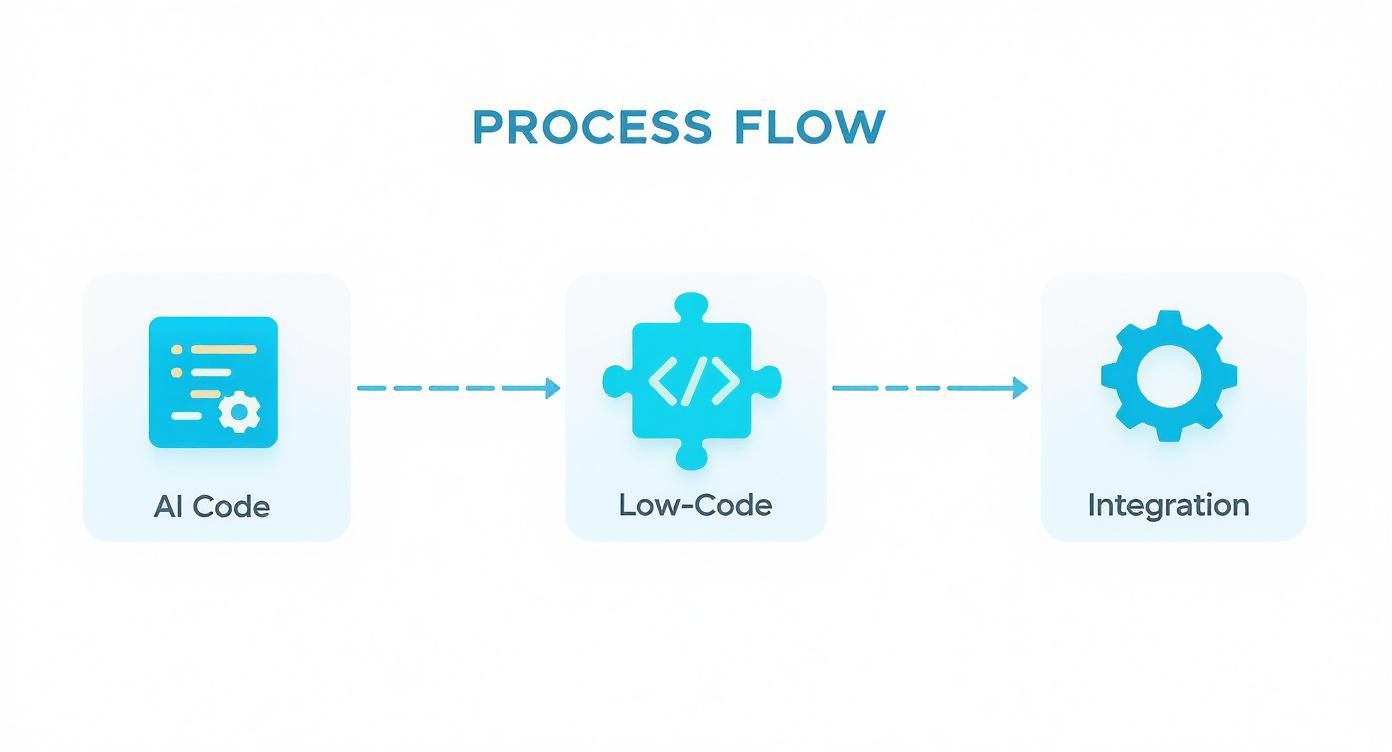
It’s clear that AI-assisted code, low-code platforms, and complex integrations are becoming major sources of debt. By mapping these issues back to business goals, you get everyone on the same page and can make much smarter decisions as a team.
Weaving Debt Reduction into Your Workflow

Let’s be honest: treating technical debt like a massive, one-off project is a recipe for failure. It’s the kind of thing that gets planned, then delayed, then forgotten when the next big feature request comes in.
The teams I’ve seen succeed with this don’t schedule massive “debt sprints.” Instead, they make paying down debt a small, consistent, and non-negotiable part of their everyday routine. The goal is to stop reacting to code smells and start proactively building a culture of continuous improvement. This isn’t about reaching some mythical “zero debt” state; it’s about making small, regular payments so the interest never gets out of control.
Adopt the Boy Scout Rule
One of the simplest yet most profound habits you can build is the “Boy Scout Rule.” The idea, popularized in software circles, is simple: “Always leave the code a little cleaner than you found it.” This philosophy turns every developer into a steward of the codebase.
When someone goes into a file to fix a bug or add a tiny feature, they’re encouraged to make one or two small improvements. Maybe they rename a confusing variable, extract a complex chunk of logic into its own function, or add a clarifying comment. These tiny acts of refactoring, when done by everyone, compound over time. You end up with a healthier, more maintainable codebase without ever needing a massive, dedicated project.
Allocate a Debt Budget Each Sprint
Another great move is to formalize debt reduction by setting aside a fixed percentage of every sprint for it. Think of it as a “debt tax” or an “improvement budget.” Most teams find success by dedicating 10-20% of their sprint capacity specifically to tackling items from the tech debt backlog.
This approach works wonders for a few reasons:
- It makes debt reduction predictable. It’s no longer something you have to fight for; it’s a guaranteed part of the plan.
- It prevents developer burnout. It gives your team a dedicated window to fix the very things that slow them down and cause frustration.
- It sends a clear message. Leadership signals that code quality isn’t just a nice-to-have, but a genuine priority.
By budgeting for it, you turn a wishful thought into a scheduled reality. For a deeper dive on this, checking out some code review best practices can really help cement these habits in your team’s workflow.
Proactive modernization isn’t a cost center; it’s a competitive advantage that directly accelerates your ability to deliver value. It’s the engine that powers sustainable speed.
Getting buy-in from leadership is key here. The best way to do that? Tie it directly to business outcomes. It’s a powerful argument to point out that companies actively modernizing their systems can speed up feature delivery by as much as 40%. Suddenly, refactoring isn’t just “cleanup”—it’s a strategic move that helps the business grow.
Common Questions (and Straight Answers) About Technical Debt
If you’ve started talking about technical debt, you’ve probably noticed the same questions pop up again and again. These are the practical, in-the-weeds concerns that surface in planning meetings and code reviews. Getting clear on them is the first step to making real progress.
Let’s cut through the noise and tackle the most common questions head-on.
How Can I Get My Manager to Actually Care About This?
This is the big one. The key is to stop talking like an engineer and start talking like a business owner. Your manager is juggling budgets, deadlines, and feature requests. “Messy code” doesn’t mean much, but “increased security risk” or “delayed feature launch” definitely does.
Instead of just saying something is poorly written, frame it with tangible impact. For example, “This old authentication module is a security risk and takes us 2x longer to update, which is blocking the new SSO feature.”
And bring data to the table. Show them the numbers—bug reports in a specific part of the codebase, the slowdown in development velocity, or customer complaints. It’s also much easier to get a “yes” by proposing a small, consistent investment, like dedicating 15-20% of every sprint to this work, rather than asking for a whole sprint to be derailed for a massive cleanup.
Isn’t All Technical Debt Bad?
Nope. Thinking all debt is bad is like thinking all financial debt is bad. Sometimes, taking out a loan (or taking a shortcut in the code) is a smart, strategic move.
We call this “prudent” or “intentional” debt. Maybe you had a hard launch date for a new product, so you built a quick-and-dirty version to hit the market. That’s a conscious trade-off. You accepted the debt to achieve a business goal, with a clear plan to go back and fix it later.
The real enemy is the “reckless” debt—the kind that piles up from sloppy work, a lack of standards, or just not paying attention. Your goal isn’t to have zero debt; it’s to be smart about the debt you take on and ruthless about paying down the unintentional stuff.
What Are Some Simple First Steps Our Team Can Take?
Don’t try to boil the ocean. The best way to start is by building small, positive habits that create momentum.
My favorite place to begin is with the “Boy Scout Rule”: always leave the code a little cleaner than you found it. Every time a developer is in a file, they can make a tiny improvement. Rename a confusing variable, add a helpful comment, or break up a long function. It’s a cultural shift that pays off big over time.
Another easy win is to start a tech debt log. During code reviews, when you see an issue that’s too big to fix right then, just log it. A simple list in your project management tool is enough. This makes the invisible visible and gives you a concrete list to prioritize from later.
What Tools Can Help Us Find Technical Debt?
You can’t fix what you can’t see. Automated tools are fantastic for shining a light on hidden problems across your entire codebase.
Static analysis tools are your best friend here. Think of tools like SonarQube, CodeClimate, or NDepend. They scan your code and flag things like:
- Code smells (signs of deeper issues)
- High complexity (areas that are hard to change)
- Duplicated code (the classic copy-paste problem)
- Poor test coverage
The real power move is integrating these tools directly into your CI/CD pipeline. That way, you get an early warning system that helps prevent new debt from ever making it into your main branch. By making debt reduction a strategic, ongoing part of your development culture, you transform it from a source of drag into a driver of sustainable innovation and speed.
Your Tech Debt Scorecard
Use these takeaways to transform debt management from a chore into a strategic advantage for your team.
📊 Core Metrics
- Sprint Capacity Allocated — Percentage of each sprint dedicated to refactoring (target: 10-20%).
- High-Impact Debt Resolved — Number of "quick win" and major project items cleared from the backlog.
- Development Velocity Change — How much faster your team can ship features post-cleanup.
🕹️ My Cheatcodes
- 🌱 Speak Business Value — Frame cleanup in terms of risk reduction and faster delivery, not "messy code."
- 🦎 Use the Impact/Effort Matrix — Prioritize ruthlessly to focus on what matters most.
- ⚡ Adopt the Boy Scout Rule — Make small, continuous improvements a daily team habit.
📈 Reflection Points
- 💡 Am I communicating the cost of *not* fixing this debt to stakeholders?
- 🧩 Is our team taking on debt intentionally with a plan, or accidentally through neglect?
- 📘 What is one small improvement I can make to the codebase today?
Gallery
Lemon shots