Boosting Productivity in Engineering Teams
Ask a dozen engineering leaders what “productivity” means, and you might get a dozen different answers. For a long time, the go-to metrics were things like lines of code or hours spent at a keyboard. But that’s a trap. It’s not about how busy engineers are; it’s about the frictionless delivery of high-quality value.
The real goal is to build an environment where talented people can sink their teeth into tough problems without getting bogged down by needless roadblocks.
What Is Engineering Productivity Really

For decades, we tried to measure engineering work with simple but deeply flawed metrics. We counted commits. We tallied pull requests. We measured the sheer volume of code being churned out. This led to all the wrong incentives, rewarding activity over actual impact. An engineer could write 1,000 lines of tangled code to solve a problem when a more elegant 50-line solution would have been infinitely better.
True productivity in engineering is much bigger than one person’s output. Think of it like a Formula 1 pit crew. Success isn’t just about how fast one person changes a tire. It’s about the entire team’s seamless, coordinated dance—perfect communication, optimized workflows, and total precision to get that car back on the track in seconds.
The Core Components of Modern Productivity
Modern engineering productivity stands on three core pillars. If one of them starts to wobble, the whole structure becomes unstable.
- Development Speed: This is all about shrinking the time it takes to get an idea from a whiteboard into the hands of users. It isn’t about rushing; it’s about ruthlessly eliminating obstacles.
- Code Quality: Shipping fast doesn’t mean a thing if the product is a buggy mess. High-quality, maintainable code is what prevents you from grinding to a halt later on, drowning in technical debt.
- Team Well-being: Burned-out, frustrated engineers are not productive. Period. A sustainable work pace, psychological safety, and a healthy culture are non-negotiable foundations for long-term success.
This balanced view helps teams deliver great work consistently, not just in short-lived, unsustainable sprints.
Protecting the Flow State
At the very heart of an individual engineer’s ability to get things done is the “flow state.” This is that magical zone of deep, uninterrupted concentration where the real, complex problem-solving happens. When an engineer is in the zone, they are at their absolute peak. But this state is incredibly fragile.
A single five-minute interruption—an unexpected meeting or a “quick question” over Slack—can cost an engineer over 20 minutes just to get their focus back. Constant context-switching is the silent killer of deep work.
A huge part of an engineering leader’s job, then, is to guard that flow state fiercely. This means actively:
- Cutting down on pointless meetings and pushing for asynchronous communication.
- Setting crystal-clear priorities so engineers aren’t constantly guessing what’s important.
- Carving out and defending large blocks of uninterrupted time for heads-down technical work.
At the end of the day, improving engineering productivity isn’t about cracking a whip. It’s about being a friction-remover. It’s about giving smart people the tools, processes, and culture they need to work smarter, not just harder. Embracing this mindset is the first real step toward building a high-performing engineering team.
How We Measure Engineering Output Now
For years, the way we measured engineering output was, frankly, broken. We were obsessed with tracking vanity metrics—things like lines of code, the number of commits, or how many pull requests got merged. This approach didn’t just miss the point; it actively pushed engineers to do the wrong things. It created a culture where people were rewarded for writing bloated, complex code just to look busy, even when a simple fix would have been far more valuable.
This old model was like judging a chef by how many pots and pans they dirtied instead of how the food tasted. It created a strange disconnect. Teams could look incredibly productive on paper but, in reality, were shipping buggy, unmaintainable software that was slowing everyone else down. The focus was all on individual activity, not on making real progress together.
The Shift to Outcome-Focused Metrics
Thankfully, the conversation around productivity in engineering has grown up. Today’s high-performing teams have stopped measuring busyness and started focusing on outcomes. The question is no longer “How much code did you write?” It’s now “How quickly can we get reliable, valuable software into our users’ hands?”
This shift is built around a handful of key metrics that give you a complete picture of the development pipeline, from the first keystroke all the way to production.
- Cycle Time: This is the stopwatch for a task, measuring the time from “in progress” to “done” and deployed. A short cycle time is a great sign of an efficient workflow with very few frustrating delays.
- Deployment Frequency: This simply asks: how often are we successfully shipping code? A high frequency points to a stable, automated process that allows for smaller, less risky updates.
- Change Failure Rate: This tracks what percentage of your deployments cause a problem in production that needs a hotfix or a rollback. A low rate is a huge vote of confidence in your code quality and testing practices.
These are often called DORA metrics, and they work together to create a balanced scorecard. Instead of pointing fingers at individual engineers, they shine a light on systemic bottlenecks and process issues. This helps build a culture of shared ownership and constant improvement. To go deeper, check out our complete guide to essential software engineering productivity metrics.
The AI Revolution in Measurement and Roles
The recent explosion in AI-assisted development has put this evolution into overdrive. As AI tools have become common, the very definition of an engineer’s job has started to shift. An engineer isn’t just a coder anymore; they’re a strategic problem-solver, an architect, and an orchestrator of AI-generated solutions.
This change demands a new way of measuring success. The data is already telling the story: a 2025 report shows that 90% of engineering teams now use AI coding tools, and 62% of them are seeing productivity gains of over 25%. In a clear sign of this confidence, 61% of companies have actually increased their engineering budgets. The catch? Only 20% are actually measuring AI’s impact with modern metrics like cycle time. There’s a big gap between using the tech and understanding its true effect. You can see more of these engineering metrics findings on Revelo.com.
The most valuable engineer is no longer the one who can write the most code the fastest. It’s the one who can most effectively guide AI to generate optimal solutions, identify flaws in its output, and integrate it seamlessly into a larger system.
In this new reality, productivity is about an engineer’s ability to use AI as a force multiplier. It comes down to the quality of their prompts, their skill in debugging code written by a machine, and their ability to focus on high-level architecture while AI handles the grunt work. This is where modern tools like Zest become essential. They give you visibility into how teams are actually using AI, where it’s saving time, and which workflows are getting the biggest boost. They help leaders turn those anecdotal “I feel more productive” moments into measurable, repeatable success.
Find and Fix Common Productivity Bottlenecks
One of the best ways to improve productivity in engineering is to hunt down and eliminate the silent killers of your team’s momentum. These bottlenecks are easy to miss, but they’re constantly draining energy and focus from your development cycle. They aren’t just small annoyances; they’re deep-rooted problems that cause friction, delay projects, and burn out your team.
Think of your development pipeline like a highway. A bottleneck is that sudden, inexplicable traffic jam. Even with miles of open road, a single chokepoint brings everyone to a halt. As a leader, your job is to be the traffic engineer: find the jam, figure out what’s causing it, and get the road clear so everyone can get moving again.
The table below breaks down some of the most common blockers we see, what they look like in practice, and how to start fixing them.
Common Engineering Bottlenecks and Their Solutions
| Bottleneck | Symptom | Strategic Solution |
|---|---|---|
| Legacy Tech Debt | Engineers spend more time on bug fixes and maintenance than on new features. Simple changes take weeks instead of days. | Dedicate 10-20% of every sprint to paying down debt. Prioritize issues in critical or frequently changed parts of the code. |
| Slow Code Reviews | Pull requests sit stale for days, forcing developers to context-switch while waiting for feedback. The “time to merge” is consistently high. | Set clear turnaround goals (e.g., under 24 hours). Use PR templates and automate linting to speed up the process. |
| Vague Requirements | Projects start with unclear goals, leading to constant questions, scope creep, and significant rework later on. | Establish a “Definition of Ready” that a task must meet before development begins. All requirements must be clear and agreed upon. |
| Too Many Meetings | Engineers’ calendars are packed with meetings, leaving very little time for focused, deep work. | Mandate a clear agenda and goal for every meeting. Encourage asynchronous communication for status updates and minor questions. |
Let’s dive a little deeper into a few of these.
The Problem of Legacy Tech Debt
Technical debt is what happens when you choose the quick-and-dirty solution now, knowing you’ll have to rework it later. Over time, that debt gathers interest, and every new feature becomes harder and more time-consuming to build. Small shortcuts eventually compound until your entire system feels fragile and scary to change.
The longer you let it slide, the worse it gets. Before you know it, your best engineers are spending all their time fighting fires and patching up old systems instead of building cool new things. This doesn’t just kill your roadmap; it crushes morale. Nobody wants to spend their days wrestling a legacy monster.
To get out of this cycle, you need to be proactive, not just reactive.
- Schedule Debt Pay-Down Time: Make it a non-negotiable part of your process. Dedicate a fixed chunk of every sprint—say, 10-20%—to only working on tech debt. This turns a massive, overwhelming problem into a manageable, ongoing task.
- Create a “Debt Registry”: Keep a running list of all known tech debt issues. This makes the problem visible to everyone and helps the team prioritize what needs to be fixed first.
- Focus on High-Impact Areas: You don’t have to fix everything at once. Start with the debt in parts of the codebase that are most critical to the business or are touched most often by developers.
Slow and Inconsistent Code Reviews
Code reviews are crucial for quality, but they can quickly turn into a massive bottleneck. When a pull request (PR) sits idle for days just waiting for a pair of eyes, momentum dies. That “wait time” forces developers to switch gears, moving on to something else while their finished work just sits there collecting dust.
This slowdown is usually a sign of unclear expectations. Without any team-wide standards, reviews can become totally subjective, inconsistent, or way too nitpicky, sparking long debates that delay merges for no good reason.
A slow code review process doesn’t just block a single feature; it disrupts the entire team’s flow. Making reviews faster and more effective is a high-leverage way to accelerate your entire development cycle.
The key is to treat your code review process like any other product you’d want to optimize.
- Set Clear Service-Level Agreements (SLAs): Get the whole team to agree on a reasonable turnaround time for reviews, like a 24-hour max. This creates a shared responsibility to keep things moving.
- Use Checklists and Templates: A standardized PR template can work wonders. Include a checklist for the author to ensure they’ve provided all the necessary context, and one for the reviewer to keep feedback focused and consistent.
- Automate What You Can: Let the robots handle the small stuff. Use linters and automated tests to catch simple mistakes before a human even lays eyes on the code. This frees up your reviewers to focus on the important things, like logic and architecture.
Vague Requirements and Endless Meetings
Nothing grinds productivity to a halt faster than ambiguity. When engineers get fuzzy or constantly changing requirements, they’re forced to guess, and those guesses often lead to major rework down the line. This problem is usually coupled with another productivity killer: too many meetings. Teams often schedule meetings for everything, interrupting deep work for discussions that could have been an email or a quick Slack message.
The infographic below shows that while teams are adopting new tools to boost productivity, these fundamental process issues can prevent them from seeing the full benefits.
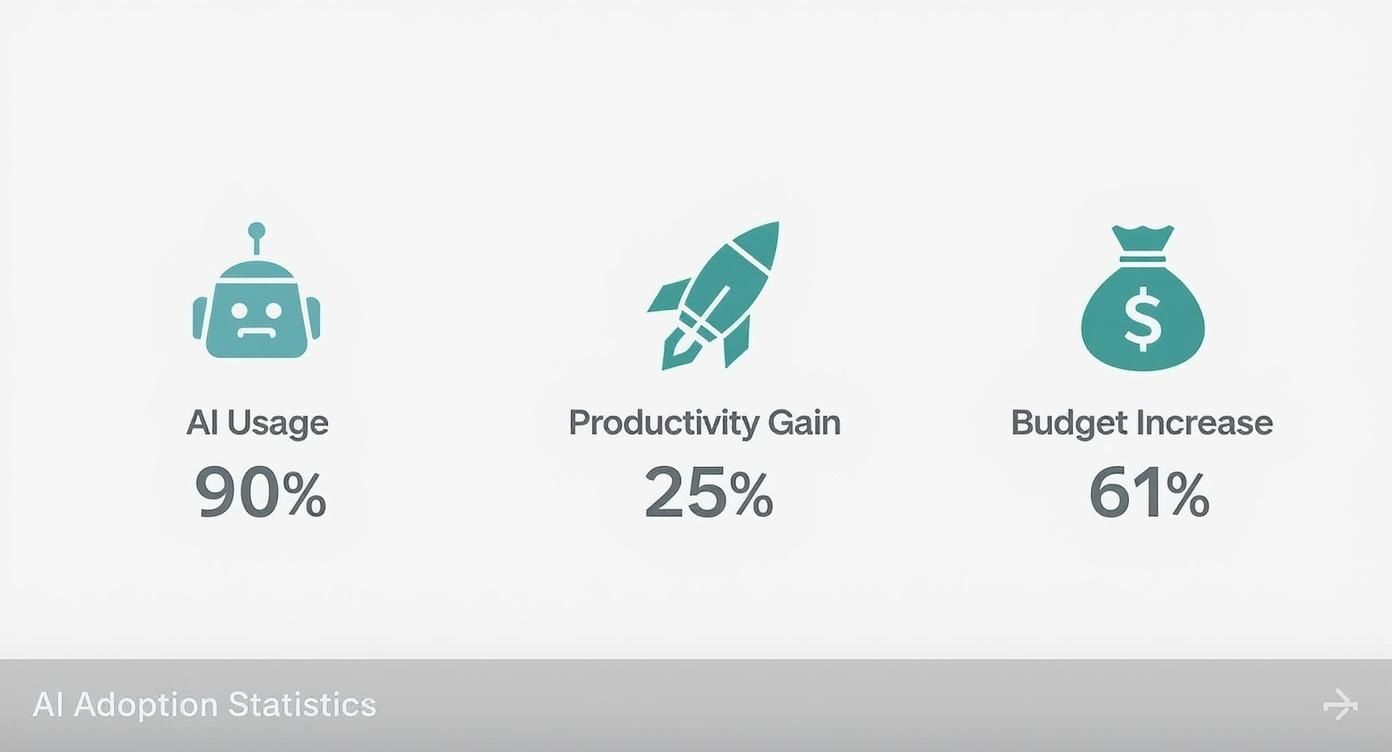
The data makes it clear: to get the most out of new tech, you first have to nail the fundamentals, like clear communication. Here’s how to start.
- Embrace Asynchronous Communication: Push for more communication through detailed documentation, well-written tickets, and threaded chats in tools like Slack or Teams. This keeps a record of conversations and, more importantly, protects your engineers’ focus time.
- Define a “Definition of Ready”: Before a single line of code is written, a task must meet a clear checklist. This ensures all requirements, designs, and success criteria are locked in from the start.
- Make Meetings Deliberate: If a meeting invite doesn’t have a clear agenda, a specific goal, and a list of only the essential attendees, question whether it needs to happen at all.
By systematically finding and fixing these common roadblocks, you can create a workflow that’s smoother, faster, and way more enjoyable for your entire engineering team.
How AI Is Transforming Engineering Workflows

Generative AI is no longer just a hot topic; it’s fundamentally changing how engineering teams build, test, and ship software. Once you get past the hype, you can see how AI is tangibly reshaping daily work. It’s less like a tool and more like a dedicated, highly skilled teammate.
The real magic here isn’t just about making one developer type faster. It’s about boosting the entire team’s ability to tackle complex problems.
AI is doing this by taking over the tedious, repetitive tasks that eat up so much of an engineer’s day. By offloading that cognitive weight, AI frees up developers to focus on what matters most: high-level architectural decisions and creative problem-solving that pushes a product forward.
AI as a Development Co-pilot
The most immediate change is happening right in the code editor. AI-powered tools are now baked into the development environment, offering real-time help that’s miles ahead of simple autocompletion.
- Intelligent Code Completion: Modern AI assistants don’t just suggest the next word; they can generate entire blocks of code, from complex functions to entire algorithms, just by reading the context of your file and a few comments. This dramatically reduces time spent on boilerplate and routine logic.
- Automated Test Generation: Writing good tests is crucial, but let’s be honest, it can be a grind. AI tools can analyze your code and instantly spit out a suite of relevant tests, giving you better coverage and higher quality with a fraction of the manual effort.
- Advanced Debugging Assistants: Instead of painstakingly tracing errors through lines of code, you can now just ask an AI to analyze stack traces, explain what a bug is doing, and suggest fixes. A frustrating debugging session becomes a guided, efficient process.
These features work together to create a smoother, less interrupted coding experience, helping engineers stay in that elusive “flow state” for longer.
Scaling Productivity Across the Team
But the real power of AI is how it scales. It’s a force multiplier for the entire team, not just an individual. When you weave AI into your team’s processes, it smooths out collaboration and breaks through common bottlenecks.
Code review is a perfect example. A solid AI code review process can act as a first line of defense, catching common errors, style issues, and even potential bugs before a human ever lays eyes on the pull request. This lets human reviewers focus their energy on the big-picture stuff—like the logic and architectural soundness of the change. The whole feedback loop gets faster and more valuable for everyone involved.
By handling the low-level, repetitive aspects of development, AI tools allow engineering teams to reallocate their most valuable resource—human ingenuity—to the most challenging and impactful problems.
This creates a powerful, positive cycle. Faster reviews lead to shorter cycle times, which means features get to users more quickly. That rapid feedback, in turn, helps the team learn, iterate, and improve at a pace that was previously unimaginable.
The Measurable Economic Impact of AI
This isn’t just theory; AI integration is delivering real, measurable economic gains. Since the explosion of generative AI in 2022, data shows a dramatic productivity spike in industries that have embraced it.
Sectors like software publishing have seen productivity growth nearly quadruple, jumping from an average of 7% between 2018–2022 to around 27% by 2024. In sharp contrast, industries with little to no AI exposure saw their growth actually dip over the same period.
What’s more, revenue per employee in AI-heavy industries is now growing at three times the rate of less exposed sectors. It’s clear that AI has become a critical competitive advantage. To dig into the numbers yourself, you can learn more about these productivity findings on PwC.com.
The data paints a clear picture: strategically using AI is no longer a “nice to have” for teams that want to stay in the game. It’s a core piece of modern productivity in engineering. By embracing these tools, teams don’t just speed up their work; they build better, more robust software that delivers real business value. The key is to see AI not as a replacement for developers, but as a powerful partner that enhances their skills and amplifies their impact.
Applying Digital Tools Beyond Software Development
The principles that drive productivity in engineering aren’t just for software developers. The same hunt for better visibility, smarter automation, and data-backed decisions is making waves in traditional fields like manufacturing, construction, and civil engineering. Just as software teams obsess over their pipelines, these industries are in the middle of their own digital shift.
This transition stretches the idea of a “workflow” beyond commits and deployments to cover the entire lifecycle of a physical project. The goals, though, look surprisingly familiar: slash costly delays, get teams to collaborate better, and deliver a higher-quality product. Instead of pull requests, think blueprints. Instead of code reviews, think structural stress tests.
A Universal Language of Efficiency
When you get right down to it, making any kind of engineering team more productive boils down to a few basic truths. It’s about having a single source of truth, catching mistakes before they become expensive disasters, and making sure everyone has the information they need, right when they need it. The tools might change, but the core philosophy doesn’t.
This is exactly where technologies that were perfected in the software world are now having a huge impact on more physical projects. Cloud platforms, IoT sensors, and powerful simulation software are creating a new reality for how things get planned, built, and maintained.
The core principles of boosting productivity—improving visibility, automating processes, and using data—apply across all engineering fields, connecting the lessons from software to the broader engineering world.
This shared DNA proves that whether you’re building a mobile app or a skyscraper, the fundamental challenges of coordination, quality control, and using resources wisely are always there.
Digital Tools in Traditional Engineering
Let’s look at how specific digital tools are changing the game in these industries.
- Digital Twins: This is simulation on a whole new level. A digital twin is a living, breathing virtual model of a physical object or system. For a manufacturing plant, it can run simulations of production lines to find bottlenecks before a single machine is even ordered. In construction, it can model a building’s energy use over 50 years, leading to incredibly efficient designs.
- IoT Sensors: Imagine tiny, connected sensors embedded in factory machines, bridges, or building materials, constantly streaming real-time data. This makes predictive maintenance possible—fixing a machine before it breaks down—and helps monitor the structural health of critical infrastructure to prevent catastrophic failures.
- Cloud-Based Collaboration Platforms: Huge engineering projects involve dozens of specialized teams, from architects to electricians, who are often spread all over the world. Cloud platforms act as a central hub for all project documents, plans, and conversations, ensuring everyone is working from the latest version and killing the expensive rework that comes from miscommunication.
These tools work together to create a far more predictable and controlled project environment, minimizing nasty surprises and maximizing efficiency.
The engineering and construction (E&C) sector is a perfect real-world example. Staring down persistent workforce shortages, firms are increasingly adopting digital tools to fill the gaps. In 2024-2025, the global E&C industry saw a 10% nominal increase in value, but that growth was threatened by a lack of skilled labor and constant project delays. To fight back, firms are bringing in cloud computing, IoT, AI, and digital twins to make their operations more efficient. According to Deloitte’s 2025 industry outlook, these technologies are now essential for offsetting labor shortages while also improving safety and project outcomes.
This strategic pivot shows that the push for technology-driven productivity isn’t just a software trend—it’s a fundamental shift happening across the entire engineering world.
It’s All About the Culture
Let’s be real. All the fancy tools, AI helpers, and complex metrics in the world are only half the story. Lasting productivity in engineering isn’t something you can buy with a better tech stack; it’s built on a foundation of trust and support. Without that, even the best tools will just gather digital dust.
The real engine behind continuous improvement is a culture where engineers feel safe. Safe to try new things, ask “dumb” questions, and yes, even mess up without getting thrown under the bus. This is what people call psychological safety, and it’s the bedrock of any team that consistently knocks it out of the park. When it’s not there, creativity and innovation simply stop.
What Psychological Safety Actually Looks Like
Psychological safety isn’t about removing accountability. Far from it. It’s about creating an environment where the team’s default setting is “let’s solve this together,” not “who can we blame?” In a culture like this, engineers are way more likely to flag a concern, pitch a wild idea, or just admit they’re stuck—all the things you need to happen to catch problems early and keep moving forward.
Leaders are the ones who set the tone here. It takes a conscious, consistent effort to steer the team’s focus away from individual scorekeeping and toward collective wins.
A high-trust, collaborative culture is the true operating system that powers everything else. When engineers feel safe, they’re free to take the smart risks that lead to breakthroughs.
This shift in mindset changes everything. Collaboration becomes second nature, and everyone feels a shared ownership over the project’s highs and lows.
Practical Steps for Leaders
Building this kind of culture doesn’t happen by accident. Here are three concrete things you can do to get started.
-
Hold Blameless Post-Mortems: When something breaks, the goal is to figure out the systemic “what” and “why,” not the “who.” This approach gets people to open up honestly, which is the only way the team can learn the right lessons and make sure it doesn’t happen again.
-
Make Knowledge Sharing a Ritual: Don’t just hope it happens; build it into your team’s routine. This could be anything from casual lunch-and-learns and internal tech talks to simply giving a shout-out when someone documents a tricky process. When knowledge flows freely, everyone gets better.
-
Celebrate the Team, Not Just the Hero: It’s so easy to praise the one developer who stayed up all night to fix a bug. The problem is, this can accidentally punish teamwork. Instead, make a huge deal out of recognizing collaborative wins—a thoughtful code review, a productive pairing session, or a project where the whole team clicked. This sends a powerful message: we succeed together.
When you put culture first—one built on safety, learning, and collaboration—you end up with a resilient and truly productive engineering team. In the end, it’s the people that unlock the full potential of any tool or process you put in place.
Your Engineering Productivity Scorecard
Making your engineering team more productive isn’t about a single silver bullet. It’s a constant cycle of measuring what you do, thinking honestly about what’s working (and what’s not), and tweaking your process along the way. When you track the right things, you start to see the hidden friction that slows your team down.
This whole process is about moving away from just counting lines of code and starting to focus on the actual impact your team is having. The trick is to draw a clear line from your team’s daily habits to your company’s biggest goals. For example, you can directly see how a small change in your code review process can speed up how often you deploy new features.
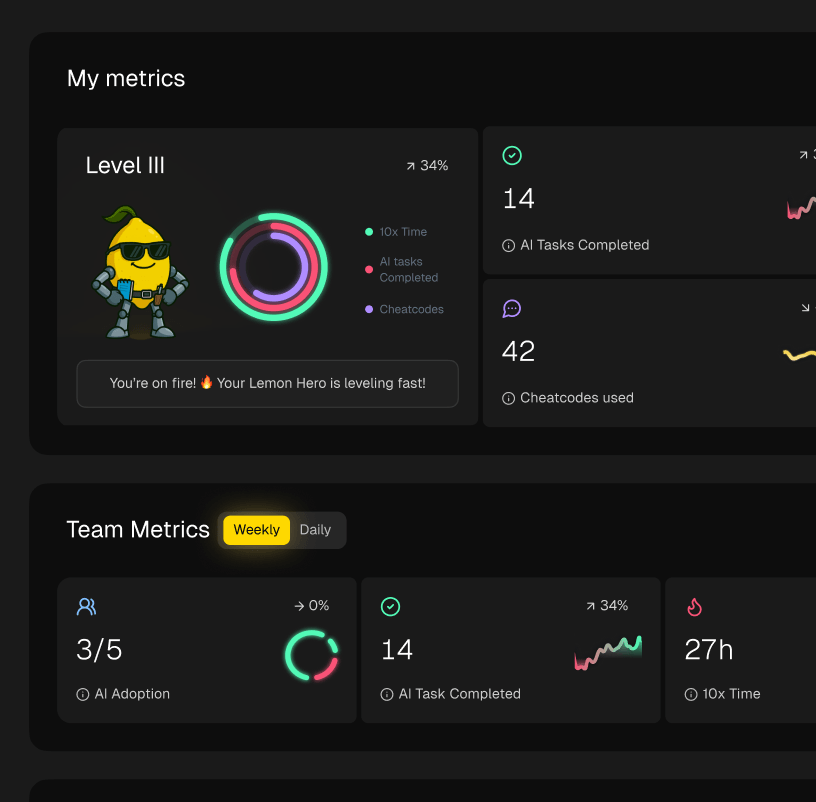
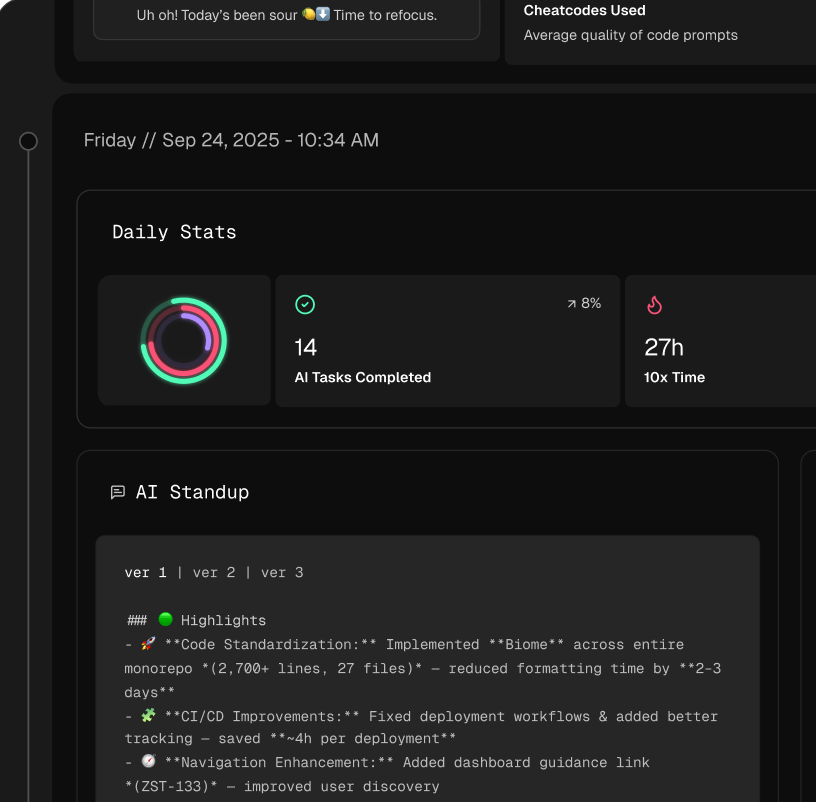
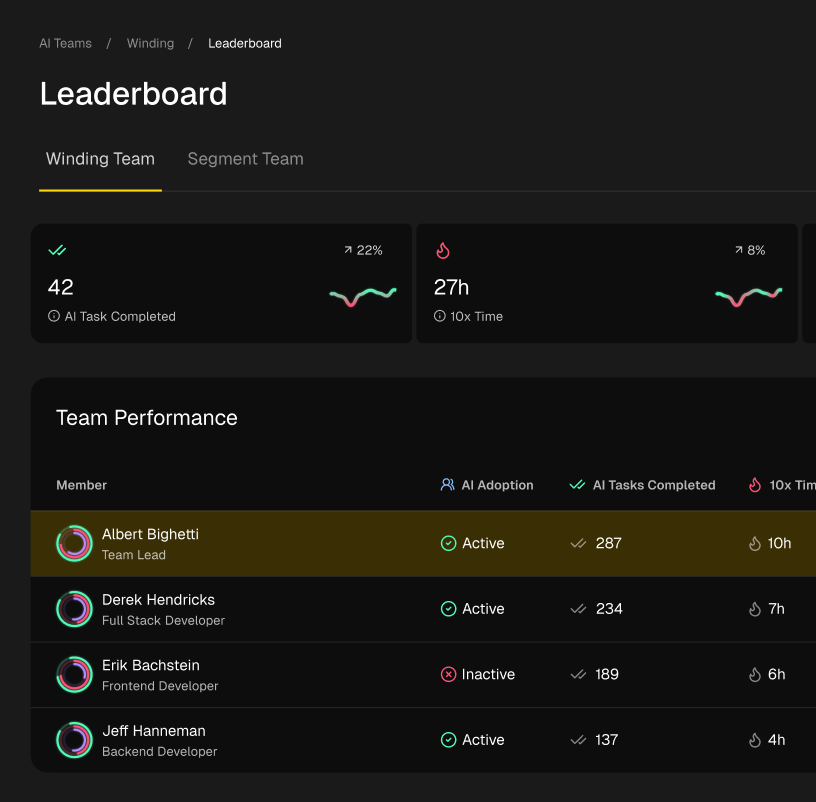
To get you started, we’ve put together a simple scorecard with the most important metrics and a few “cheat codes” to help you improve. If you want to go deeper on this, our guide on choosing the right KPI for engineering teams is a great next step.
Use this scorecard to find your biggest bottlenecks, protect your team’s focus time, and build a culture where everyone is always looking for ways to get better. Think of it as a starting point for turning those big goals into a daily reality.
Your Engineering Productivity Playbook
Turn these insights into a daily reality by removing friction, protecting focus, and building a culture of continuous improvement.
📊 Core Metrics
- Cycle Time — average time from first commit to production deployment
- Deployment Frequency — number of successful deployments per week or month
- Change Failure Rate — percentage of deployments that cause a production failure
🕹️ My Cheatcodes
- 🌱 Protect Flow State — ruthlessly cut unnecessary meetings and encourage asynchronous communication
- 🦎 Automate Everything — leverage AI and scripts for testing, code reviews, and deployments
- ⚡ Measure Outcomes, Not Output — abandon vanity metrics like lines of code for impact-focused DORA metrics
📈 Reflection Points
- 💡 What is the single biggest bottleneck currently slowing down our development cycle?
- 🧩 Does our team feel psychologically safe to admit mistakes and suggest radical ideas?
- 📘 Are we dedicating a consistent portion of our sprints to paying down technical debt?
Gallery
Lemon shots