Modern Leadership in Engineering: Your Playbook for Success in 2026
What does it really mean to be a leader in engineering today? Let’s get one thing straight: it’s no longer about being the most senior person in the room or the one who can write the most complex code. The role has evolved. True leadership is now about being a multiplier—someone who makes everyone on their team better, smarter, and more effective.
The Shift From Taskmaster to Multiplier
Not too long ago, the path to engineering management was often a reward for technical prowess. The best engineer became the manager. This created a culture of “taskmasters”—leaders who saw their job as assigning tickets, checking boxes, and pushing for deadlines. This approach was a bottleneck. It killed creativity and treated talented engineers like cogs in a machine.
Thankfully, that model is dead. Or at least, it should be.
Modern engineering leaders are multipliers. Their primary job isn’t to direct work; it’s to create an environment where great work can happen. They focus on coaching, mentoring, and clearing roadblocks so their team can truly own their work and innovate.
To dig deeper into the nuances of this evolution, it’s worth exploring what it takes to excel in leadership in a technology-driven world.
The table below breaks down this fundamental mindset shift.
Traditional Manager vs. Modern Engineering Leader
| Dimension | Traditional Manager (The Taskmaster) | Modern Leader (The Multiplier) |
|---|---|---|
| Primary Focus | Managing tasks and tracking ticket progress. | Developing people and growing their capabilities. |
| Source of Value | Their own technical contributions and directives. | The collective output and impact of their team. |
| Communication Style | Top-down directives. “Do this.” | Context-driven. “Here’s why this matters.” |
| Success Metric | Features shipped, tickets closed. | Team growth, autonomy, and business impact. |
| Problem Solving | Provides the answers. | Asks the right questions to guide the team. |
This isn’t just a semantic difference; it’s a completely different operating system for leadership.
From Directing Work to Developing People
This shift boils down to one simple question: are you managing tasks or growing people? A taskmaster asks, “Is that Jira ticket finished?” A multiplier asks, “What roadblocks are you hitting on this project, and what did we learn from the last one?”
It’s a subtle but powerful change. It puts the focus on continuous improvement and personal growth, not just output. In 2026, skills like empathy and coaching are what set exceptional engineering leaders apart. This people-first approach has a direct impact on the business. Data shows that employees in organizations with strong purpose and alignment are 4.1 times more likely to stay. In a competitive market, that’s not a soft skill—it’s a survival strategy.
Aligning Technical Strategy With Business Goals
The other piece of the puzzle is thinking beyond the code. A modern leader must be the connective tissue between the engineering team and the larger business. Your job is to make sure the brilliant work your team is doing actually matters.
This means you’re constantly:
- Translating Business Needs: You have to explain the why. Why are we building this feature? What customer pain are we solving? Without this context, work is just a list of instructions.
- Prioritizing for Impact: You guide the team to focus on the work that will move the needle for the business, not just the projects that are technically interesting.
- Managing Stakeholders: You’re the chief communicator, translating progress, risks, and trade-offs to executives, product managers, and other departments in a way they can understand.
Without this strategic alignment, you get teams building technically beautiful features that nobody uses. That’s not a success story; it’s a waste of talent and a failure of leadership. We cover how to track this alignment in our guide to productivity in engineering.
A modern engineering leader’s success is measured not by their own output, but by the growth, autonomy, and impact of their team. They create an environment where smart people can do their best work.
The Five Pillars of Effective Engineering Leadership
What really separates a good engineering manager from a truly great one? It’s not about just keeping projects on track. Moving from manager to leader means mastering a few core skills that have less to do with code and more to do with people, strategy, and execution.
These five pillars aren’t just theory. They’re a practical roadmap you can use to see where you are today and where you need to focus your energy to grow.
This diagram shows how modern leadership connects high-level strategy with the deeply human skills—like empathy and mentorship—that make it all work.
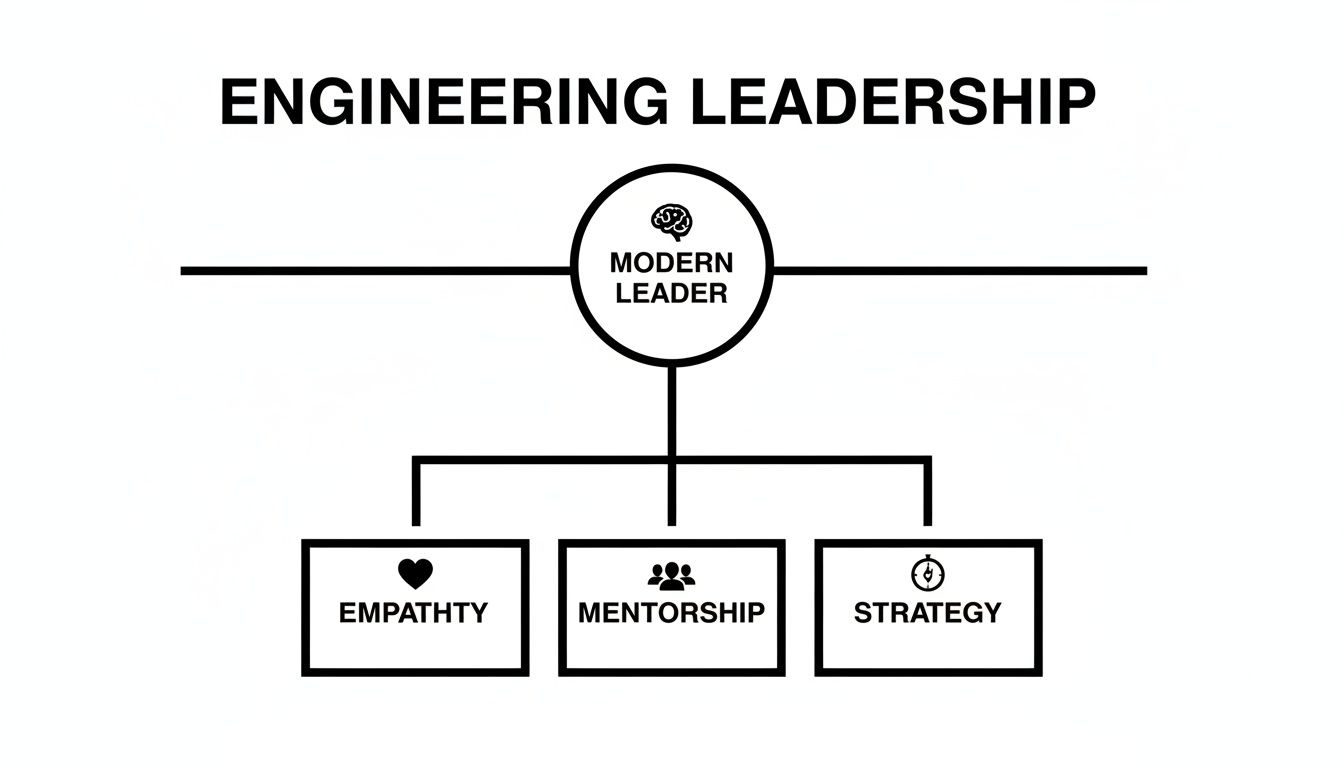
As you can see, strategic thinking is the goal, but it’s supported entirely by a foundation of people-first skills.
1. Maintain Technical Credibility
Let’s be clear: your team doesn’t expect you to be the best coder anymore. But they absolutely need to trust your technical judgment. Technical credibility isn’t about getting into the weeds of every pull request; it’s about having enough depth to steer architectural decisions, ask smart questions, and guide high-level technical debates.
An engineering leader’s credibility comes from their ability to listen, ask incisive questions, and trust the talents of the people around them. Their job is to create the conditions where smart people can do their best work.
How do you keep this credibility? Stay connected. Join design reviews, actually read the technical docs, and make sure you understand the trade-offs your team is making. Your goal is to be a knowledgeable sounding board, not a disconnected supervisor.
2. Focus on Growing Your People
Your most important job is to make your people better. A great leader is a coach, plain and simple. You’re there to develop the skills and careers of every single person on your team. This means shifting your mindset from just assigning tasks to creating real growth opportunities.
This looks like:
- Having career conversations that aren’t just about the next sprint.
- Giving specific, actionable feedback that an engineer can actually use.
- Finding chances for your team members to step up and stretch themselves.
The classic mistake here is hoarding your best talent or only giving work to the person who can do it the fastest. Great leaders build teams that are so strong, they could run successfully without them. That journey starts by investing in each person’s growth.
3. Drive Strategic Impact with Product Thinking
Even the most elegant code is a waste of time if it doesn’t solve a real customer problem or help the business. As a leader, you are the bridge between the technical work and the company’s strategy. You have to constantly translate business goals into technical plans and, just as crucially, explain what the engineering team is doing in terms of business value.
Make sure your team knows the “why” behind their work. When engineers feel connected to the mission, they become more creative, motivated, and engaged. It’s your job to provide that context and help them focus on the work that truly matters.
4. Build a System for Flawless Execution
Ideas are cheap. Execution is everything. An effective leader creates strong systems and processes that let the team ship high-quality software predictably. This isn’t about adding red tape; it’s about clearing a smooth path so work can flow from an idea to the customer’s hands.
This pillar is all about:
- Removing friction and bottlenecks from the development cycle.
- Putting effective quality checks in place to find problems early.
- Driving clear, proactive communication, which is non-negotiable for remote and hybrid teams.
When you get this right, the process feels invisible. It just works, letting your team focus on solving interesting problems instead of fighting with the system.
5. Be the Team Builder
The final pillar is your duty to actively build the team. This goes way beyond just hiring. It’s about creating a fantastic onboarding experience and fostering an inclusive culture where everyone feels they can do their best work.
Hiring strategically means you’re not just looking for a technical skill set; you’re finding people who add to the team’s culture and values. Onboarding is your first, best chance to set a new hire up for success by immersing them in your tools, rituals, and mission from day one. By constantly investing in your team, you’re building a resilient, collaborative unit that can tackle anything.
How to Build a High-Performance Engineering Culture

A great engineering culture is the one advantage your competitors can’t copy. It’s not about the free snacks or the ping-pong table; it’s the invisible force that shapes how your team tackles problems, collaborates, and improves. Culture isn’t something that just happens—it’s designed.
This is what truly attracts and keeps great engineers. It’s the difference between a team just checking off tickets and one that feels a genuine sense of ownership. As an engineering leader, making that environment a reality is one of your most important jobs.
Designing Your Core Engineering Rituals
Culture is built through your team’s daily habits and routines. When you design these rituals with intention, they naturally encourage the behaviors you want to see, like autonomy, teamwork, and a drive to get better. If you don’t, they just become friction points that waste everyone’s time.
Let’s focus on three core rituals every engineering leader needs to get right.
- Onboarding: This is your first, best chance to show a new hire how your team really works. A solid onboarding plan does more than just set up a laptop. It’s a structured journey to connect them with the right people, set clear expectations, and guide them to an early win.
- Stand-ups: Let’s be honest, most daily stand-ups are a waste of time—just a series of status reports for the manager. Their real purpose is to unblock each other, and that’s why modern teams are moving to async formats.
- Communication: The way your team shares information directly impacts its speed and clarity. For any distributed team, getting asynchronous communication right is a must. It cuts down on meeting fatigue and creates a clear, written record of key decisions.
An exceptional culture is simply the sum of your daily habits. As a leader, your job is to design rituals that reinforce autonomy and shared purpose, turning good habits into your team’s default operating mode.
Rethinking the Daily Stand-up
Traditional stand-ups are broken. They interrupt deep work and usually end up with people just listing off tasks for a manager. The goal should be peer-to-peer alignment, not top-down reporting.
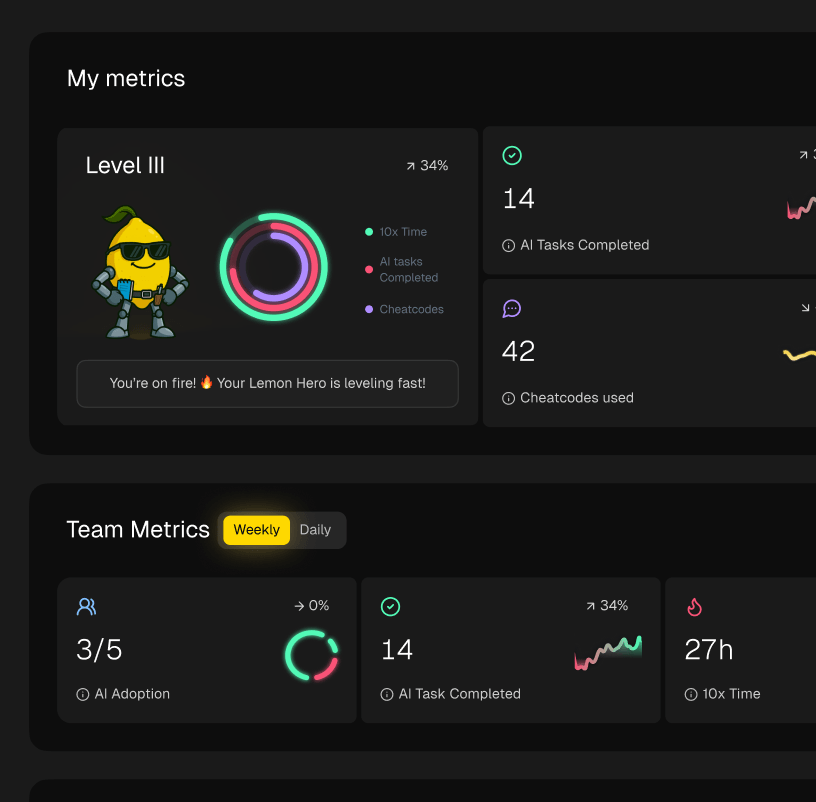
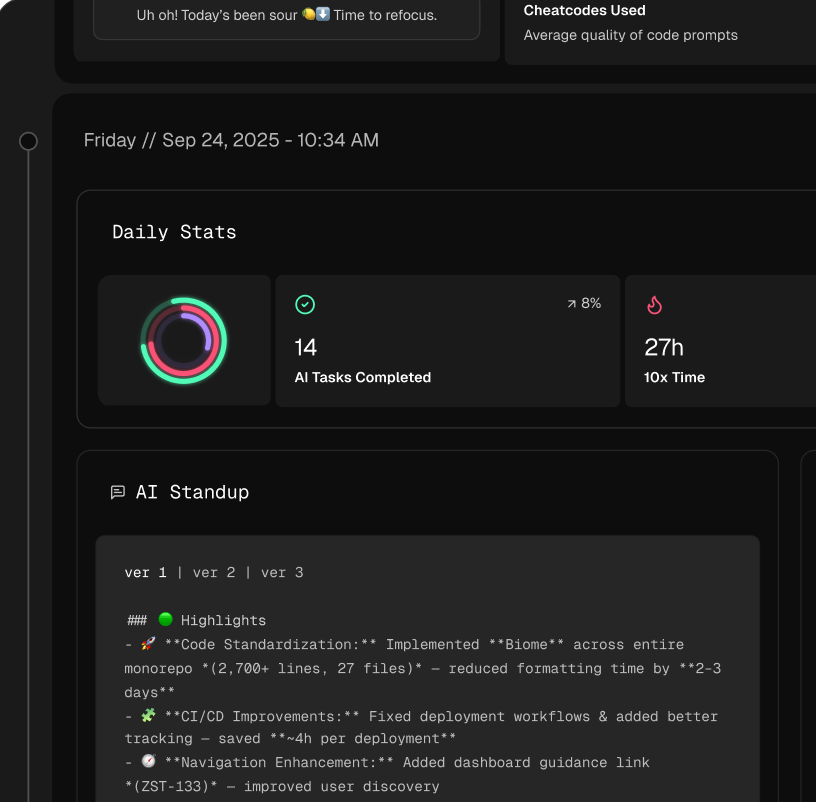
This is where AI-powered async stand-ups, managed through tools like Zest, are a complete game-changer. The AI automatically pulls a developer’s wins, blockers, and time saved right from their code editor and summarizes it. These AI Standups give the whole team rich context without forcing another meeting. This protects maker time and turns the daily update into something genuinely useful. To improve how your team shares knowledge, explore some knowledge sharing best practices that align with this new async approach.
Culture as a Retention Strategy
The competition for engineering talent is fiercer than ever. With some studies suggesting hiring timelines could double by 2026, a strong culture has become your most effective retention tool. The smartest engineering leaders are focusing on three things: building internal upskilling programs to boost AI literacy and coding days by 15%, redesigning career paths to reward architecture and systems thinking, and sourcing talent globally.
When you build a culture with clear growth paths and a real commitment to upskilling your own people, you send a powerful message: we are invested in you. That sense of investment is worth far more than any short-term perk. For a closer look at creating this kind of environment, check out this excellent guide on how to build high-performing teams. Ultimately, great engineering leadership means building a place where the best people want to stay.
4. Measure What Matters With Modern, AI-Powered Metrics

As an engineering leader, you can’t fix what you can’t see. For years, we got stuck measuring the wrong things—counting lines of code or tracking commit frequency. These are classic vanity metrics. They tell you your team is busy, but they say nothing about whether their work is actually making a difference.
To lead effectively, you have to measure what truly matters. It’s a mindset shift from measuring raw activity to understanding tangible outcomes. The right metrics give you a clear window into your team’s health, speed, and quality, allowing you to coach them toward real business goals instead of just managing a to-do list.
A Modern Framework For Engineering Metrics
A healthy metrics program gives you a holistic view by focusing on three core areas: Delivery, Quality, and AI-assisted Productivity. Looking at these together prevents you from over-optimizing one area at the expense of another—like pushing for speed so hard that code quality nose-dives.
Think of it like a three-legged stool. If one leg is weak, the whole thing wobbles.
- Delivery: This isn’t just about shipping fast; it’s about how quickly your team gets value to your users. It measures the entire journey from an idea to a live feature.
- Quality: This focuses on the stability and reliability of what you ship. Great quality means fewer production fires, less time spent on bug fixes, and more energy for building what’s next.
- AI-Assisted Productivity: This is about removing friction so your developers can do their best work. In 2026, a huge part of this is understanding how they’re using AI tools and protecting the deep work time that those tools enable.
If you’re just getting started with a data-driven approach, established frameworks can be a huge help. For a deeper dive, check out our guide on DORA metrics and software performance.
From Manual Tracking to AI-Powered Insights
Not long ago, gathering these metrics was a painful, manual slog through spreadsheets and project management tools. Today, AI-powered platforms like Zest give you real visibility into your team’s workflow automatically. Better yet, these tools don’t just spit out numbers; they connect the dots and provide the context behind the data, turning it into real coaching opportunities.
This change frees you up to stop being a data-gatherer and start being a data-driven coach.
An engineering leader’s strength is to listen, ask questions, and lean into the talents of the people around them. My job is to create the conditions where they can do their best work.
Instead of just asking, “What did you get done this week?”, you can have a much more powerful conversation: “I noticed the new AI agent helped us cut down review time. Where else are you seeing wins, and where are you getting stuck?”
A Closer Look: The Modern Engineering Metrics Framework
To put this into practice, here’s a breakdown of the key metrics modern engineering leaders are tracking. This framework helps you measure team health, delivery velocity, and the impact of AI adoption in a balanced way.
| Domain | Key Metric | What It Measures | How Zest Helps |
|---|---|---|---|
| Delivery | Cycle Time | The time from the first commit to production release. Shorter cycles mean faster value delivery. | Automatically tracks cycle time across projects, highlighting bottlenecks in the review or deployment process. |
| Quality | Change Failure Rate (CFR) | The percentage of deployments that cause a production failure, requiring a hotfix or rollback. | Correlates deployments with incidents, giving you a clear, real-time view of your CFR without manual tracking. |
| AI Productivity | AI Adoption Rate | How frequently and effectively your team uses AI assistants for coding, testing, and documentation. | Surfaces usage patterns, identifies power users, and shows which AI tools are actually saving developer time. |
| AI Productivity | AI-Assisted Time Saved | The quantifiable time developers save by using AI prompts and workflows for specific tasks. | Calculates time saved by analyzing AI interactions, making it easy to spot and share high-impact “cheatcodes.” |
This table isn’t just a list of KPIs to hit; it’s a guide for asking better questions. It helps you see the story behind the numbers, so you can focus on building a high-performing, sustainable team.
Using AI Metrics For Coaching, Not Surveillance
Let’s be clear: the point of these metrics is insight, not surveillance. Used correctly, they build trust. Used poorly, they create a culture of fear.
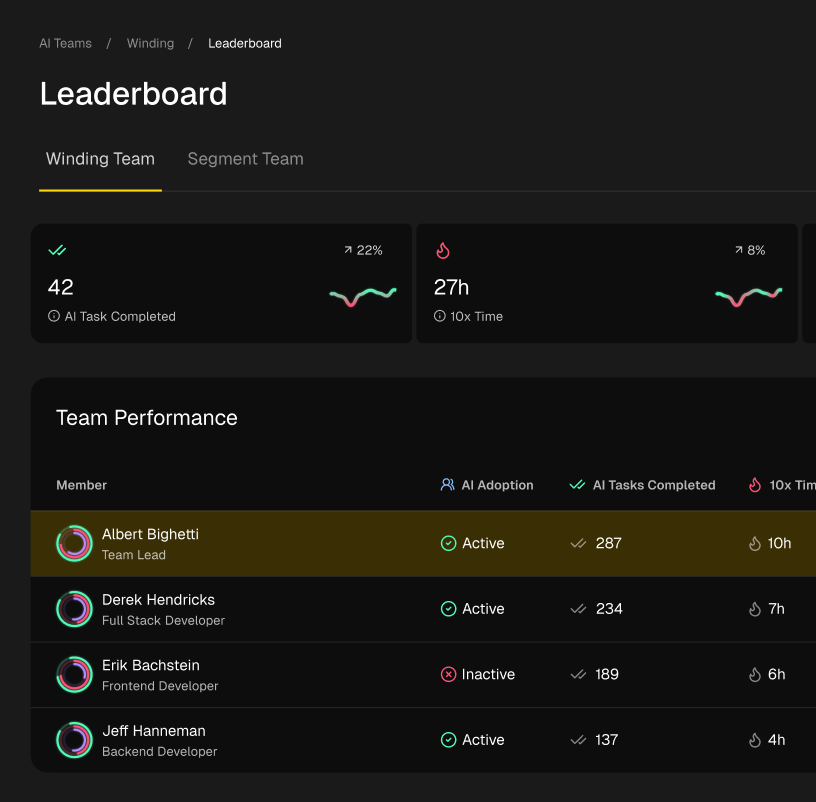
When you use a tool like Zest, you can see how AI is being adopted, identify which prompts are saving the most time, and spot where developers are hitting walls. This data is the foundation for genuinely helpful coaching.
Here’s how you can put this visibility to work:
- Celebrate AI-Assisted Time Savings: When you see that a new prompt strategy cut code review time by 30%, share that win! It’s the best way to encourage others to try it.
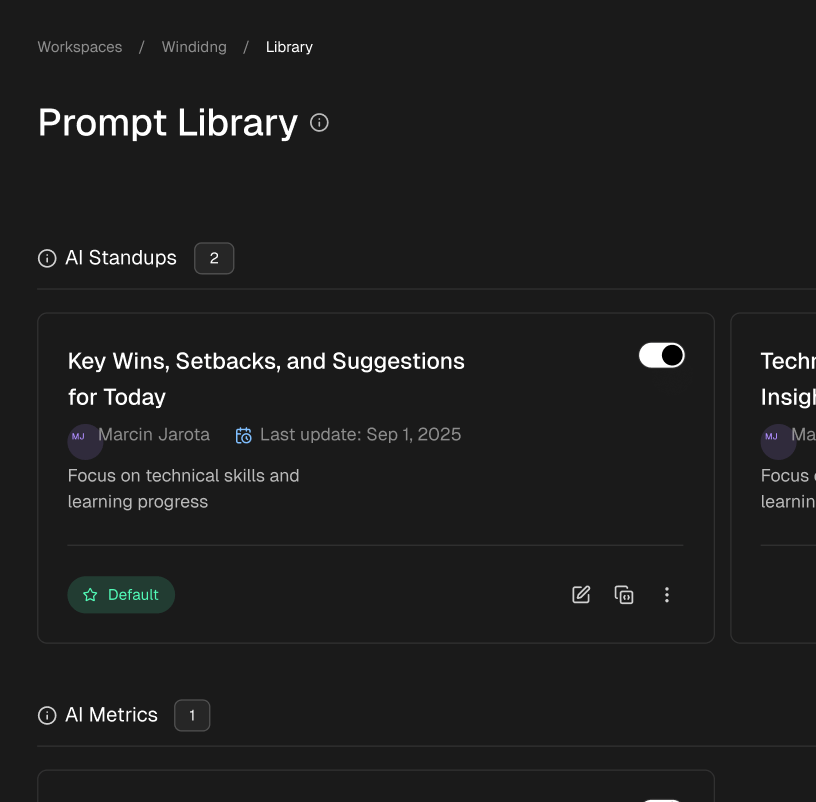
- Surface and Share ‘Cheatcodes’: Has one of your engineers discovered a brilliant prompt for writing unit tests? Zest can surface that “cheatcode” so you can share it with the whole team, scaling that individual’s discovery into a team-wide best practice.
- Spot ‘AI Hints’ for Coaching: If you see a developer spinning their wheels trying to get a useful response from an AI assistant, it’s not a performance issue—it’s a coaching opportunity. These “AI hints” show you exactly who could benefit from a quick tip or a better prompt template.
By using data this way, you make it clear that the goal is to lift everyone up, not to micromanage individuals. You’re building a system where the team learns together from both its successes and its challenges—and that’s the heart of great leadership in engineering.
Fostering Pragmatic Innovation Within Your Team
Let’s be honest: true innovation isn’t about chasing every shiny new tool that pops up on Hacker News. It’s about solving real-world problems in a way that actually moves the business forward. Your job as a leader is to take all that creative energy from your team and focus it on things that matter.
It comes down to striking the right balance between exploring new ideas and actually shipping code. You have to give your team the freedom to experiment with powerful tools like AI, but you also need to hold those experiments accountable for making a real difference. Great leadership in engineering is the magic ingredient that turns a cool concept into a product people will pay for.
Give Them Room to Play, But Keep Score
Innovation can’t happen if your engineers are afraid to fail. You have to create an environment where trying something new—and not quite getting it right—is seen as a learning opportunity, not a mistake. Without that psychological safety, people will just stick to what they know, and your team’s growth will flatline.
But that freedom needs a little structure. What we’re seeing across the industry in 2026 is a big swing away from just adopting AI for the sake of it and toward getting a measurable return. The focus is now on disciplined engineering and quantifiable results. As some recent studies on global innovation leadership point out, it’s about building in governance from the get-go, not as an afterthought.
Here’s how you can strike that balance:
- Create “sandboxes” for innovation: Set aside dedicated time for exploration. This could be a recurring “hack day” or even just 10% of a sprint where engineers can tinker with new tech without the pressure of a deadline.
- Define what “winning” looks like: Before starting an experiment, get everyone aligned on two simple questions: “What problem are we trying to fix?” and “How will we know if we’ve succeeded?” This keeps exploration focused on a purpose.
- Encourage small, fast bets: Instead of kicking off massive, multi-month R&D projects, push for quick, small-scale experiments to see if an idea has legs. Fail fast, learn faster.
This approach gives your team the creative breathing room they need, while making sure their efforts are always tied to tangible goals.
Innovation Needs Guardrails, Not Gates
Letting everyone do their own thing with powerful new tech like generative AI is a recipe for trouble. You need clear guidelines from day one. This isn’t about killing creativity—it’s about steering it in a safe and productive direction.
Good governance starts by asking a few simple questions before a new tool gets rolled out to the whole team:
- Security: How does this tool handle our code and customer data? Is it secure?
- Consistency: How do we make sure we’re all using this in a way that aligns with our engineering standards?
- Efficiency: How do we capture and share the good stuff so we’re not all reinventing the wheel?
The best engineering leaders don’t just allow innovation; they build a system for it. They create guardrails that empower teams to experiment safely and productively, turning individual discoveries into organizational strengths.
For example, a tool like Zest can help by simply making AI usage visible. You can see which prompts and workflows are actually saving people time and which ones are just noise. This visibility acts as a form of lightweight governance, letting you guide your team toward what works without being a micromanager.
Turning Good Ideas Into Great Products
At the end of the day, innovation is only useful if it results in a product or feature that ships. The journey from a spark of an idea to a released feature is where strong leadership really shines.
You are the one who builds the bridge from experiment to execution.
- Create a clear hand-off process: When an experiment shows promise, have a simple way for it to “graduate” into a real project. This could be a quick demo for the team, a one-pager on the results, and a clear case for why it’s worth building.
- Share what you learn—good and bad: Make sure the lessons from every experiment, successful or not, are documented and shared. This builds the team’s collective brainpower.
- Celebrate the practical wins: When a team successfully takes an innovative idea and turns it into something real, celebrate it. Publicly recognize their work. This shows everyone what you value: not just creativity, but results.
By putting this kind of disciplined, supportive framework in place, you’re not just encouraging your team to have great ideas—you’re giving them a path to bring those ideas to life.
Common Questions About Engineering Leadership
Moving up in engineering isn’t always a straight line. The skills that made you a phenomenal individual contributor aren’t the same ones that will make you a great leader. It’s a whole new ballgame, and it’s natural to have questions.
Let’s tackle some of the biggest ones that come up on this journey.
How Do I Transition From an Engineer to a Leader?
The biggest hurdle most new leaders face is the mental shift from doing the work to enabling others to do their best work. It’s a profound change in focus. You’re no longer the star player; you’re the coach who builds a winning team.
The best way to start is to act like the leader you want to be, right now.
- Start mentoring: Take a junior engineer under your wing. This is the single best way to start building your coaching muscle.
- Own the process: Don’t just show up to meetings. Volunteer to run project kick-offs, retrospectives, or design reviews. This shows you can think bigger than a single task.
- Become a translator: Practice explaining complex technical decisions to product managers or other non-technical folks. Clear communication is a leadership superpower.
Most importantly, tell your manager you want this. Be direct about your ambitions. Ask for their honest feedback and for specific chances to grow in those ‘Five Pillars’ we talked about, especially when it comes to developing people and thinking strategically.
What Is the Most Important Skill for an Engineering Leader Today?
Your technical credibility is the price of admission. It’s what gets you in the room. But what will define your success once you’re there is coaching.
It’s the one skill that separates a manager who just assigns tickets from a leader who builds talent. Your ability to give direct, constructive feedback, help people navigate their career paths, and unblock them when they’re stuck is what truly multiplies your impact.
A great coach doesn’t just improve performance on the current project; they elevate the entire team’s capability for every project that follows. In a market where your best engineers have plenty of options, being the leader they want to work for is your ultimate retention tool.
How Do I Measure the ROI of AI Coding Tools?
You have to look past the vanity metrics. Counting lines of AI-generated code is like measuring a writer’s productivity by their word count—it tells you nothing about the quality or the impact.
The real value of AI tools isn’t just writing code faster. It’s about eliminating friction. It’s in unblocking developers, shrinking review cycles, and freeing up mental energy for the truly hard problems.
To get a real sense of ROI, you need to connect tool usage to the outcomes that matter. With a platform like Zest, you can start tracking tangible signals:
- AI Adoption: Who is actually using the tools? Is it your whole team or just a few power users?
- Time Saved on Tasks: Are the tools actually helping developers get unstuck faster or speed up tedious work?
- Reduction in Blocked Time: Is AI helping your team find answers without having to wait for a senior engineer?
Take that data and connect it to a core delivery metric like Cycle Time. If you see a team’s AI adoption go up and their cycle time go down, you’re onto something. Don’t forget to ask about it in your one-on-ones, either. Understanding how these tools affect developer happiness is a huge, often overlooked, part of the ROI.
How Can I Build a Strong Remote Engineering Culture?
Great remote cultures are built, not stumbled upon. You have to be incredibly intentional about it, especially when you can’t rely on hallway conversations or team lunches.
It starts with mastering asynchronous communication. This isn’t just about using Slack; it’s about creating a system where people can contribute effectively without being online at the same time. This is your number one defense against meeting fatigue.
Next, document everything. Your onboarding process, your code review standards, your promotion criteria—it all needs to be written down and easily accessible. Clear, documented processes create a fair and transparent environment.
Finally, lean on tools that support this new way of working. AI-powered async standups in a tool like Zest can keep everyone in sync without adding another calendar invite. But remember, tools support culture—they don’t create it. You still need to make time for genuine human connection, whether it’s through high-quality one-on-ones focused on growth or virtual events that are actually fun.
Ready to Level Up Your Engineering Leadership?
Becoming a great engineering leader isn’t about having all the answers. It’s about asking the right questions and focusing on what truly moves the needle. Modern leadership is about cultivating a high-performing environment where your team can thrive. It all boils down to a fundamental shift in mindset: coach, don’t command. Your role isn’t to be the smartest person in the room doling out tasks. It’s to be the person who develops your engineers’ skills, removes obstacles, and gives them the autonomy to solve problems. To make this practical, remember to measure what matters—focus on outcomes like team cycle time and AI adoption, not vanity metrics. By combining a coaching mindset with data-driven insights, you build a resilient, innovative team where the best people want to stay and grow.
Level Up Your Engineering Leadership
Turn your team into a high-performing, innovative unit by shifting from taskmaster to coach.
📊 Core Metrics
- Team Cycle Time — measures the speed from first commit to production release
- AI Adoption Rate — tracks how many engineers are leveraging AI tools effectively
- Developer Retention — gauges team health and leadership effectiveness over time
🕹️ My Cheatcodes
- 🌱 Coach, Don't Command — focus on developing people's skills and autonomy, not just managing their tasks
- 🦎 Measure Impact, Not Activity — ditch vanity metrics like LOC; track what moves the business needle
- ⚡ Make AI Wins Visible — use data to surface and share effective AI "cheatcodes" across the team
📈 Reflection Points
- 💡 Am I spending my time on tasks or on growing my people?
- 🧩 Do our team metrics show business value or just engineering busywork?
- 📘 Can I identify which AI patterns are actually saving time vs. creating noise?
Gallery
Lemon shots