Solving the Top 5 Issues in Engineering Teams

Is your roadmap slipping? Is team morale taking a nosedive? Chances are, you’re dealing with one of the classic issues in engineering that silently grinds progress to a halt. These aren’t just one-off problems; they’re often a tangled mess of technical debt, process bottlenecks, skill gaps, and the chaotic rush to adopt new tools.
The Hidden Problems Slowing Down Your Team
When a project falls behind, it’s tempting to point fingers at a single bug or an individual’s performance. But the real culprits are usually systemic and deeply intertwined. I like to think of them as tangled wires under the floorboards—you can’t get the power back on until you trace each one back to the source.
The real trap is how these problems feed each other, creating a vicious cycle. For instance, a fuzzy project requirement (a process issue) forces a developer to guess, leading to quick-and-dirty code (technical debt). That messy code then becomes a nightmare for new hires to work with, making your talent gap feel even wider. This guide will help you look past the surface-level symptoms and get to the root of what’s really going on.
Unpacking the Core Challenges
The most persistent engineering issues aren’t just about code; they’re about operations, culture, and people. They show up in different ways, but they all drain your team’s energy and kill innovation.
-
Technical Debt: This is more than just “messy code.” It’s the silent tax you pay for every shortcut, outdated library, and poor architectural choice. It makes every new feature more difficult and expensive to build. In fact, some studies show developers spend a staggering 42% of their time just wrestling with technical debt.
-
Process Friction: Think slow code reviews, endless meetings that go nowhere, and manual deployment processes. These are the bottlenecks that create a constant “hurry up and wait” dynamic, leaving even your best engineers feeling stuck.
-
Talent and Skills Gaps: Finding and keeping great engineers is a constant battle. On top of that, you have to keep your current team’s skills sharp in a world where technology, especially AI, changes in the blink of an eye.
-
Communication Breakdowns: Vague status updates, siloed information, and the inherent difficulties of remote work create misalignment. Truly mastering the challenges of working remotely is key to preventing the isolation and digital fatigue that fuel these breakdowns.
The diagram below shows just how connected these issues are. Tech debt, process friction, and talent gaps don’t exist in a vacuum—they form a web that can trap your entire team.

As you can see, a weakness in one area puts immediate pressure on the others. This is what slows the whole engineering engine down. Once you grasp this, you can stop just fighting fires and start building a more resilient, effective team.
Key Engineering Issues and Their Business Impact
To make it even clearer, here’s a quick breakdown of these five critical engineering challenges, what they look like in the real world, and how they hit the bottom line.
| Engineering Issue | Common Symptoms | Primary Business Impact |
|---|---|---|
| Technical Debt | Slow development cycles, frequent bugs, high cost of change, developer frustration. | Delayed time-to-market, increased maintenance costs, reduced product quality. |
| Bugs & Incidents | Unhappy customers, reactive “firefighting” mode, dips in system reliability. | Reputational damage, customer churn, wasted engineering resources. |
| Process Bottlenecks | Long wait times for reviews, delayed deployments, inefficient meetings. | Decreased team velocity, lower productivity, missed deadlines. |
| Collaboration Issues | Misaligned teams, knowledge silos, lack of clear ownership, remote work friction. | Duplicated work, poor decision-making, slower innovation. |
| Tooling & AI Gaps | Manual toil, inconsistent AI usage, inability to measure AI impact on workflows. | Wasted time, competitive disadvantage, poor return on AI investments. |
Understanding this table is the first step. Recognizing these symptoms in your own team is how you start to turn things around. These aren’t just “developer problems”—they are business problems that demand real solutions.
1. Technical Debt: The Silent Killer of Productivity
Technical debt isn’t just “messy code.” Think of it as the invisible interest you pay on shortcuts taken in the past. It’s like putting a quick fix on a credit card—it feels fast and easy now, but the bill always comes due. Eventually, your team spends more time paying off that “interest” (fixing old problems, working around brittle code) than building anything new.
This is easily one of the most common and damaging problems an engineering team faces, mostly because it creeps up on you. A rushed architectural decision here, a neglected test suite there… each shortcut adds another layer of complexity. Before you know it, your once-agile system becomes a house of cards.
The Warning Signs of High Technical Debt
So, how do you know if you’re drowning in debt? The signs are often behavioral long before they show up in system crashes. You can see it in the team’s daily friction.
Are there certain parts of the codebase that everyone dreads touching? Is there a specific module that seems to sprout a new bug every week? When developers actively avoid an area of the code like it’s a haunted house, you’ve found a pocket of high technical debt.
A classic tell-tale sign of overwhelming technical debt is when a simple, small feature request requires a monumental effort. If adding a button means editing ten different files and praying during deployment, you’re paying a steep price for past decisions.
Other critical symptoms to watch for include:
- Declining Velocity: The team is working just as hard, but shipping less and less over time. It feels like you’re running in mud.
- Painful Onboarding: It takes new hires forever to get up to speed because the system is too tangled and undocumented to grasp.
- A Brittle Codebase: Making a small, seemingly safe change in one place causes unexpected bugs to pop up somewhere completely different.
A Toolkit for Diagnosing Debt
The goal isn’t to eliminate all debt—sometimes a shortcut is a strategic business decision. The real key is managing it wisely, and that starts with knowing where it is and how bad it is. You need to move from a vague feeling of “our code is messy” to having a concrete map of the problem areas.
This is where data-driven tools come in. For example, you can use AI Metrics to see the “stuck time” associated with specific files. If developers are consistently spending hours wrestling with the same component, that’s your smoking gun—it’s a prime candidate for refactoring. For a more detailed look at tackling this, check out this practical guide on how to manage technical debt.
Making technical debt visible is the first and most important step. It transforms the problem from a hidden source of drag into a measurable issue you can prioritize against new features. With the right data, you can build a solid case for dedicating time to cleanup work that will pay huge dividends in future speed and stability. For more hands-on strategies, our complete guide on reducing technical debt has actionable steps you can start using today.
Navigating the ever-widening engineering talent gap has become a defining challenge for today’s leaders. It’s no longer about just fixing internal processes or paying down tech debt; the battle for skilled engineers is relentless. The old playbook of hiring your way out of a productivity jam just doesn’t work anymore.
The gap between the demand for talent and the available supply is growing, and it’s forcing a real shift in how we think about building and scaling engineering teams.
This isn’t a problem confined to one region or industry; it’s a global reality. The demand for technical work is simply accelerating faster than the pool of qualified engineers can keep up. In the UK, for instance, Engineering UK’s 2025 report noted that while 6.4 million people work in engineering and tech roles (making up 19.3% of the total workforce), the country still faces an annual shortfall of 37,000–59,000 engineers.
The story is similar in the United States. The Bureau of Labor Statistics projects about 186,050 engineering openings each year, driven by both newly created jobs and the need to replace those leaving the field. You can dive deeper into these numbers by reading the full 2025 engineering talent market update.

On top of the raw numbers, two other factors make the situation even trickier. First, we’re facing a wave of retirements from senior engineers, taking decades of tribal knowledge with them. Second, there’s a persistent skills mismatch. Technology moves so fast that a team’s core skills can become outdated in just a few years, creating a painful gap between what your team can do and what the business needs them to do.
From Hiring to Force Multiplication
With these market realities, the only path forward is to multiply the impact of the team you already have. The goal isn’t to find that mythical “10x engineer” anymore. It’s to create a “10x team” by making every single person more skilled and productive.
This isn’t about sending everyone to a weekend training course. It requires a two-pronged approach that embeds improvement directly into your daily workflow.
- Build a Culture of Continuous Learning: Learning has to stop being a special event. It needs to become part of the daily grind, turning every coding task, bug fix, and feature release into a chance to get better.
- Give Your Team Force-Multiplying Tools: Arm your engineers with tools that get rid of tedious work, offer smart guidance on the fly, and make it easy to capture and share best practices.
Think about it this way: you have very little control over the external talent market. But you have total control over the environment you build for your team. The real competitive advantage lies in making your current engineers smarter and faster, day in and day out.
Cloning Expertise with Shared Workflows
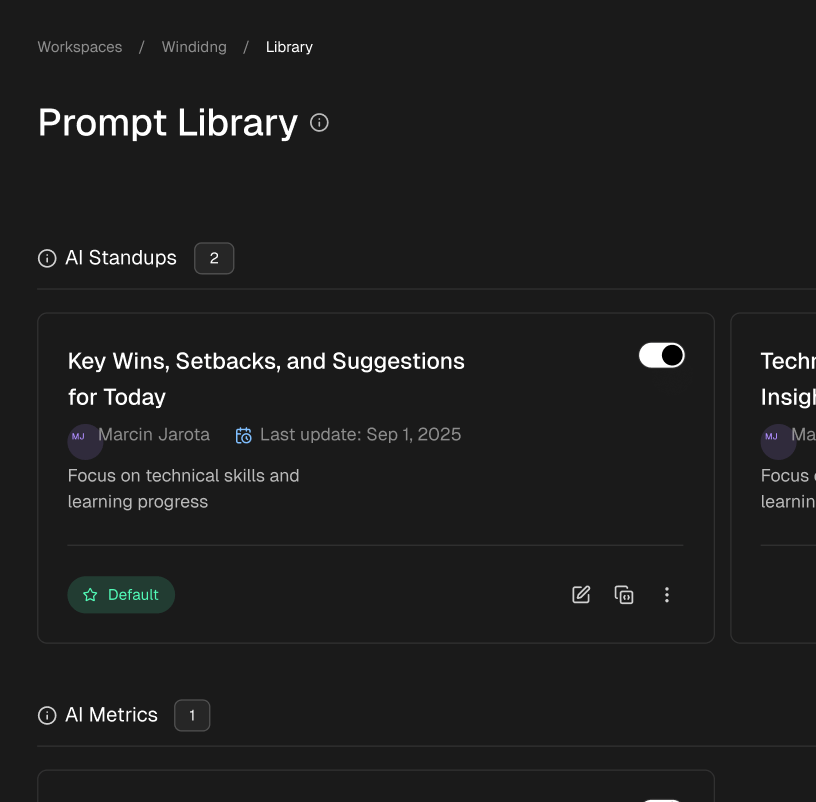
One of the best ways to close an internal skills gap is to figure out what your top performers do differently and then clone their expertise for everyone else. This is where a shared system for effective AI prompts and workflows becomes a total game-changer.
Your best engineers have almost certainly developed their own “cheatcodes”—those clever prompts, unique debugging methods, or efficient refactoring tricks that make them so effective. The problem is, that knowledge usually stays locked in their heads.
By creating a central repository for these proven workflows, you effectively build a living playbook for success. A junior developer can access a senior engineer’s exact prompt for generating robust unit tests, instantly leveling up their own capabilities.
This simple shift turns individual brilliance into a scalable, team-wide asset. Here’s how it works in practice:
- Capture Best Practices: When an engineer finds an AI workflow that works exceptionally well, they can save it as a reusable “cheatcode” for the whole team.
- Share and Distribute: This shared library becomes the first place everyone looks when tackling a problem, ensuring the best methods are used every time.
- Accelerate Onboarding: New hires can get up to speed in a fraction of the time by tapping into the curated best practices of your most seasoned engineers.
This strategy tackles the skills gap from the inside out. Instead of just hoping to hire expertise, you start manufacturing it internally. You end up with a resilient, self-improving engineering culture that can thrive no matter what the job market looks like.
Fixing Inefficient Processes and Communication Gaps
Even the sharpest engineers get bogged down by broken processes and bad communication. These operational snags are often invisible compared to technical debt, but they’re just as destructive. They introduce a constant friction that turns simple tasks into marathon slogs, draining the very energy your team needs to build great things.
Think of your engineering workflow like a pipeline. Clogged processes and communication leaks reduce the flow of work to a mere trickle. A single hiccup in the system can set off a chain reaction of delays, blowing up timelines and stressing out the entire team.
Identifying Common Operational Bottlenecks
Process bottlenecks are those repetitive, manual, or confusing steps in your workflow that bring everything to a crawl. They’re the reason developers get stuck in that “hurry up and wait” limbo, blocked not by a tough coding problem, but by red tape. Spotting these is the first step to a smoother, faster system.
Here are a few of the usual suspects:
- Vague Project Requirements: When a ticket is short on details, engineers have to guess. That guesswork often leads to rework when the final feature doesn’t match what stakeholders actually wanted. It’s a recipe for wasted effort right from the start.
- Slow Code Review Cycles: A pull request sitting idle for days is a classic bottleneck. It kills momentum, forces the author to constantly switch context, and can block other dependent work. Before you know it, you’ve got a traffic jam in your development pipeline.
- Manual Deployment Rituals: If shipping code involves a complex, manual checklist that only one person can perform, you’ve created a huge single point of failure. This not only makes releases painstakingly slow but also dramatically increases the risk of human error.
An inefficient process rarely affects just one person. A slow code review doesn’t just block the developer who wrote the code; it delays testing, holds up product validation, and ultimately pushes back the value you can deliver to customers.
Bridging the Communication Divide
Right alongside process friction, communication breakdowns are a huge source of trouble. With so many teams working remotely and asynchronously, clear, consistent communication is non-negotiable. When it fails, you feel the pain almost immediately. There are plenty of ways to tackle this, and you can explore a variety of methods for software development process improvement that hit these challenges head-on.
Some of the most common communication failures look like this:
- Information Silos: Key knowledge gets trapped with one person or team, making everyone else dependent on them and unable to move forward on their own.
- Ambiguous Progress Updates: Vague stand-up updates often hide the real blockers. “I’m still working on the API” tells a manager almost nothing—is the developer on track, totally stuck, or about to finish?
- Cross-Time-Zone Friction: Working across different time zones is tough. Long delays while waiting for a simple answer or an approval can stall progress for an entire day.
Automating Sync-Ups to Restore Clarity
The answer isn’t more meetings. It’s smarter, automated communication. We can offload the most tedious parts of keeping a team aligned to intelligent tools, which frees up engineers to focus on what they were hired to do: solve complex problems.
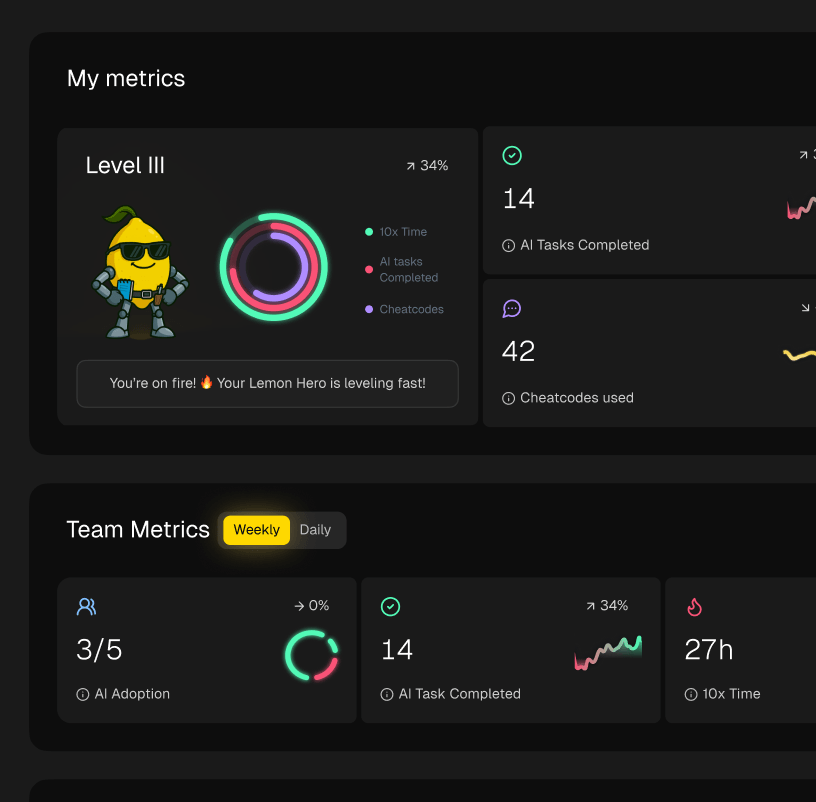
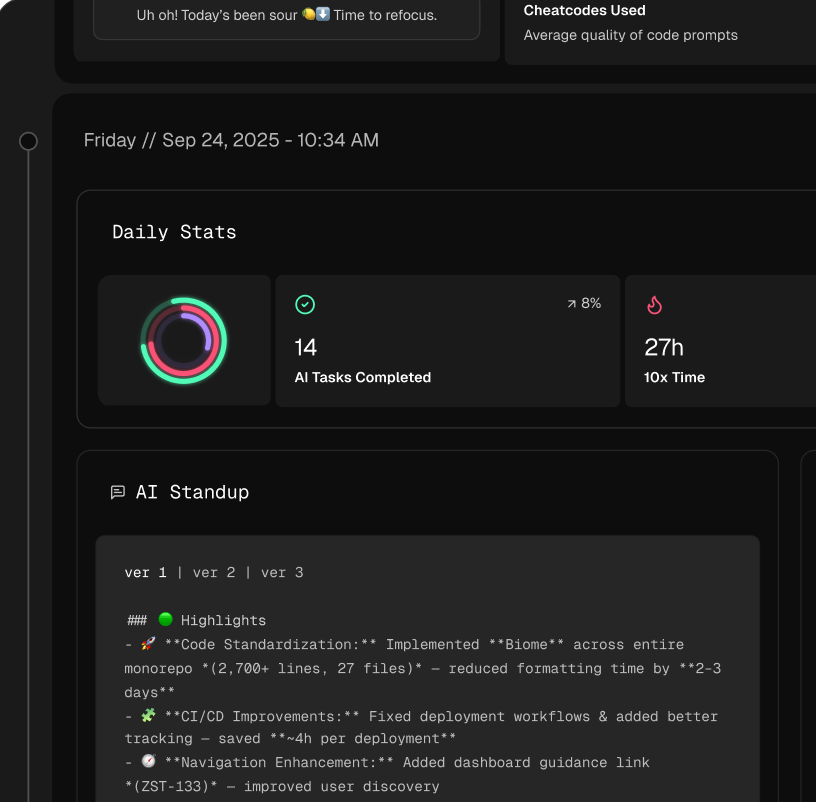
For instance, AI-powered standups can automatically analyze a developer’s activity and generate a clear, concise summary of their work. These updates can highlight recent wins, flag specific blockers, and even show how much time was saved by using AI tools. This gives everyone on the team perfect visibility without the time sink of a daily meeting, finally ending the “who’s working on what?” confusion.
Turning AI Chaos into a Competitive Advantage
AI coding assistants have landed on the engineering scene with a bang. But what was supposed to be a simple productivity boost is, in many cases, turning into a source of subtle, new issues in engineering. When adoption is a free-for-all, it can quickly create friction and inconsistency that actually slows teams down.
This new kind of chaos shows up in a few ways. You get a skills gap, where some engineers are flying with AI workflows while others are left behind. You also get a total lack of visibility, making it impossible for leaders to know what’s actually working. And then there’s “prompt-fiddling”—that invisible time-suck where engineers spend ages tweaking prompts just to get a decent output.
The AI Adoption Paradox
We’re seeing a weird disconnect. Execs are excited about AI’s potential, but many engineers feel they don’t have the right tools or training to use it well. This gap between expectation and reality leads to a lot of frustration and wasted effort. Without a real strategy, AI becomes a wild west of inconsistent code and “black box” solutions that no one else on the team can maintain.
The numbers back this up. A PwC survey found that while nearly 70% of employees feel they have control over technology at work, support is lagging. Only 51% of non-managers feel they have the learning resources they need, compared to 72% of senior executives. The problem gets even worse with generative AI: 75% of daily users feel trained up, but that number drops to just 59% of infrequent users. This is how a capability gap widens right inside your own team. You can read more about these trends in the latest workforce survey findings.

From Chaos to Control
The answer isn’t to hit the brakes on AI. It’s to manage it deliberately. The idea is to move from chaotic, individual experiments to controlled, collective improvement. That means making two big shifts: getting visibility and providing clear guidance.
You can’t fix what you can’t see. By putting tools in place that give you clear AI Metrics, you can finally understand how, where, and when your team is using AI. This data answers the big questions:
- Which AI tools are actually helping?
- Where are my engineers getting stuck or wasting time?
- Is AI really making our team faster, or is it just noise?
Visibility turns AI from an unpredictable variable into a measurable asset. It provides the concrete data needed to make informed decisions about training, tooling, and workflow optimization.
Transforming AI into a True Asset
Once you can see what’s happening, you can start to guide people. This is where features like AI Hints make a huge difference. They can spot when a developer is struggling—maybe they’re stuck on one task for too long or writing ineffective prompts—and offer a helpful nudge in the right direction.
This creates a powerful feedback loop that helps engineers get better on the fly. Instead of letting bad habits take root, you can steer the entire team toward methods that work and produce consistently great code.
By bringing visibility and guidance together, you create a system where the best AI-assisted practices are spotted, saved, and shared. That’s how you turn the initial chaos into a real competitive advantage and make sure your investment in AI actually pays off in speed and quality.
Building a Data-Driven Engineering Culture
Tackling the messy, interconnected issues in engineering we’ve covered isn’t about buying a new tool or adopting another framework. It’s about a fundamental shift in culture. You have to move from a reactive, fire-fighting mode to a proactive one that’s built on solid data, open communication, and a drive to always get better. This is how you create a world where data points out the problems, not just frustrated developers.
This whole transformation starts the moment you begin backing up intuition with hard evidence. Instead of just guessing where the bottlenecks are, your teams can look at real metrics and pinpoint exactly where the friction is. That kind of transparency takes the blame out of the equation and turns problem-solving into a team sport. When everyone can see the same data, the conversation changes from “I think we have a problem” to “I know exactly where to start.”
Gamifying Best Practices and Shared Success
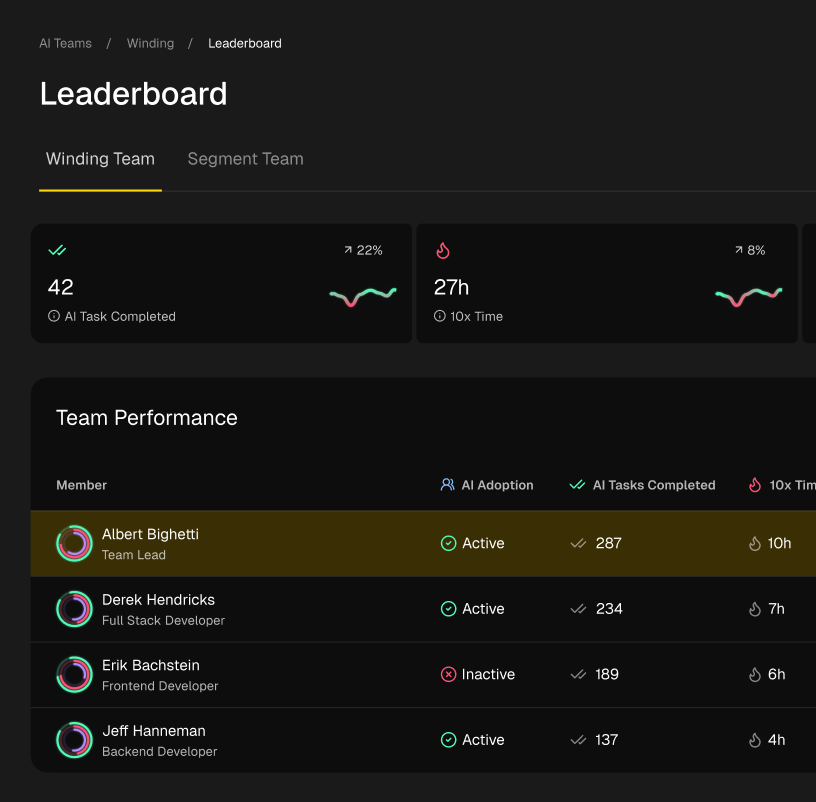
A huge part of making this culture stick is celebrating the wins and making improvement feel like a shared mission. This is where something as simple as a leaderboard can work wonders. By gamifying the adoption of good habits, you create positive momentum and a bit of friendly competition.
Think about a leaderboard that isn’t just about lines of code. Imagine one that spotlights engineers who:
- Use AI most effectively to crush repetitive tasks and save everyone time.
- Contribute the most useful “cheatcodes” or reusable workflows that the whole team can benefit from.
- Consistently jump on blockers that pop up in the automated standups.
This turns one person’s smart idea into a win for the entire team. It also gives clear, visible credit for the very behaviors that lead to a healthier and more effective engineering org. Our guide on engineering performance indicators digs deeper into which metrics actually encourage this kind of positive behavior.
Fostering Resilience Through Data
At the end of the day, a data-driven culture is a resilient one. When you create transparent feedback loops, you give your team the power to see problems forming long before they blow up into full-blown crises. This proactive stance is your best defense against the technical debt, process snags, and communication breakdowns that trip up so many teams.
When your culture is built on a foundation of shared data and continuous learning, you’re not just solving today’s challenges. You are building the muscle memory your team needs to adapt and thrive in the face of whatever new challenges come next.
This is the mindset that turns every project, every bug, and every success into a genuine learning opportunity. By nurturing this approach, your team doesn’t just fix problems—they build a sustainable system for excellence that will pay dividends for years to come.
Frequently Asked Questions About Issues in Engineering
When you’re in the trenches, it’s easy to get lost in the day-to-day challenges. Here are some straightforward answers to the big questions engineering leaders are asking right now, helping you connect these ideas to what your team is facing.
What Is the Single Biggest Issue in Engineering Right Now?
It’s a two-sided problem: the ongoing talent shortage on one hand, and on the other, not getting the full potential from the talent you already have. Many teams are feeling the pressure of hiring freezes while simultaneously being slowed down by process friction, communication gaps, and that ever-present technical debt.
The answer isn’t always to just hire more engineers. It’s about figuring out how to amplify your current team’s output. You do that by systematically clearing out the internal roadblocks and embracing real force-multipliers, like AI, that give your team leverage.
How Can I Justify Investing in Tools to Solve These Issues?
You have to talk about business impact, not just a cool list of features. Show how a tool directly tackles a real, costly problem—whether it’s constantly missed deadlines, high developer turnover, or a product that’s becoming buggier with each release.
The best way to do this is with data.
Track metrics that tell a clear story. Show the hours your team loses to repetitive tasks each week. Point to the number of bugs originating from a specific, debt-ridden part of the codebase. Calculate the real cost of a project delay. When a tool can provide hard data on where the time and money is going, the investment case practically writes itself.
Is AI Creating More Problems Than It Solves for Engineers?
Think of AI as an amplifier. If you just let it run wild with no visibility, it will amplify bad habits. You’ll get inconsistent code, developers wasting hours on poor prompts, and a whole new category of subtle issues in engineering.
But when you manage it with a system that offers analytics, helpful guidance, and a simple way to share what works, AI amplifies your team’s best habits. The goal isn’t to fear AI or avoid it; it’s to build a smart workflow around it. That’s how it becomes a genuine productivity multiplier instead of just another source of chaos.
Ready to stop guessing and start measuring? Zest gives you the visibility to turn your team’s engineering challenges into a serious competitive advantage.
Start for free on meetzest.com
Solve Core Engineering Issues
Transform your team from reactive fire-fighting to proactive problem-solving by leveraging data and smart automation.
📊 Core Metrics
- Technical Debt Velocity — Rate at which tech debt accumulates or is paid down
- Process Friction Score — Time lost to bottlenecks like code reviews or manual deployments
- Team Productivity Multiplier — Impact of AI tools and shared workflows on overall output
🕹️ My Cheatcodes
- 🌱 Make Debt Visible — Use data to map out problem areas instead of relying on gut feelings.
- 🦎 Clone Your Top Performers — Capture and share the effective AI workflows of your best engineers.
- ⚡ Automate Sync-Ups — Replace status meetings with AI-driven summaries to restore clarity and focus.
📈 Reflection Points
- 💡 Are our processes helping our engineers, or are they the biggest bottleneck?
- 🧩 Is our team's institutional knowledge siloed or shared as a collective asset?
- 📘 How are we measuring the real impact of AI adoption on our team's productivity and happiness?
Gallery
Lemon shots