10 Good Code Review Practices for High-Performing Teams in 2026
Code review is more than just a quality gate; it’s the heartbeat of a healthy engineering culture. It’s where standards are upheld, knowledge is shared, and teams collectively level up. But are your reviews just a rubber-stamping ritual, or are they a catalyst for real improvement? The common “LGTM” (Looks Good To Me) comment often signals a missed opportunity for deeper engagement and meaningful feedback. Effective code reviews prevent bugs, ensure maintainability, and act as a powerful mechanism for mentorship and team alignment. When done right, they are one of the highest-leverage activities a software team can perform.
The shift to AI-assisted development adds a new layer of complexity, demanding we not only review code but also the AI strategies and prompts that produce it. This requires a fresh look at our established workflows. For a deeper dive into the foundational principles that drive quality, speed, and collaboration, consider this resource on comprehensive code review best practices. Building on those fundamentals, this article unpacks 10 essential good code review practices that transform this critical process from a bottleneck into a powerful engine for innovation and high-quality software delivery.
We’ll move beyond generic advice to provide specific, actionable strategies that you can implement immediately. From structuring constructive feedback and keeping pull requests small to leveraging automation and metrics, each point is designed to make your reviews more efficient and impactful. You will learn how to set clear standards, define reviewer roles, and even integrate AI-assisted workflows thoughtfully. By the end of this guide, you’ll have a complete toolkit to ensure every pull request becomes a valuable learning opportunity for the entire team.
1. Asynchronous Code Reviews
Asynchronous code reviews allow developers to participate in the review process without needing to be online at the same time. Instead of live, synchronous sessions, feedback is exchanged through comments on pull requests (PRs) or merge requests (MRs). This model is a cornerstone of modern, distributed software development, enabling teams across different time zones and schedules to collaborate effectively. It removes the bottleneck of coordinating calendars and empowers individuals to review code during their most productive hours.
This practice is particularly powerful for teams integrating AI into their workflows. Developers can capture AI interactions, prompts, and generated code directly within the PR description. This gives reviewers a complete picture, allowing them to assess not just the final code, but the reasoning and AI suggestions that led to it. This level of transparency is key to establishing good code review practices that account for AI-assisted development.
How to Implement Asynchronous Reviews
For this approach to succeed, your team needs clear guidelines and the right tools. Start by defining Service Level Agreements (SLAs) for review turnaround times, such as a 24-hour first-response window. This prevents PRs from languishing and keeps the development cycle moving.
Leverage your version control system’s features to their fullest potential. GitHub Pull Requests and GitLab Merge Requests are built for this workflow. Enhance them by creating standardized PR templates that prompt developers to include critical context, such as:
- AI Prompts: The exact prompts used to generate or refactor code.
- AI Suggestions: A summary of the AI’s recommendations.
- Activity Logs: Links to session logs from tools like Cursor or VS Code.
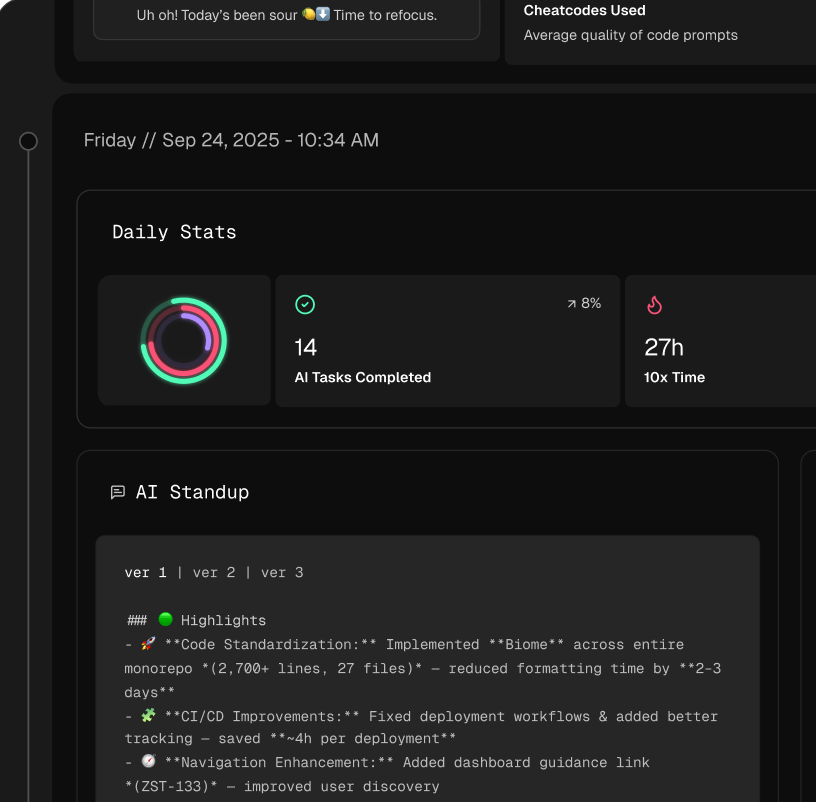
Tools like Zest can further streamline this by capturing AI interactions automatically. Its “AI Standups” feature summarizes a developer’s AI-assisted work, providing a high-level overview for reviewers before they even look at the code. This rich context turns a simple code check into a valuable learning opportunity for the entire team. While most reviews can be async, schedule optional sync discussions for highly complex or contentious changes.
2. Automated Code Quality Checks Before Review
Automated code quality checks shift the burden of catching syntax errors, formatting inconsistencies, and common bugs from human reviewers to machines. By implementing a pipeline of automated tools-such as linters, type checkers, and security scanners-teams ensure that code meets a baseline standard of quality before it ever reaches a pull request. This practice frees up developers’ cognitive capacity, allowing them to focus on more complex aspects like business logic, architectural integrity, and the patterns emerging from AI-assisted development.
This pre-review gatekeeping is a fundamental component of good code review practices in modern software engineering. It creates a more efficient and focused review cycle, as reviewers aren’t bogged down providing feedback on trivial issues that a machine could have caught. When AI tools are involved, these automated checks become even more critical. They act as a safety net, validating that AI-generated code adheres to team standards and doesn’t introduce subtle vulnerabilities or performance regressions that might otherwise be missed.
How to Implement Automated Quality Checks
Integrating automated checks effectively requires a layered approach, starting locally and extending into your CI/CD pipeline. The key is to provide fast, actionable feedback to developers. Begin by establishing pre-commit hooks using tools like Husky and lint-staged, which run linters (ESLint), formatters (Prettier), and type checkers (TypeScript) automatically before code can be committed.
Next, formalize these checks as mandatory gates in your CI pipeline using platforms like GitHub Actions or GitLab CI. This ensures no substandard code can be merged. Enhance your pipeline with:
- Unit Tests: Set minimum test coverage thresholds to enforce quality.
- SAST Tools: Integrate security scanners like SonarQube to find vulnerabilities early.
- AI Metrics: Use tools like Zest to analyze AI-generated code for complexity and identify patterns where AI assistance leads to quality issues.
By automating these foundational checks, you empower reviewers to dedicate their expertise to what truly matters: building robust, well-designed software. This structured approach makes the entire process faster, more consistent, and ultimately more valuable.
3. Peer Review Rotation and Knowledge Sharing
Systematically rotating code reviewers ensures that knowledge about different parts of the codebase is distributed across the entire team. Instead of relying on a single domain expert, this practice prevents knowledge silos and transforms code review into an active learning process. It democratizes code expertise, reduces dependency on key individuals, and ensures that no single reviewer becomes a bottleneck for the development cycle.
This approach is especially valuable for teams integrating AI into their workflows. As different developers discover effective AI prompting strategies or refactoring techniques, a rotation system naturally spreads these best practices. When one developer uncovers a powerful “cheat code” for generating efficient SQL queries, their turn as a reviewer for the database service allows them to share that insight directly where it’s most relevant. This cross-pollination of AI skills accelerates team-wide adoption and innovation.
How to Implement Review Rotations
A successful rotation system requires structure and clear ownership. Start by mapping out code domains and assigning primary and secondary reviewers. The key is to ensure the secondary reviewer changes periodically, giving more engineers exposure to different systems. This is one of the most effective good code review practices for building a resilient team.
Utilize your version control tools to facilitate this. GitHub’s CODEOWNERS file can be used with round-robin or load-balancing assignments for review requests within a team. This automates the rotation and ensures fairness. To support this, establish clear guidelines for each domain, including:
- Review Standards: Documentation outlining what to look for in specific services.
- Onboarding Materials: Links to key architectural documents within the repository.
- AI Wins: A shared space, like a wiki or a dedicated Slack channel, to post successful AI prompts.
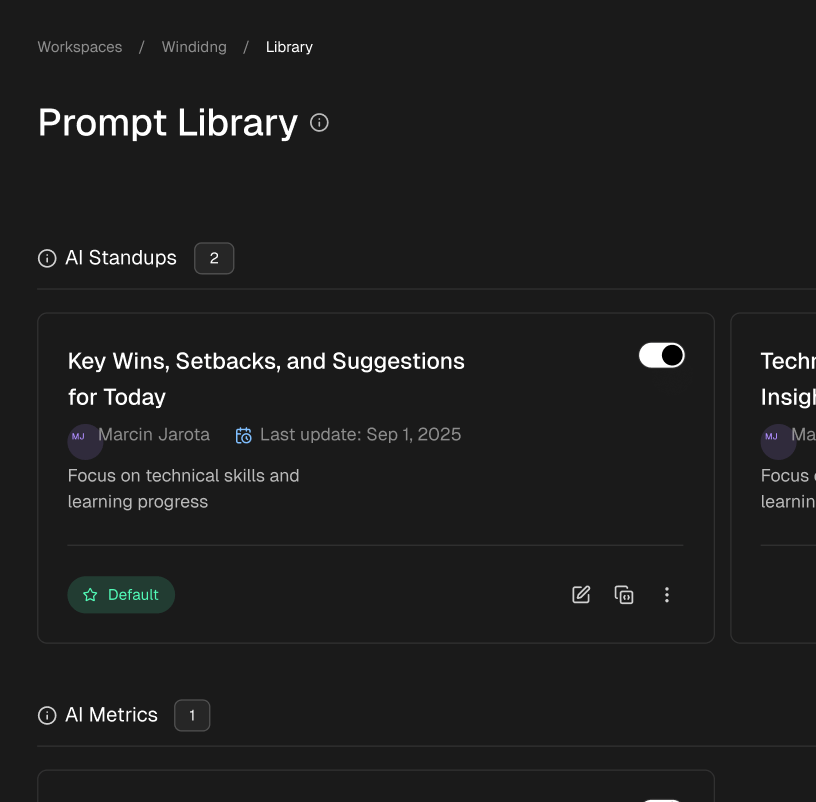
Tools like Zest can amplify this by capturing high-leverage AI interactions as “Cheatcodes.” This feature allows reviewers to easily share their best AI prompts and workflows, making peer-driven learning scalable. By tracking team leaderboards, you can also identify and celebrate engineers who are not just great coders, but also great knowledge sharers, reinforcing a culture of continuous improvement.
4. Constructive, Actionable Feedback
Effective code reviews are built on feedback that is specific, respectful, and focused on improvement rather than criticism. This practice moves beyond simply pointing out flaws and instead guides the author toward a better solution. The goal is to create a positive, collaborative environment where feedback is seen as a coaching opportunity, not a judgment. This approach builds psychological safety, encouraging developers to share work early and often without fear of harsh critique.
When AI-generated code is part of the pull request, this principle becomes even more critical. Constructive feedback must address not just the final code, but also the AI prompts and reasoning that produced it. Instead of a simple “Wrong prompt usage,” a reviewer can explain why a prompt was ineffective and offer a better alternative. This transforms the review into a valuable lesson on prompt engineering and helps the entire team master their AI tools more effectively, which is a key part of establishing good code review practices.
How to Implement Constructive Feedback
Fostering a culture of actionable feedback requires intention and clear examples. Start by framing suggestions collaboratively. Instead of saying “You did it wrong,” try “Here’s an alternative approach I’ve found useful.” This subtle shift in language makes feedback feel less personal and more like a shared problem-solving exercise. Always provide concrete examples, whether it’s a code snippet or a revised AI prompt.
To embed this into your team’s workflow, leverage your tools and create clear guidelines:
- Ask, Don’t Assume: Begin with questions like, “Did you consider this edge case?” to understand the author’s thought process before making assertions.
- Suggest, Don’t Command: Use inline suggestions in GitHub or GitLab to provide concrete, ready-to-commit examples of your proposed changes.
- Coach on AI Usage: When reviewing AI-assisted work, analyze the prompt. Suggest improvements like, “I notice the prompt didn’t specify the function signature. Adding that constraint often gives the AI better context.”
- Balance with Praise: Acknowledge what was done well. Highlighting effective solutions or clever AI prompts reinforces good habits and keeps morale high.
Tools like Zest can capture this valuable feedback and turn it into reusable team learnings or “cheatcodes.” This ensures that the coaching provided in one review benefits the entire team, preventing the same mistakes from being repeated and systematically improving your team’s engineering and AI prompting skills.
5. Small, Focused Pull Requests
Breaking down work into small, focused pull requests (PRs) is a powerful strategy that makes the entire review process faster, more thorough, and less intimidating. Instead of a single, massive change, developers submit a series of incremental updates. This approach, championed by tech giants like Google and Shopify, drastically reduces the cognitive load on reviewers, allowing them to provide higher-quality feedback and catch subtle issues that might be lost in a large diff. Small PRs are a cornerstone of effective continuous delivery and one of the most impactful good code review practices a team can adopt.

This practice is especially critical in AI-assisted development. A small PR often corresponds to the output of a specific, targeted AI prompt or a short development session. This makes it far easier for reviewers to understand the developer’s intent, validate the AI-generated code against the original prompt, and ensure the suggestions align with project standards. By isolating changes, teams can quickly assess the effectiveness of their AI strategies and iterate on them without introducing compounding risks.
How to Implement Small, Focused Pull Requests
Adopting a small PR culture requires a shift in how features are planned and executed. Start by breaking down larger tasks into logical, independent sub-tasks before writing any code. The goal should be for each PR to be reviewable in under 30 minutes. Use feature flags to merge code for incomplete features, allowing the main branch to remain stable and deployable.
Your PR template should be optimized for this workflow, encouraging developers to provide clear, concise context for each small change. This is where AI-assisted tooling adds immense value:
- PR Scope: Clearly state the single responsibility of the PR.
- AI Prompt Strategy: Document the key prompts used to generate or refactor the code within the PR.
- Logical Grouping: Use semantic commit messages to create a clear history of changes.
Tools like Zest are built to enhance this workflow. Its “AI Standups” can automatically summarize the specific accomplishments of each small PR, giving reviewers an immediate, high-level understanding of the work done. This context allows reviewers to focus their attention where it’s needed most, turning a potentially tedious process into a highly efficient and collaborative one.
6. Clear Code Review Standards and Documentation
Establishing written standards and guidelines for code reviews ensures everyone provides consistent, high-quality feedback. Instead of relying on individual opinions, the team operates from a shared playbook that defines what “good” looks like. This practice, popularized by companies like Google and Airbnb, removes ambiguity, reduces subjective arguments, and helps standardize the codebase. It creates a fair and predictable review process for everyone involved.
These standards become even more critical when integrating AI into development. Without clear documentation, teams struggle with inconsistent AI usage, poor prompt quality, and the acceptance of subpar AI-generated code. Documenting AI-specific guidelines, such as when to use AI versus manual coding or what constitutes an acceptable AI-assisted contribution, is a core component of modern good code review practices. This clarity empowers developers to use AI effectively while maintaining high engineering quality.
How to Implement Clear Standards
Start small and build your documentation iteratively. Focus on creating a living document that is easily accessible, searchable, and version-controlled alongside your code. This ensures the standards evolve with your team and technology stack.
Leverage data from your team’s workflow to decide which standards to create first. For instance, you can analyze common issues found during reviews to build a “most wanted” list of fixes. Then, create clear guidelines with before-and-after examples for each.
Your documentation should include specific sections for:
- Code Style: Formatting, naming conventions, and language-specific patterns.
- Best Practices: Design principles, security considerations, and performance optimizations.
- AI Usage Guidelines: Rules for prompt quality, patterns for reviewing AI-generated code, and instructions for logging AI interactions in PRs.
Tools like Zest can provide invaluable data for this. Its “AI Hints” and “Cheatcodes” features can surface common patterns and effective prompts used by your team, which can be directly translated into official standards. This turns tribal knowledge into documented, repeatable best practices that accelerate both development and review cycles.
7. Limited Review Scope and Time-Boxed Reviews
Setting firm boundaries on review scope and duration is a critical yet often overlooked practice. A time-boxed review is a focused session, typically lasting 30-60 minutes, dedicated to a single PR. This approach combats reviewer fatigue, as research from Microsoft has shown that the effectiveness of code review sharply declines after about an hour. By keeping reviews short and focused, teams can maintain a high standard of quality and catch more subtle issues.
This practice is especially vital for AI-assisted workflows. When AI generates large or complex code blocks, the cognitive load on the reviewer increases significantly. Time-boxing empowers reviewers to meticulously verify AI-generated logic and validate its suggestions without becoming overwhelmed. It ensures that AI-assisted code receives the same rigorous scrutiny as human-written code, upholding one of the most fundamental good code review practices.
How to Implement Time-Boxed Reviews
To successfully implement time-boxing, your team must agree on clear, enforceable guidelines. Start by establishing an official time limit for reviews in your team’s engineering handbook, with 60 minutes being a common upper bound. Reinforce this by encouraging developers to create smaller, more focused PRs (ideally 100-400 lines of code) that naturally fit within this timeframe.
Integrate this practice into your team’s daily workflow and tooling to make it a sustainable habit. Consider these actionable steps:
- Schedule Reviews: Encourage team members to block out review time on their calendars to minimize distractions.
- Use Context Tools: Leverage tools like Zest to provide reviewers with “AI Standups” that summarize the AI interactions behind a PR. This pre-review context accelerates understanding.
- Track Review Time: Use metrics from GitHub or GitLab to monitor how long reviews are taking. Consistently long reviews are a signal that PRs are too large or complex.
- Defer When Necessary: If a review uncovers a major issue that can’t be resolved within the timebox, document it and create a follow-up task. Don’t let one PR derail the entire development cadence.
For highly complex changes that cannot be simplified, consider pair reviews. Two sets of eyes can often work through intricate logic more efficiently than one person battling fatigue.
8. AI Prompt Quality and Strategy Review
In AI-assisted development, the quality of the final code is directly tied to the quality of the prompts that generated it. An effective code review process must therefore extend beyond the code itself to include a thorough review of the prompts and overall AI strategy. This practice treats prompts as first-class citizens in the development lifecycle, ensuring they are clear, specific, and structured for optimal results. It transforms code review into a collaborative learning exercise in prompt engineering.
By analyzing the prompts used in a pull request, teams can identify weak strategies, share effective patterns, and build a collective intelligence around interacting with AI. This is a critical component of establishing good code review practices in an AI-native world. It helps standardize the team’s approach, prevents inconsistent or low-quality AI outputs, and accelerates the team’s overall proficiency with AI tools.
How to Implement AI Prompt Reviews
Start by making prompts visible. Mandate that all PRs leveraging AI must include the key prompts used, either in the PR description, commit messages, or as code comments. This provides reviewers with the necessary context to understand how the code was created, not just what was created.
Integrate tools that capture and surface this information automatically. For example, Zest’s “AI Hints” feature can flag potentially weak or vague prompts that led to suboptimal code, drawing the reviewer’s attention to areas needing improvement. This automated insight is key to successfully integrating AI with knowledge management, turning individual AI interactions into a shared, reusable asset for the entire team.
- Create Prompt Templates: Develop and share templates that show examples of strong vs. weak prompts for common tasks like refactoring, test generation, or bug fixing.
- Document Winning Strategies: Use a shared knowledge base or a tool like Zest’s “Cheatcodes” to document and circulate prompt patterns that consistently produce high-quality results.
- Focus Retrospectives: Dedicate time in sprint retrospectives to discuss which AI prompts and strategies were most and least effective, fostering a culture of continuous improvement.
- Review for Strategy: Encourage reviewers to ask questions like, “Would you use this prompt strategy again?” or “Is there a more efficient way to ask the AI for this result?”
9. Blocking and Non-Blocking Comments
Distinguishing between blocking and non-blocking comments is a powerful practice that brings clarity and efficiency to code reviews. This approach categorizes feedback into two types: “blocking” comments, which identify critical issues that must be resolved before the code can be merged, and “non-blocking” comments, which are suggestions, questions, or ideas for future improvement. This separation helps developers prioritize fixes and prevents pull requests from getting stalled by minor, optional feedback.
This distinction is crucial when reviewing AI-generated code. An AI might produce functional code that passes all tests but could be optimized for readability or performance. A blocking comment would flag a critical bug or security flaw in the AI’s output, while a non-blocking comment could suggest refactoring a complex, AI-generated function into smaller, more maintainable pieces. This ensures that essential quality standards are met without stifling the rapid iteration that AI tools enable, making it a key component of good code review practices.
How to Implement Blocking and Non-Blocking Comments
To implement this effectively, your team must agree on clear criteria for each comment type. Start by documenting these standards in your team’s engineering handbook. For example, a blocking comment could be reserved for bugs, security vulnerabilities, or significant deviations from established architectural patterns.
Integrate this system directly into your review workflow using tools and conventions:
- Comment Prefixes: Establish a simple prefix system, such as
[BLOCKER],[SUGGESTION], or[NITPICK], to make the intent of each comment immediately clear. - Platform Features: Utilize features in GitHub or GitLab that allow reviewers to submit comments as part of a review. A review requesting changes implies blocking comments, while a simple approval with comments indicates they are non-blocking.
- Labels: Use PR labels like
must-fixornice-to-haveto categorize the overall state of the feedback.
For AI-assisted workflows, tools like Zest can automatically categorize AI-generated suggestions by severity. This helps reviewers quickly identify which hints are critical (blocking) and which are stylistic or performance-related (non-blocking). By training your team to categorize their feedback, you create a more focused, actionable, and less confrontational review process.
10. Metrics-Driven Review Process Optimization
A metrics-driven approach transforms code reviews from a subjective art into a measurable science. By tracking key performance indicators like review time, feedback quality, and time-to-merge, teams can identify bottlenecks and systematically improve their workflow. This practice shifts the focus from individual performance to the health of the entire development process, making it a cornerstone of effective, continuous improvement.
When AI-assisted development is involved, metrics become even more critical. Tracking the “percentage of changes from AI prompts” or “prompt quality improvement over time” provides concrete data on how effectively the team is leveraging AI. It helps answer important questions: Is AI speeding up development? Are developers becoming better prompt engineers? This data-driven insight is essential for building good code review practices that fully embrace AI’s potential.
How to Implement a Metrics-Driven Process
Begin by identifying a few simple, high-impact metrics and the right tools to track them. The goal is to gain visibility, not to create a punitive surveillance system. Communicate clearly that these numbers are for process improvement, not performance evaluation.
Start with foundational metrics available in most version control systems. GitHub and GitLab offer built-in analytics for tracking merge request review times and approval rates. From there, expand to more sophisticated metrics.
- Initial Metrics: Begin with basics like average review time, comment frequency, and time-to-merge.
- AI-Specific Metrics: Measure the impact of AI by tracking the percentage of code generated by AI suggestions or the evolution of prompt effectiveness.
- Team Dashboards: Create shared dashboards to visualize trends and celebrate improvements. Transparency builds trust and encourages collective ownership.
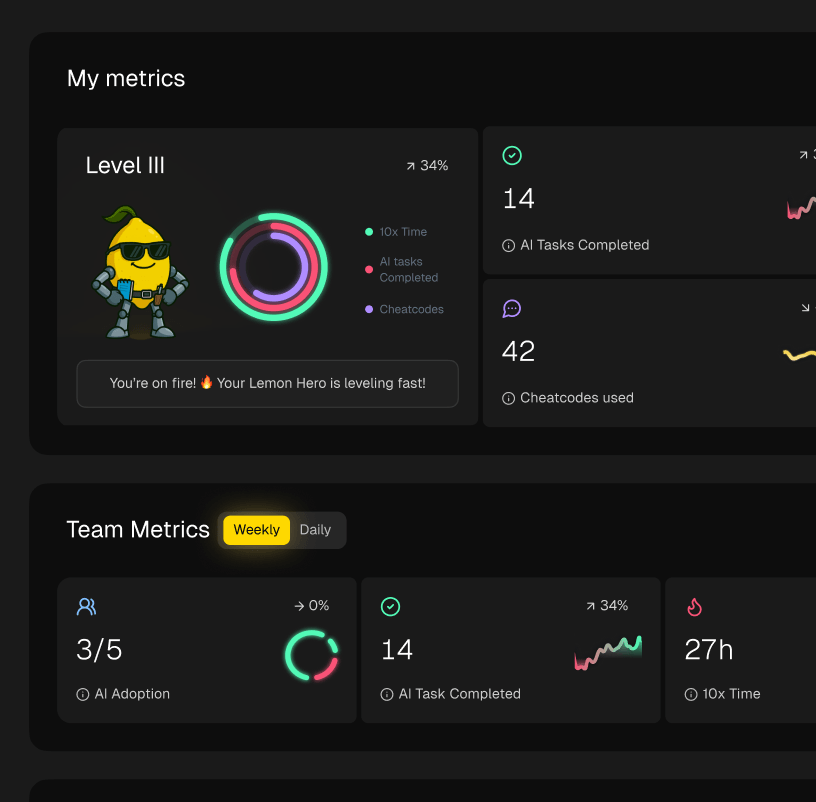
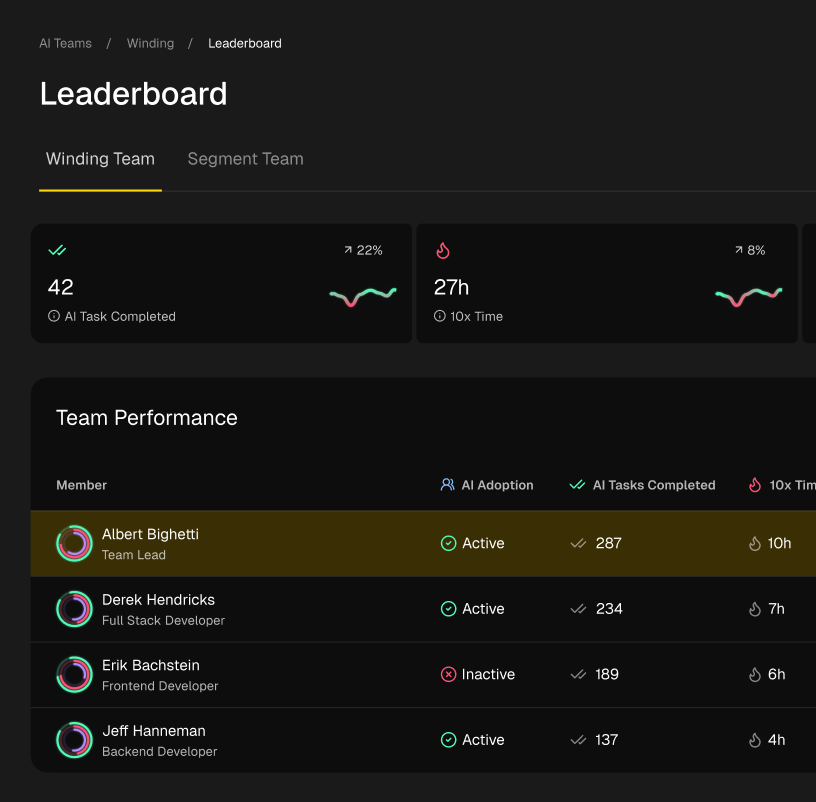
Tools like Zest AI Metrics can consolidate all AI coding activity into a single, comprehensive view. Its dashboards and leaderboards provide insights into team-wide AI adoption and individual contributions, helping you correlate AI usage with development velocity and code quality. Review these metrics as a team regularly, perhaps monthly, to discuss trends, identify friction points, and collaboratively decide on process adjustments.
10-Point Comparison of Good Code Review Practices
| Practice | Implementation Complexity 🔄 | Resource Requirements ⚡ | Expected Outcomes ⭐📊 | Ideal Use Cases 💡 | Key Advantages ⭐ |
|---|---|---|---|---|---|
| Asynchronous Code Reviews | Medium 🔄 — needs SLAs, templates | Low–Medium ⚡ — PR platform + coordination time | ⭐⭐📊 — improved documentation & flexible participation; risk of delayed fixes | Distributed teams, cross-timezone work, AI activity logs | Preserves AI context; reduces interruptions |
| Automated Code Quality Checks Before Review | High 🔄 — CI & rule tuning required | Medium–High ⚡ — CI runners, SAST, test infra | ⭐⭐⭐📊 — fewer trivial issues; reviewers focus on logic & architecture | Teams requiring consistent baseline quality or security gates | Filters noise; enforces consistency automatically |
| Peer Review Rotation & Knowledge Sharing | Medium 🔄 — scheduling and onboarding effort | Medium ⚡ — coordination, mentoring time | ⭐⭐📊 — reduced knowledge silos; broader code ownership | Growing teams, cross-training, sharing AI prompt techniques | Distributes expertise; prevents reviewer bottlenecks |
| Constructive, Actionable Feedback | Medium 🔄 — reviewer training and norms | Low–Medium ⚡ — extra reviewer time per review | ⭐⭐⭐📊 — better learning, trust, and improved AI usage | Teams focused on developer growth and quality coaching | Turns reviews into coaching; improves prompt/code quality |
| Small, Focused Pull Requests | Low–Medium 🔄 — discipline to split work | Low ⚡ — more frequent but smaller reviews | ⭐⭐⭐📊 — faster reviews, easier debugging and reverts | Rapid iteration, AI-generated focused changes | Reduces cognitive load; speeds turnaround |
| Clear Code Review Standards & Documentation | High 🔄 — write and maintain standards | Medium ⚡ — documentation time, periodic updates | ⭐⭐⭐📊 — consistent reviews; faster onboarding | Large teams, regulated codebases, AI-specific policies | Reduces inconsistency; provides objective acceptance criteria |
| Limited Review Scope & Time-Boxed Reviews | Low–Medium 🔄 — enforce timeboxes and handoffs | Low ⚡ — scheduling and tracking | ⭐⭐📊 — sustained review quality; less fatigue | High-volume reviews, preventing reviewer burnout | Preserves focus; makes review effort predictable |
| AI Prompt Quality & Strategy Review | Medium–High 🔄 — capture prompts and evaluate them | Medium ⚡ — tooling to record prompts, reviewer expertise | ⭐⭐📊 — improved prompt engineering and fewer AI errors | Teams heavily using AI to generate code | Improves AI outputs; captures effective prompt patterns |
| Blocking vs Non-Blocking Comments | Low 🔄 — define criteria and labels | Low ⚡ — minor coordination, labeling conventions | ⭐⭐📊 — clearer priorities; faster merges for non-critical items | Teams needing clear severity and faster flow | Clarifies what must be fixed vs suggestions |
| Metrics-Driven Review Process Optimization | High 🔄 — define metrics, build dashboards | High ⚡ — analytics tools, data collection & analysis | ⭐⭐⭐📊 — identifies bottlenecks; measures AI adoption & impact | Large orgs, process improvement, scaling reviews | Data-driven improvements; tracks AI effectiveness |
Implementing Your Blueprint for Better Reviews
We’ve explored a comprehensive set of good code review practices, from structuring asynchronous workflows and automating quality checks to the nuanced art of delivering constructive feedback. Each practice, whether it’s maintaining small, focused pull requests or establishing clear review standards, serves as a building block for a more effective, efficient, and collaborative engineering culture. The goal isn’t just to find bugs; it’s to build a system of shared ownership, continuous learning, and collective improvement.
The journey to a world-class review process is not about adopting every single recommendation at once. It’s a strategic, iterative process. Your team’s first step is to identify the most significant friction point in your current workflow. Are pull requests too large and intimidating? Start by enforcing the principle of small, focused changes. Is feedback often vague or inconsistent? Implement documented standards and introduce the concept of blocking versus non-blocking comments to add clarity and urgency.
Key Takeaways for Immediate Impact
To transform theory into practice, focus on these core pillars:
- Structure and Clarity: Implement clear standards, checklists, and templates. A documented process removes ambiguity and ensures every review starts from a shared understanding of what “good” looks like. This is the foundation upon which all other improvements are built.
- Human-Centered Communication: Frame feedback as a collaborative effort, not a critique. Use constructive language, ask clarifying questions, and separate the code from the coder. This fosters psychological safety, making developers more receptive to feedback and willing to engage openly.
- Data-Driven Optimization: Don’t guess what’s working. Use metrics like Review Cycle Time and Comments Per Review to get real insights into your process. This data helps you identify bottlenecks and measure the impact of the changes you implement, turning optimization into a scientific process.
- Strategic AI Integration: Embrace AI not as a replacement for human reviewers, but as a powerful assistant. Tools like Zest can automate routine checks, summarize complex changes, and suggest improvements, freeing up human reviewers to focus on high-level logic, architecture, and intent. The future of good code review practices involves a seamless partnership between human insight and AI efficiency.
Your Actionable Next Steps
Mastering the code review process is a marathon, not a sprint. It’s a cultural shift that requires buy-in, consistency, and a commitment to continuous improvement. As you leave this article, your objective is clear: move from passive reading to active implementation.
Begin by scheduling a team meeting to discuss your current review process. Present two or three practices from this list that could address your most pressing challenges. Decide as a team which one to pilot for the next two weeks. For example, you might agree to time-box all reviews to a maximum of 60 minutes or mandate that all PRs under 200 lines of code get priority. By starting small and demonstrating value, you build momentum and make the larger cultural shift feel achievable.
Ultimately, a refined code review process is one of the highest-leverage investments an engineering organization can make. It directly impacts code quality, developer velocity, and team morale. It transforms a procedural gate into a powerful engine for knowledge sharing and mentorship. By implementing these good code review practices, you are not just improving code; you are building a stronger, smarter, and more resilient engineering team ready to tackle any challenge.
Ready to supercharge your code reviews and reclaim hours of engineering time? Zest integrates directly into your workflow, using AI to automate summaries, identify risks, and help your team apply best practices consistently. See how it can transform your review process by visiting Zest today.
Refine Your Review Workflow
Transform every code review into a catalyst for quality, knowledge sharing, and team velocity.
📊 Core Review Metrics
- Review Cycle Time — Time from PR creation to merge.
- Comments Per Review — Volume of feedback per change.
- Small PR Ratio — Percentage of PRs under 200 lines of code.
🕹️ My Cheatcodes
- 🌱 Small & Focused — Keep PRs tight to one logical change for faster, deeper reviews.
- 🦎 Automate First — Let linters and static analysis tools handle style and syntax before human review.
- ⚡ Block vs. Non-Block — Clearly distinguish mandatory changes from optional suggestions to unblock merges.
📈 Reflection Points
- 💡 Is our feedback constructive and specific, or is it purely critical?
- 🧩 Are our review standards documented and easily accessible to everyone?
- 📘 How can we better leverage AI to handle routine checks and summaries?
✅ Before Merging
- 🔍 Confirm all blocking comments have been resolved.
- 📊 Verify automated quality checks and tests have passed.
- 🧭 Ensure the PR description clearly states the "why" behind the change.
- 📈 Document one new learning or pattern for the team.
Gallery
Lemon shots