Mastering 12 principles of agile development for AI coding
The Agile Manifesto’s core tenets guided a generation of software developers, but they now face a new test: the era of AI-assisted coding. Modern tools like VS Code and Cursor promise a massive boost in productivity, yet they also introduce fresh complexities. How do you ensure AI genuinely accelerates your team without sacrificing quality, collaboration, or sustainability? The answer lies in revisiting the fundamentals through a modern lens.
This guide is your practical roadmap. We will break down each of the 12 principles of agile development, reframing them for teams using AI today. Forget abstract theory; this is about action. You will learn how to turn these principles into tangible productivity gains, with concrete steps and real-world examples specifically for developers working with AI assistants.
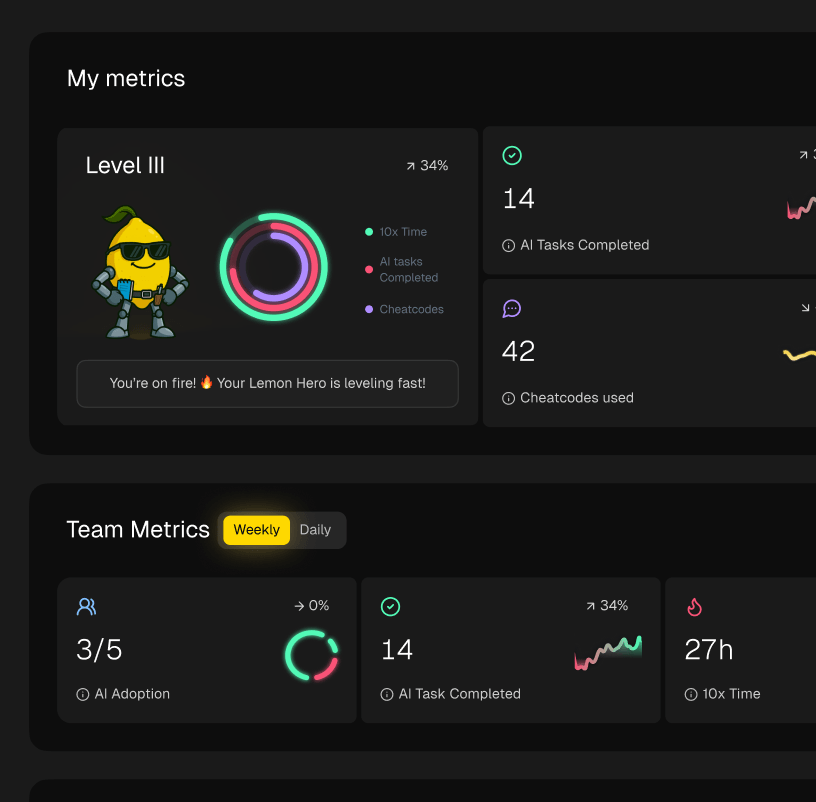
To effectively combine Agile methodologies with Artificial Intelligence, using the right technology is crucial. Understanding the available options can improve your team’s output and decision-making, as highlighted in this guide to the top AI tools for product management. We will also explore how to use AI coding managers like Zest to measure what matters, eliminate friction, and build a high-performing, AI-powered engineering culture. This article provides a clear path to integrating foundational agile practices with the power of modern AI workflows.
1. Customer Satisfaction Through Early and Continuous Delivery
This foundational principle is about making your customers happy by delivering working software in frequent, predictable increments. Instead of a single “big bang” release after months of work, you ship smaller, valuable updates on a regular cycle, often every few weeks. This approach creates a powerful feedback loop, allowing you to adapt to real user needs instead of building based on assumptions.

In a team using AI-assisted coding, this means continuously pushing features and improvements, even if the underlying AI workflow isn’t “perfect.” For example, the Cursor IDE team iterates on its AI prompt suggestions based on direct developer feedback, and VS Code extensions often release weekly updates with AI-powered refinements. This iterative process is a core part of the 12 principles of agile development, ensuring the final product truly solves user problems.
How to Implement This Principle:
- Establish a Rhythm: Align your release schedule with your team’s sprint cadence. A consistent two-week cycle is a great starting point.
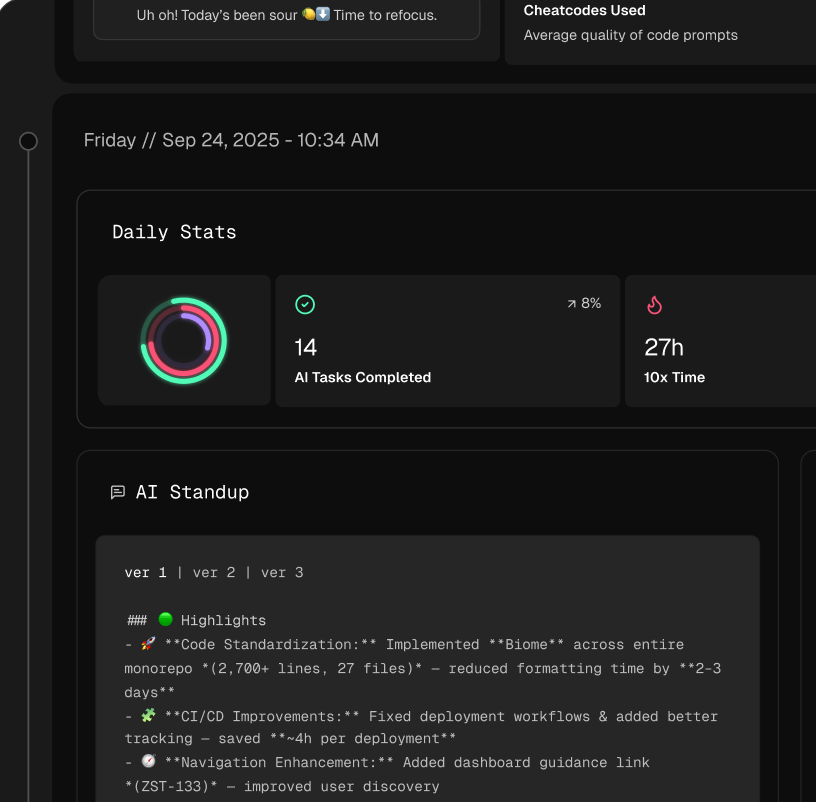
- Measure Impact: Use Zest’s AI Standups to see how each delivery cycle affects team progress and morale. This creates a direct link between shipping code and team outcomes.
- Focus on Value: With AI Metrics from Zest, you can identify which features are delivering the most user value, helping prioritize the next development cycle.
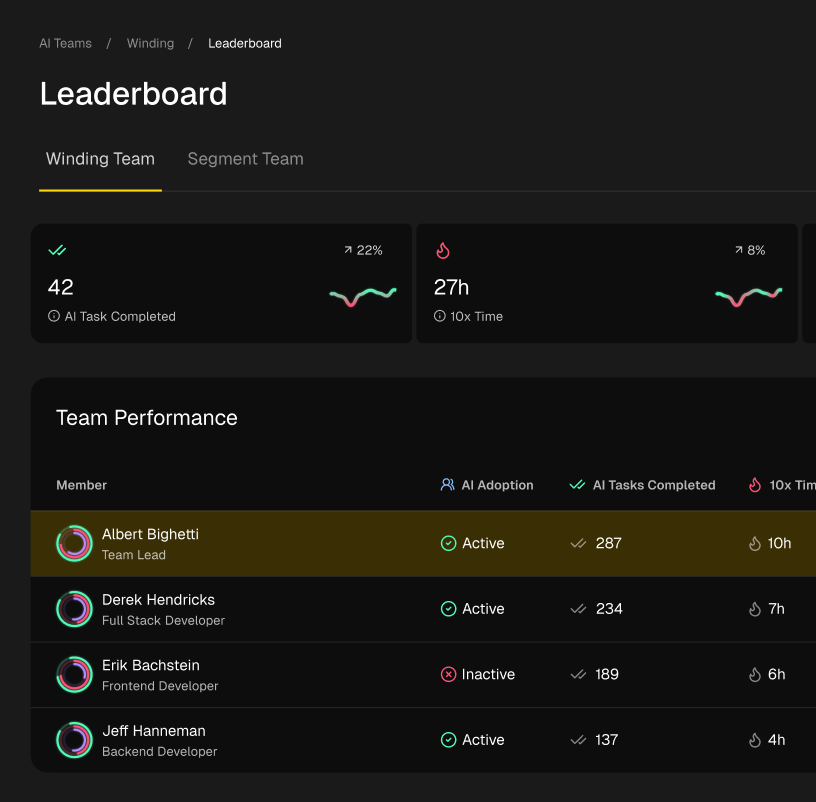
- Celebrate Adoption: Zest’s leaderboards can be used to gamify and celebrate teams that quickly adopt and benefit from newly shipped AI features, encouraging a culture of continuous improvement.
2. Welcome Changing Requirements, Even Late in Development
This principle treats change not as a disruption, but as a competitive advantage. Agile teams embrace shifting requirements, even late in the process, viewing them as opportunities to deliver a more valuable product. Instead of resisting new information, you build flexibility into your workflow, allowing you to adapt quickly to customer feedback, market shifts, or new technical discoveries.
For a team using AI-assisted coding, this means being ready to pivot your tools and techniques as AI models evolve. For example, a startup might discover that Claude 3.5 Sonnet is better for code reviews than their existing GPT-4 setup and decide to switch mid-project. This adaptability is a key part of the 12 principles of agile development, ensuring you are always using the best tool for the job.
How to Implement This Principle:
- Establish a Review Cadence: Set up a weekly or bi-weekly meeting to review your AI strategy, prompts, and tool configurations to ensure they still meet team needs.
- Identify Inefficiencies: Use Zest’s AI Hints to spot when your current prompts are becoming less effective or causing confusion, signaling it’s time for an update.
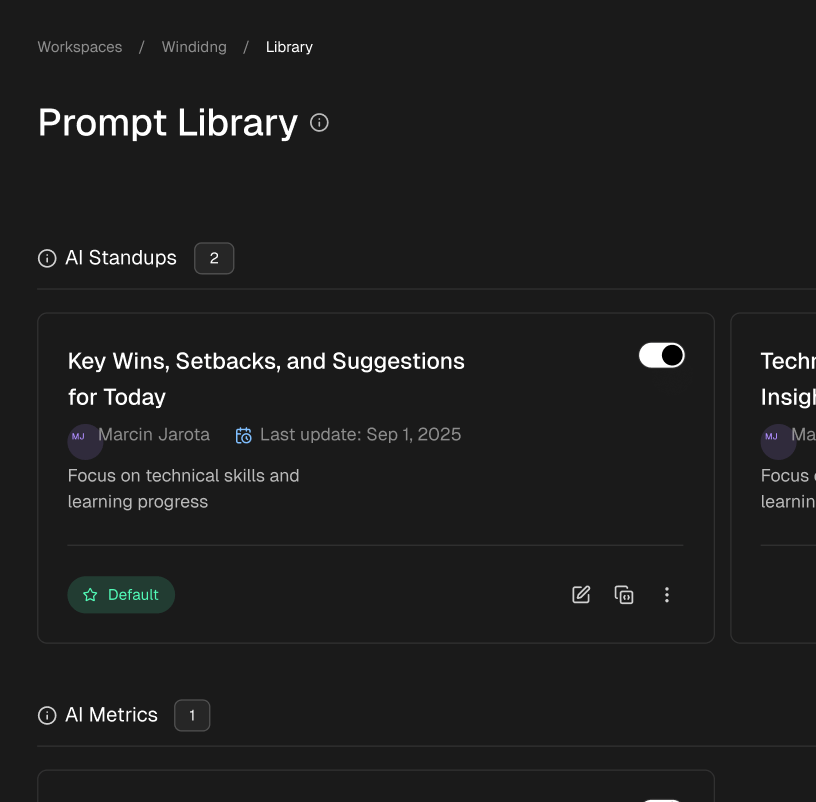
- Build Reusable Prompts: Create a library of cheatcodes that are easy to update and share. When a better pattern is discovered, you can modify the cheatcode once and roll it out to the whole team.
- Test with Early Adopters: When considering a major change, like a new AI model, use Zest’s leaderboards to identify early adopters. Let them pilot the new approach and gather feedback before a team-wide implementation.
3. Deliver Working Software Frequently (Weeks Rather Than Months)
This principle moves teams away from long, high-risk release cycles and toward a rhythm of shipping working software in short, predictable intervals. By delivering in weeks instead of months, you create rapid learning cycles. This allows teams to get real-world feedback on what they’ve built, validate their direction, and adapt quickly to new information or changing user needs.
For a team using AI-assisted coding, this means shipping not just product features but also workflow enhancements. For example, a team using Cursor might deploy a new library of shared prompts every sprint. GitHub Copilot iterates on its suggestions based on telemetry and feedback gathered from its frequent releases. This frequent cadence is a key part of the 12 principles of agile development, ensuring that even the tools and methods used to build software are improving continuously.
How to Implement This Principle:
- Define “Done”: Create a clear and shared “definition of done” for features, especially those built with AI assistance. This should include testing, documentation, and user validation.
- Plan Releases: Align your release schedule with your team’s natural sprint boundaries. A two-week cycle is a common and effective starting point.
- Automate Testing: Automate as much of your testing pipeline as possible, especially for validating the outputs of AI-generated code, to maintain a high development velocity in Scrum.
- Track Quality: Use Zest’s AI Metrics to create a pre-release quality checklist. Monitor metrics like AI-assisted refactoring rates and code churn to ensure quality isn’t sacrificed for speed.
- Highlight Improvements: Create simple release notes for each cycle, using data from Zest’s AI Standups to show how new AI workflows or prompts are improving team productivity.
4. Business People and Developers Must Work Together Daily
This principle tackles a classic source of project failure: the disconnect between business goals and technical execution. It calls for constant collaboration between developers and business stakeholders, breaking down silos to ensure everyone is moving in the same direction. Daily interaction keeps the project grounded in real-world value and prevents the engineering team from building features that don’t solve actual business problems.

In an AI-assisted development environment, this daily sync is even more critical. Engineering managers can review Zest AI Standups with product teams to spot trends in how AI tools are being used, identifying where prompt improvements are needed. This tight feedback loop is a key part of the 12 principles of agile development, ensuring that AI adoption directly translates into meaningful business outcomes, not just isolated productivity metrics. The goal is to make daily collaboration a core part of your workflow; for more tips on structuring these meetings, you can explore our guide on the daily stand-up agenda.
How to Implement This Principle:
- Make Data a Daily Habit: Start each day with a 15-minute sync between business and tech leads to review Zest’s AI Standup summaries. This makes collaboration data-driven and actionable.
- Create Shared Visibility: Use Zest’s AI Metrics to build a shared dashboard visible to all stakeholders. This ensures everyone from the CTO to the product manager has the same view of AI tool effectiveness and potential bottlenecks.
- Fuel Conversations with Data: Use leaderboard progress as a neutral starting point for discussions. Instead of asking “Is the new AI tool working?”, you can ask “Why is Team A seeing a 40% adoption rate and Team B is at 10%?”
- Connect AI to Business Impact: Establish weekly reviews focused on how AI productivity gains, identified through Zest, are impacting business KPIs like feature velocity or time-to-market.
5. Build Projects Around Motivated Individuals and Trust Them
This principle centers on empowerment and autonomy. Agile projects thrive when they are built around motivated people who are given the environment, support, and trust they need to get the job done. Instead of micromanaging tasks or enforcing rigid, top-down workflows, agile leadership trusts skilled individuals to self-organize and determine the best way to achieve their goals. This fosters a sense of ownership and accountability that is critical for success.
For teams using AI-assisted coding, this translates to trusting developers to experiment with different tools and prompts. For instance, top performers might discover highly effective Claude prompts for their specific codebase and share them with the team. This autonomy is a core part of the 12 principles of agile development, as it allows teams to organically discover and adopt the most effective workflows rather than waiting for a mandate.
How to Implement This Principle:
- Trust, but Verify Results: Give developers the freedom to choose their preferred AI-assisted IDEs, like Cursor or VS Code, but use Zest’s AI Metrics to measure the impact of their choices on productivity and code quality.
- Recognize Excellence: Use Zest’s leaderboards to publicly celebrate developers who are leading the way in AI adoption. This creates positive reinforcement and encourages healthy competition.
- Create a Knowledge-Sharing Hub: Establish a dedicated channel for sharing discoveries. Developers can contribute their best prompts and workflows as Zest cheatcodes for the whole team to use.
- Encourage Experimentation: Use AI Standups in Zest to discuss wins from individual experiments, making learning a collective and celebrated activity.
6. The Most Efficient and Effective Method of Conveying Information is Face-to-Face Conversation
This principle champions direct, real-time communication as the best way to share information and resolve complexities. While written documentation has its place, nothing beats the bandwidth of a face-to-face conversation for conveying nuance, tone, and immediate feedback. It’s the fastest way to build shared understanding and is a key part of the 12 principles of agile development.
For distributed teams using AI coding assistants, this translates to prioritizing video calls to discuss AI strategies and troubleshoot workflows. Instead of writing a long document about a new prompting technique, a developer can screen-share in Cursor and demonstrate it live. Engineering teams might hold weekly video syncs to review interesting AI Hint discoveries from Zest, ensuring valuable insights spread quickly rather than getting lost in a Slack channel.
How to Implement This Principle:
- Schedule AI Syncs: Dedicate a weekly or bi-weekly video call specifically for discussing AI workflows, prompt strategies, and blockers.
- Show, Don’t Just Tell: Use screen sharing during calls to demonstrate effective prompts in VS Code or Cursor. This visual context is far more powerful than text alone.
- Record and Summarize: Record key conversations for team members in different time zones. Follow up with a brief written summary of decisions and action items to support asynchronous work.
- Analyze Sync Impact: Use Zest’s AI Metrics to see if patterns discussed in sync meetings lead to measurable improvements in code generation, refactoring speed, or bug fixes across the team.
7. Working Software is the Primary Measure of Progress
This principle cuts through the noise of project management by focusing on one thing: tangible results. Progress in agile isn’t measured by completed documents, hours spent in meetings, or adherence to process alone. It’s measured by functioning, delivered code that provides real value. This keeps the team grounded and ensures that every activity contributes directly to the final product.
In AI-assisted development, this means looking past vanity metrics like the number of developers who have activated Copilot. Instead, success is defined by productivity gains and features shipped. For example, a team using Cursor might not celebrate just using the AI, but rather how its “auto-fix” capability reduced bug-fixing time, allowing them to complete an extra feature in a sprint. This focus on outcomes is a critical component of the 12 principles of agile development, ensuring AI tools generate real business impact.
How to Implement This Principle:
- Define ‘Working’: Establish a clear “Definition of Done” for your team that includes criteria for AI-generated components, such as passing all unit tests and meeting code quality standards.
- Correlate AI to Velocity: Use Zest’s AI Metrics to track time saved during coding sessions. Then, cross-reference this data with your sprint completion rates to confirm that AI-assisted work directly translates into faster delivery.
- Track Feature Throughput: Shift your focus from lines of code to the number of valuable features shipped per sprint. This metric provides a more accurate measure of progress and business value.
- Confirm Quality: Use Zest’s insights to compare bug rates before and after adopting AI tools. This validates that increased speed doesn’t come at the cost of code quality, confirming that the software is truly “working.”
8. Agile Processes Promote Sustainable Development; Sponsors, Developers, and Users Should Be Able to Maintain a Constant Pace Indefinitely
This principle is a crucial guardrail against burnout, emphasizing that agility is about a marathon, not a sprint. The goal is to establish a consistent, manageable work rhythm that the entire team, including developers, sponsors, and users, can maintain indefinitely. It directly counters the “crunch culture” that leads to exhaustion, decreased quality, and high turnover. True productivity comes from a steady, reliable pace, not from bursts of unsustainable overwork.
In an AI-assisted environment, it’s easy to fall into the trap of using new efficiency gains to simply pile on more work. This principle reminds us that the purpose of AI tools is to reduce toil, not to create new forms of pressure. For instance, a team might use Zest’s time-saved metrics to justify reducing sprint capacity or dedicating that newfound time to learning and innovation, rather than just increasing output. This approach is a core part of the 12 principles of agile development, ensuring that technology serves human well-being and long-term success.
How to Implement This Principle:
- Protect Your Time: Use the productivity gains identified by Zest’s AI Metrics to justify reducing hours worked or reinvesting time into innovation, not just to increase deliverables.
- Set Realistic Goals: Base sprint velocity targets on historical data that reflects a sustainable, long-term output, not on peak performance during a crunch.
- Fight Fatigue: Monitor Zest’s AI Hints for patterns of “stuck time” or repeated struggles, which can be early indicators of developer fatigue or burnout.
- Celebrate Sustainability: On Zest’s leaderboards, recognize and celebrate teams that demonstrate consistent, predictable delivery and healthy work patterns, not just those with the highest raw output.
9. Continuous Attention to Technical Excellence and Good Design Enhances Agility
This principle counters the misconception that agile means cutting corners to move fast. Instead, it argues that speed is a direct result of quality. Maintaining high standards for code, architecture, and design prevents the buildup of technical debt, which slows down future development. Rushing for short-term gains by sacrificing quality creates a brittle system that is difficult and risky to change.

In an AI-assisted workflow, this means treating generated code with the same rigor as human-written code. Speed must not become an excuse for sloppy implementation. For instance, developers using AI in Cursor or VS Code should conduct design discussions before prompting complex features and use code reviews to scrutinize AI-generated components. Upholding these standards is a key part of the 12 principles of agile development, ensuring that agility is sustainable over the long term.
How to Implement This Principle:
- Establish Quality Gates: Implement automated checks and mandatory code reviews for all contributions, including those generated by AI, to enforce coding standards.
- Analyze AI Impact: Use Zest’s AI Hints to identify sessions where developers spent significant time refactoring or correcting low-quality AI-generated code. This helps refine prompting strategies.
- Prioritize Refactoring: With AI Metrics from Zest, you can track the accumulation of technical debt and make a data-driven case for allocating specific sprint time to refactoring work.
- Standardize Best Practices: Use Zest’s cheatcodes to share and reinforce team-wide standards for reviewing AI output, ensuring everyone applies the same level of scrutiny.
10. Simplicity (The Art of Maximizing the Work Not Done) is Essential
This principle emphasizes doing only what is necessary and ruthlessly eliminating complexity. Agile teams focus on maximizing the amount of work not done, avoiding over-engineered solutions, gold-plating features with no user demand, and choosing simple tools over complex ones. It’s about achieving the goal with the minimum effort required.
For a team using AI-assisted coding, this means letting AI handle essential work, not creating elaborate AI workflows for problems that don’t exist. For instance, developers in Cursor can use simple, focused prompts to generate a function instead of building a complex multi-step prompt chain for a routine task. This approach is a key part of the 12 principles of agile development, ensuring that engineering effort is spent on delivering value, not on maintaining unnecessary complexity.
How to Implement This Principle:
- Start with Simple Prompts: Begin with direct, straightforward AI prompts. Only add complexity if the initial, simple approach fails to solve a real problem.
- Audit Your AI Tool Stack: Regularly review the AI tools and extensions your team uses. Remove any that are redundant or not providing clear value to simplify the development environment.
- Focus on Genuine Bottlenecks: Use Zest’s AI Metrics to identify where developers are actually spending their time. Direct your AI prompting efforts to solve these true bottlenecks, not theoretical improvements.
- Celebrate Simplicity: Use Zest’s leaderboards to highlight and reward team members who find simple, elegant, and effective solutions to problems, reinforcing a culture that values simplicity over complexity.
11. The Best Architectures, Requirements, and Designs Emerge from Self-Organizing Teams
This principle champions bottom-up innovation over top-down directives. Instead of management imposing a rigid AI strategy or toolset, it trusts that development teams, when given autonomy, will naturally discover the most effective architectures, workflows, and solutions. This emergent approach allows for practical, context-aware systems to evolve from real-world use rather than from abstract planning.
In an AI-assisted environment, this means letting engineers experiment. For instance, one team might find that using Claude for complex refactoring in Cursor is more effective, while another discovers that GPT-4 excels at generating boilerplate. These discoveries are core to the 12 principles of agile development, fostering an environment where the best ideas win based on merit and practical results, not hierarchy. The patterns that emerge from this freedom are often more robust and better suited to the team’s specific challenges.
How to Implement This Principle:
- Grant Tool Autonomy: Allow teams to choose their preferred AI models (GPT-4, Claude, etc.) and tools within a supported framework. Let their results speak for themselves.
- Measure Effectiveness: Use Zest’s AI Metrics to objectively compare the productivity and outcomes of different team approaches. This data helps identify which emergent strategies are most successful without imposing a single method.
- Capture and Share Patterns: When a team discovers a powerful prompt or workflow, use Zest’s cheatcodes to document and share it across the organization as a best practice, not a mandate.
- Trust Your Team: Create a culture where developers are empowered to solve their own productivity challenges. Use Zest’s AI Standups to create a forum for sharing these grassroots solutions.
12. At Regular Intervals, the Team Reflects on How to Become More Effective, Then Tunes and Adjusts Its Behavior Accordingly
This final principle is the engine of continuous improvement. Agile teams don’t just work hard; they work smarter by regularly pausing to reflect on their processes. In these sessions, known as retrospectives, the team analyzes what went well, what didn’t, and what they can change to be more effective in the next cycle. This commitment to self-adjustment is a core tenet of the 12 principles of agile development.
For teams using AI, this means dedicating part of the retro to AI tool performance. Instead of guessing, teams can review hard data from their work. For instance, a developer might notice from Zest’s AI Hints that their AI sessions often go sideways when asking for complex, multi-file refactors. This data-driven insight allows the team to create new best practices, like breaking down large refactoring prompts into smaller, more targeted requests. To learn more about how this differs from reviewing the work itself, see this guide on the sprint review vs. sprint retrospective.
How to Implement This Principle:
- Make Data the Centerpiece: Start your retrospectives by reviewing objective data. Use Zest’s AI Metrics to examine standup summaries, time-saved data, and AI Hints to ground your discussion in reality, not just feelings.
- Ask Specific Questions: Guide the conversation with pointed questions. “Which AI prompts gave us the best results this sprint?” “Where did our AI sessions struggle?” “What one new prompt strategy should we all try next cycle?”
- Codify and Track Actions: Document the specific improvements the team commits to. Use Zest cheatcodes to save effective prompts discovered during the retro, making it easy for everyone to adopt them.
- Measure the Impact: In the next retrospective, review Zest metrics again to see if the changes you made actually worked. Did the new prompt strategy reduce failed AI sessions? This closes the feedback loop.
12-Point Agile Principles Comparison
| Principle | 🔄 Implementation Complexity | Resource Requirements | 📊 Expected Outcomes | Ideal Use Cases | ⭐ Key Advantages / 💡 Tips |
|---|---|---|---|---|---|
| 1. Customer Satisfaction Through Early and Continuous Delivery | Medium — frequent releases and feedback loops | CI/CD, automated tests, monitoring, dev time | Incremental value, faster feedback, improved AI workflows | Teams iterating AI features and prompts regularly | ⭐ Faster ROI & user-driven improvements — 💡 Use AI Standups to measure impact |
| 2. Welcome Changing Requirements, Even Late in Development | Medium — needs change management discipline | Flexible architecture, adaptable planning, communication | Better alignment with business, rapid pivots to new AI models | Environments with evolving AI capabilities or priorities | ⭐ Competitive adaptability — 💡 Capture new patterns with cheatcodes |
| 3. Deliver Working Software Frequently (Weeks Rather Than Months) | Medium–High — strict cadence and quality gates | Robust CI/CD, automated testing, feature flags | Faster validation of AI changes, reduced risk per release | Teams focused on short sprint cycles and rapid learning | ⭐ Quick discovery of what works — ⚡ Accelerated productivity — 💡 Automate AI output tests |
| 4. Business People and Developers Must Work Together Daily | Medium — scheduling and stakeholder commitment | Shared dashboards, meeting time from business and devs | Better-aligned priorities, faster decision-making | Product-led AI improvements needing close stakeholder input | ⭐ Direct alignment to business goals — 💡 Use daily 15-min standups with AI summaries |
| 5. Build Projects Around Motivated Individuals and Trust Them | Low–Medium — governance vs. autonomy balance | Time for experimentation, channels for sharing, measurement | Innovative solutions, higher engagement, organic adoption | Teams piloting new AI tools or domain-specific prompts | ⭐ Faster discovery of effective patterns — 💡 Reward sharing via leaderboards |
| 6. The Most Efficient and Effective Method of Conveying Information is Face-to-Face Conversation | Medium — coordination for synchronous work | Video tools, time for pair programming and workshops | Faster knowledge transfer, fewer misunderstandings | Distributed teams needing deep context transfer | ⭐ Richer alignment & faster learning — 💡 Record and summarize key sessions |
| 7. Working Software is the Primary Measure of Progress | Medium — metrics design and validation | Instrumentation to track time-to-value, quality metrics | Objective progress measurement, clearer ROI on AI | Organizations avoiding vanity metrics and focusing on shipped value | ⭐ Clear business-focused measurement — 💡 Correlate time-saved with shipped features |
| 8. Agile Processes Promote Sustainable Development | Medium — cultural and policy changes | Capacity planning tools, monitoring burnout indicators | Stable long-term velocity, lower burnout, sustainable pace | Teams scaling AI without overloading engineers | ⭐ Reduced burnout & predictable delivery — 💡 Use time-saved to protect capacity |
| 9. Continuous Attention to Technical Excellence and Good Design Enhances Agility | Medium–High — requires discipline and reviews | Code review tooling, TDD, refactoring time | Maintainable AI-generated code, lower technical debt | Teams using AI to generate non-trivial or core code | ⭐ Long-term agility & code quality — 💡 Enforce quality gates for AI outputs |
| 10. Simplicity (The Art of Maximizing the Work Not Done) is Essential | Low — requires discipline to avoid over-engineering | Minimal tooling, focused prompts, regular audits | Lean workflows, easier onboarding, clearer ROI | Teams wanting pragmatic AI adoption without complexity | ⭐ Faster onboarding & lower overhead — 💡 Start simple; remove unused tools |
| 11. The Best Architectures, Requirements, and Designs Emerge from Self-Organizing Teams | Medium — acceptance of bottom-up decisions | Measurement systems, spaces for experiments, sharing tools | Domain-specific optimizations, higher buy-in, creative solutions | Large organizations encouraging team-level experimentation | ⭐ Emergent best practices — 💡 Let teams experiment, then codify successes |
| 12. At Regular Intervals, the Team Reflects and Adjusts (Retrospectives) | Low–Medium — needs facilitation and follow-up | Time for retros, metrics for discussion, action tracking | Continuous improvement of AI usage and workflows | Teams committed to data-driven improvement cycles | ⭐ Continuous learning loop — 💡 Make AI Metrics central to retros and track actions |
Your Blueprint for AI-Enhanced Agility
We’ve journeyed through the 12 principles of agile development, reframing them not as dusty artifacts from a pre-AI world, but as a crucial blueprint for modern, intelligent software delivery. These principles provide the essential structure and discipline needed to turn the raw power of AI coding assistants into a systematic, predictable, and human-centric engine for productivity. The core message is clear: AI doesn’t replace Agile; it amplifies it.
The principles themselves are not isolated suggestions; they form an interconnected system.
- Customer satisfaction (Principle 1) and frequent delivery of working software (Principle 3) become more achievable when AI helps you prototype and iterate faster.
- Welcoming change (Principle 2) is less daunting when your AI pair programmer can help refactor codebases to accommodate new requirements without derailing the sprint.
- Daily collaboration (Principle 4) and face-to-face communication (Principle 6) are augmented, not replaced, by tools like Zest’s AI Standups, which provide the data-driven context needed for more meaningful conversations.
Ultimately, these principles guide you toward building a sustainable and effective development culture in an AI-powered environment.
From Principles to Practical Application
The true value of this framework emerges when you move from understanding the principles to actively implementing them. The shift requires a conscious effort to measure what matters and to create feedback loops that drive continuous improvement. This is where the old-school wisdom of Agile meets new-school tooling.
For instance, upholding sustainable development (Principle 8) is no longer a gut feeling. With tools that track AI usage and developer friction, you can spot early signs of burnout or identify individuals who are struggling with new workflows. Similarly, continuous attention to technical excellence (Principle 9) is supported by AI assistants that suggest better patterns, but it’s your team’s commitment to review, test, and integrate those suggestions that maintains quality. The principle of simplicity (Principle 10) is perhaps the most critical; AI can generate complex code in seconds, but it takes human wisdom to maximize the work not done and keep the product focused.
This transition also involves operational considerations. As teams embrace AI to enhance their agility, understanding and addressing the unique challenges of the “AI Day2 Ops Problem” becomes crucial for sustained success. Managing prompts, ensuring consistency, and tracking the real impact of AI are no longer side tasks; they are central to your operational strategy.
Your Next Steps on the Agile-AI Journey
Mastering the 12 principles of agile development in the context of AI is an ongoing practice, not a one-time setup. The goal is to build a culture where technology serves your team, making their work more engaging and impactful. Start small. Pick one or two principles that resonate most with your team’s current challenges.
- Start with Measurement: You cannot improve what you do not measure. Begin by tracking how AI is being used. Are developers saving time? Where are they getting stuck? This data is the foundation for every other improvement.
- Facilitate Data-Driven Retrospectives: Use the insights from your metrics to guide your next team reflection (Principle 12). Move beyond “what went well?” to “Our data shows we saved 10 hours on refactoring but got stuck 15 times on generating tests. How can we improve our testing prompts?”
- Empower, Trust, and Verify: Give your team the autonomy to experiment with new AI techniques (Principle 5) and build from self-organizing practices (Principle 11). Use leaderboards and cheatcodes not for competition, but to celebrate and share what works, turning individual discoveries into collective strengths.
By applying this blueprint, you move beyond just “using” AI. You begin to build an intelligent, resilient, and truly agile development organization ready for the future.
Ready to turn these agile principles into measurable reality? Zest provides the visibility you need to see how your team is using AI, offering AI-powered standups, metrics, and hints to optimize your workflows directly within your IDE. Start measuring what matters and build your AI-enhanced development engine today with Zest.
AI-Enhanced Agile Scorecard
Turn the raw power of AI into a systematic, predictable, and human-centric engine for productivity.
📊 Core Metrics
- Feature Velocity Gain — Increase in features shipped per sprint after AI adoption.
- Friction Reduction Score — Decrease in "stuck time" identified by AI hints.
- Sustainable Pace — Time saved by AI that is reinvested into innovation or reduced hours.
🕹️ My Cheatcodes
- 🌱 Trust but Verify — Empower teams to experiment with AI tools and measure the outcomes.
- 🦎 Retro with Data — Use AI Standups and metric dashboards as the centerpiece for retrospectives.
- ⚡ Codify Wins — Turn successful, individual AI prompting strategies into shared team cheatcodes.
📈 Reflection Points
- 💡 Are we using 'time saved' to reduce burnout or just to increase the workload?
- 🧩 Is our 'Definition of Done' robust enough for AI-generated code quality?
- 📘 How can we better communicate AI-driven productivity wins to business stakeholders?
Gallery
Lemon shots